












































The intersection of quick-service restaurants (QSR) and major entertainment intellectual properties has long been a cornerstone of modern marketing. However, few collaborations capture the generational shift in consumer demographics as vividly as the partnership between Burger King and Toei Animation. Launched on September 1 across participating locations in the United States, the limited-time Dragon Ball Super promotion demonstrates how legacy anime franchises have transitioned from niche, import-only subcultures into dominant mainstream commercial forces.
Through targeted menu innovations, collectible premiums, and highly curated branding, the campaign seeks to capture both younger audiences and a highly lucrative demographic of adult collectors who have followed the franchise for decades.
1. Main Facts: The Anatomy of the Promotion
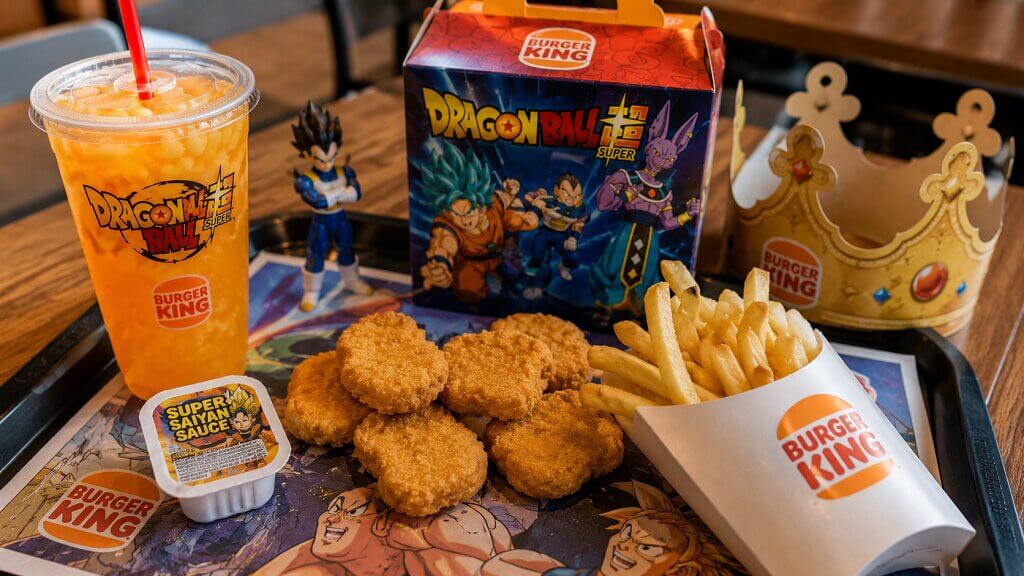
The Burger King Dragon Ball Super campaign is anchored by a specialized menu offering designed to appeal to both collectors and general fast-food consumers. The primary vehicle for the promotion is the Dragon Ball Super Power Up Pack, a bundled meal curated to deliver both a themed culinary experience and a physical collectible.
+-------------------------------------------------------------------------+
|                    DRAGON BALL SUPER POWER UP PACK                      |
+-------------------------------------------------------------------------+
|  • 10-Piece Chicken Nuggets                                             |
|  • Medium French Fries                                                  |
|  • Limited-Edition "Super Saiyan Sauce" (Sweet, savory, teriyaki-style) |
|  • "Dragon Ball Burst Lemonade" (Mango-peach with mango popping boba)   |
|  • One (1) Random Collectible Character Figure                          |
|  • Custom-Themed Packaging (Boxes, cups, and paper crowns)              |
+-------------------------------------------------------------------------+
The Collectible Toy Roster
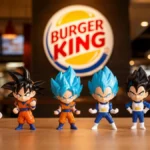
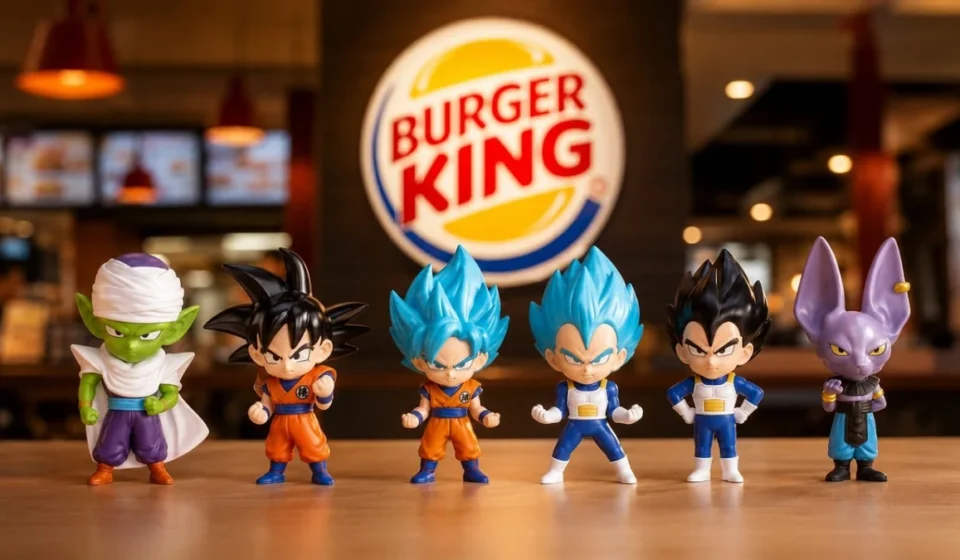
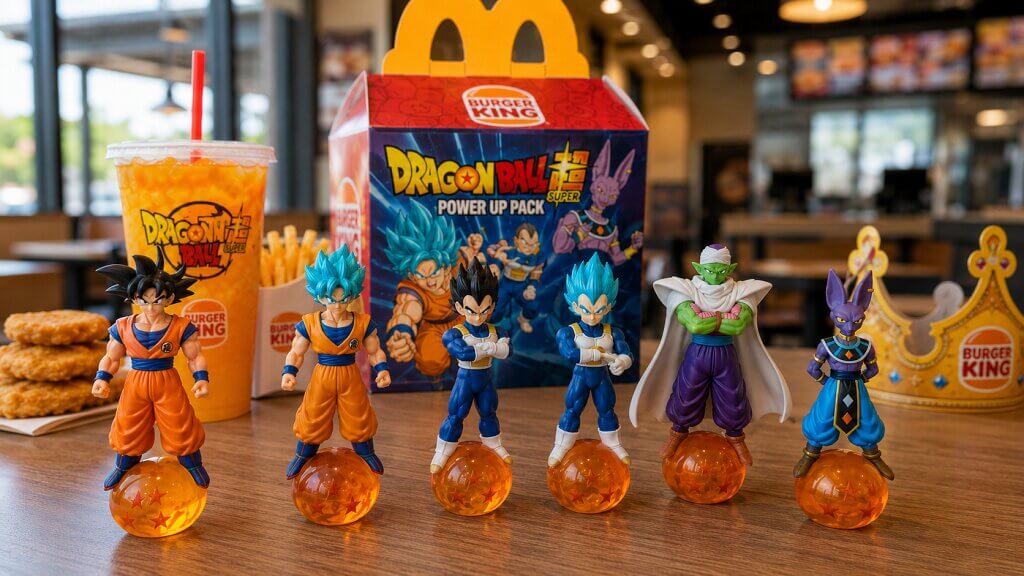
At the heart of the consumer demand are six specially manufactured, officially licensed plastic figures. The lineup consists of:
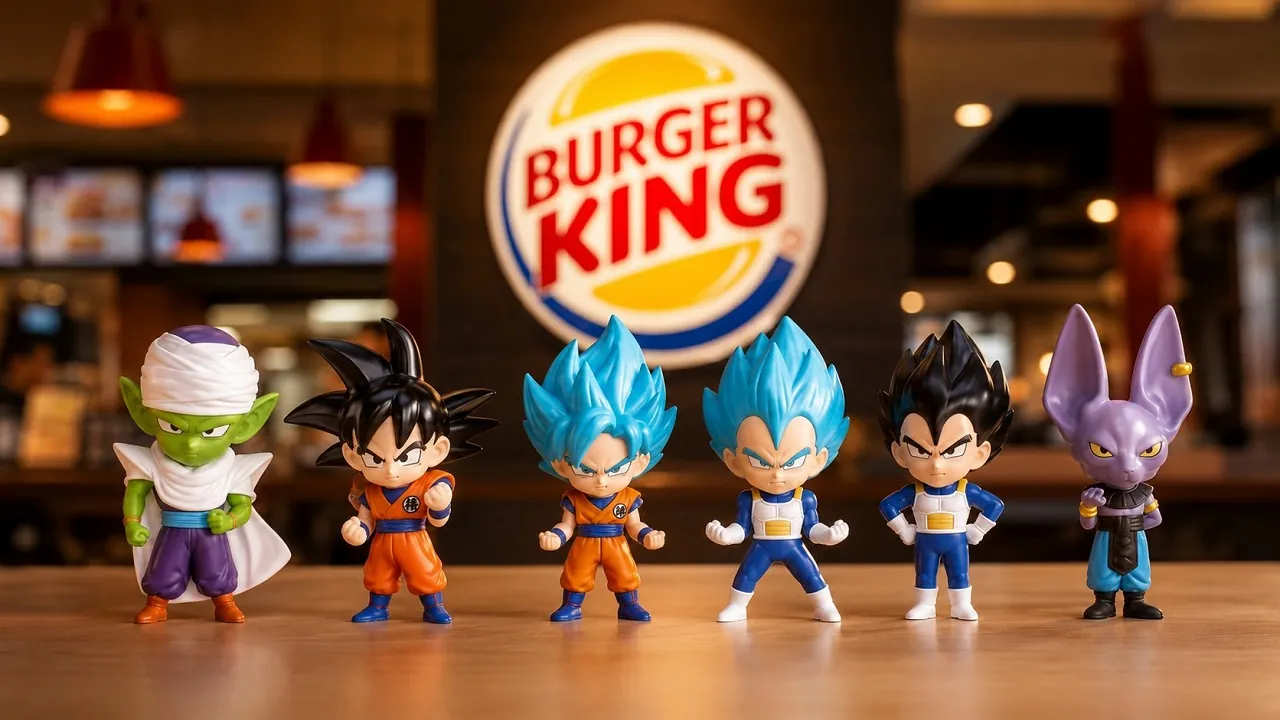
- Goku (Base Form)
- Super Saiyan Blue Goku
- Vegeta (Base Form)
- Super Saiyan Blue Vegeta
- Piccolo
- Beerus (The God of Destruction)
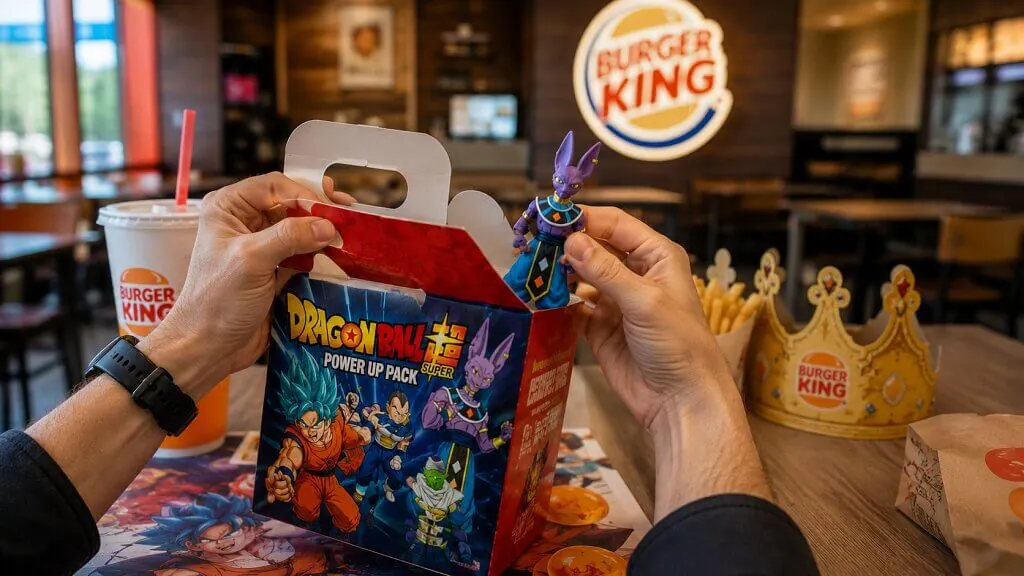
To ensure maximum accessibility across different age groups and price points, Burger King has also integrated these six figures into its standard King Jr. Meal lineup. The promotion, which officially commenced on September 1, is scheduled to run nationwide while supplies last, utilizing custom-designed boxes, cups, and the brand’s iconic paper crowns—reimagined with Dragon Ball Super graphics—to transform the physical dining environment.
2. Chronology: The Evolution of Anime Licensing in the U.S.
To fully understand the significance of a national Burger King promotion centered on Dragon Ball Super, one must examine the historical trajectory of Japanese animation licensing in North America over the past three decades.
[Late 1990s - Early 2000s] ──> [Mid-2000s - 2010s] ──> [2015 - Present]
  * Scarce official merch        * Toonami syndication      * Global simulcasts
  * Fan-subbed VHS tapes         * Mainstream push          * "Dragon Ball Super"
  * Import-only video games      * Increased licensing      * Massive QSR partnerships
The Era of Scarcity (Late 1990s–Early 2000s)
During the initial Western broadcast of Dragon Ball and Dragon Ball Z, officially licensed merchandise was exceedingly difficult to secure in the United States. Fans frequently relied on imported, un-subtitled VHS tapes, fan-translated digital distributions, and specialty hobby shops to acquire figures and media. Video game adaptations were inconsistent in quality and distribution, and television broadcasts were notorious for repeating specific story arcs due to licensing delays and syndication bottlenecks.
The Mainstream Breakthrough (Mid-2000s–2015)
As Cartoon Network’s Toonami programming block popularized the series among American youth, licensing agreements began to stabilize. Major retailers started carrying localized action figures and video games. However, these products remained segregated within specialized "anime" or "toy" aisles, rarely crossing over into mass-market promotional events of national scale.
The Modern Era and ‘Dragon Ball Super’ (2015–Present)
The debut of Dragon Ball Super in 2015, followed by blockbuster theatrical releases such as Dragon Ball Super: Broly (2018) and Dragon Ball Super: Super Hero (2022), solidified the franchise as a permanent fixture of global pop culture. Modern streaming platforms made episodes accessible simultaneously with their Japanese broadcasts, eliminating the developmental gap between Western and Eastern fanbases.
The culmination of this decades-long expansion is the current partnership with Burger King, representing the ultimate commercial normalization of the property.
3. Supporting Data & Analysis: Menu Innovation and Toy Design
The success of a QSR promotion depends heavily on two distinct pillars: the execution of the themed food and the appeal of the collectible premiums.
The Culinary Offerings: A Calculated Balance
Burger King opted for a conservative yet thematic approach to its menu design, utilizing existing operational infrastructure while introducing key modifications to satisfy the promotion’s branding requirements.
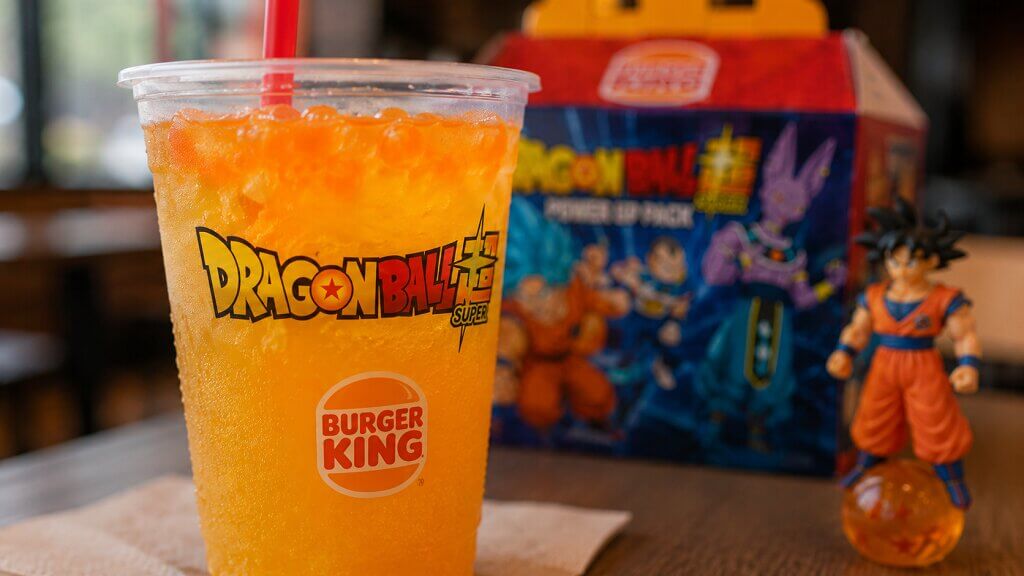
- Super Saiyan Sauce: Named after the legendary transformation of the Saiyan race, this dipping sauce is characterized by a sweet, savory, and tangy profile with a distinct teriyaki-style base. While the "Super Saiyan" moniker might suggest an intensely spicy flavor profile, the culinary team opted for a milder, crowd-pleasing teriyaki glaze. This choice ensures broad appeal across children and spice-sensitive consumers while still maintaining a thematic connection to Japanese cuisine.
- Dragon Ball Burst Lemonade: Regarded by industry analysts as the standout item of the menu, this beverage combines a mango-peach lemonade with orange, mango-flavored popping boba. The inclusion of the orange boba serves as a brilliant visual metaphor: the small, orange spheres floating in the cup directly mimic the iconic star-studded Dragon Balls that drive the franchise’s narrative.
+------------------------------------------------------------------------+
|                      MENU INNOVATION SCORECARD                         |
+--------------------------+---------------------------------------------+
| Item                     | Tactical Purpose                            |
+--------------------------+---------------------------------------------+
| Super Saiyan Sauce       | High-volume, low-waste operational ease     |
| Burst Lemonade           | Direct visual connection (Boba = Dragonball)|
| Custom Packaging         | High-impact social media shareability       |
+--------------------------+---------------------------------------------+
The Collectible Figures: A Critique of the Roster
While the inclusion of physical figures has been widely praised, the specific character selection has drawn mixed reactions from the core fanbase.
   [6-CHARACTER ROSTER COMPOSITION]
   ┌─────────────────────────────────────────┐
   │ Goku Variants (Base & SSB)        33.3% │
   ├─────────────────────────────────────────┤
   │ Vegeta Variants (Base & SSB)      33.3% │
   ├─────────────────────────────────────────┤
   │ Piccolo                           16.7% │
   ├─────────────────────────────────────────┤
   │ Beerus                            16.7% │
   └─────────────────────────────────────────┘
By dedicating four out of the six available slots to various forms of Goku and Vegeta, the promotion plays it safe. From a marketing standpoint, these two characters are the most recognizable faces of the brand. However, from a collector’s perspective, this heavy concentration represents a missed opportunity. Characters such as Golden Frieza, Future Trunks, or Android 17 (who enjoyed a major resurgence during the "Tournament of Power" storyline) could have offered a more diverse and exciting collection.
Conversely, the inclusion of Piccolo and Beerus has been highly commended:
- Piccolo: A perennial fan favorite, Piccolo’s inclusion capitalizes on his prominent role in the recent film Dragon Ball Super: Super Hero, which reintroduced him to the center of the franchise’s active lore.
- Beerus: The food-obsessed God of Destruction is uniquely suited for a fast-food tie-in. Within the series, Beerus’s volatile temperament is routinely pacified by the culinary offerings of Earth, making his placement inside a fast-food meal box an excellent piece of meta-humor.
4. Official Responses and Operational Strategy
In a joint statement accompanying the official launch, Burger King and Toei Animation emphasized the collaborative effort required to bring this campaign to fruition. The corporate strategy reflects a mutual desire to merge nostalgia with modern consumer convenience.
According to Burger King’s official press releases, the primary operational goal of the promotion was to deliver a high-impact thematic experience without disrupting kitchen workflows. QSR kitchens are highly optimized spaces where speed of service is paramount. Introducing entirely new, complex food items—such as a custom-shaped "Vegeta Spicy Burger" or a technically demanding frozen dessert—can drastically slow down drive-thru times and increase food waste.
                       [OPERATIONAL TRADEOFF]
  ┌───────────────────────────────────────────────────────────────┐
  │                           STRATEGY                            │
  ├───────────────────────────────┬───────────────────────────────┤
  │       High Complexity         │        Low Complexity         │
  │     (Themed Burgers)          │      (Sauces & Beverages)     │
  ├───────────────────────────────┼───────────────────────────────┤
  │ • Slows down kitchen prep     │ • Integrates into prep lines  │
  │ • High ingredient waste       │ • Zero disruption to speed    │
  │ • Expensive supply chain      │ • Easily scalable nationwide  │
  │                               │                               │
  │            [REJECTED]         │          [SELECTED]           │
  └───────────────────────────────┴───────────────────────────────┘
By utilizing existing inventory items (such as chicken nuggets and french fries) and pairing them with a specialty dipping sauce and an easily assembled beverage, Burger King successfully executed a national rollout that maintained peak operational efficiency.
5. Implications: Nostalgia Marketing and the "Kidult" Phenomenon
The Burger King Dragon Ball Super promotion highlights a major shift in the toy and fast-food industries: the rise of the "Kidult" market—adults who actively purchase toys, games, and collectibles typically associated with children.
       [TARGET DEMOGRAPHIC DUALITY]

       ┌───────────────────────────┐
       │     THE ADULT COLLECTOR   │
       │   • Ages 25–45            │
       │   • Nostalgia-driven      │
       │   • High disposable income│
       └─────────────┬─────────────┘
                     │
                     ├─► [THE DRAGON BALL SUPER MEAL]
                     │
       ┌─────────────┴─────────────┐
       │      THE MODERN CHILD     │
       │   • Ages 6–12             │
       │   • Discovered via stream │
       │   • Low brand loyalty     │
       └───────────────────────────┘
For decades, fast-food toy promotions were aimed almost exclusively at young children. However, as generations who grew up with anime, comic books, and video games have reached adulthood, their purchasing power has transformed the retail landscape. Research indicates that adult consumers now account for a significant percentage of toy industry sales, often driven by a desire to reconnect with childhood passions.
The Dual-Demographic Strategy
This campaign is engineered to engage two distinct consumer bases simultaneously:
- The Nostalgic Parent/Adult: Individuals in their late 20s, 30s, and early 40s who watched Dragon Ball Z on afternoon television now have the disposable income to pursue collectibles. For this group, obtaining a blind-bagged Beerus or Piccolo figure from a fast-food counter evokes the same thrill of discovery they experienced as children, wrapped in an affordable, low-stakes transaction.
- The Next Generation: Children who have discovered the franchise through Dragon Ball Super, theatrical films, and video games like Dragon Ball FighterZ or Dragon Ball Xenoverse. For this younger audience, the toys serve as active playthings, bridging the gap between old and new iterations of the franchise.
The inclusion of the paper crown—a long-standing symbol of fast-food playfulness—is a perfect example of this dual appeal. While designed for children, it is increasingly embraced by adult fans on social media, driving organic, user-generated marketing campaigns across platforms like Instagram and TikTok.
Verdict: A Calculated Triumph
Ultimately, the Burger King Dragon Ball Super promotion succeeds by respecting its source material while working within the strict limits of mass-market fast food. While hardcore collectors might criticize the safe character choices or wish for more daring menu items, the overall package delivers a highly satisfying blend of nostalgia, visual appeal, and operational execution. For a franchise that began as a hard-to-find import, its prominent placement on thousands of American drive-thru menus is a testament to its enduring legacy.