









































Zoox Accelerates Robotaxi Dominance: Strategic Expansion into Harry Reid International Airport

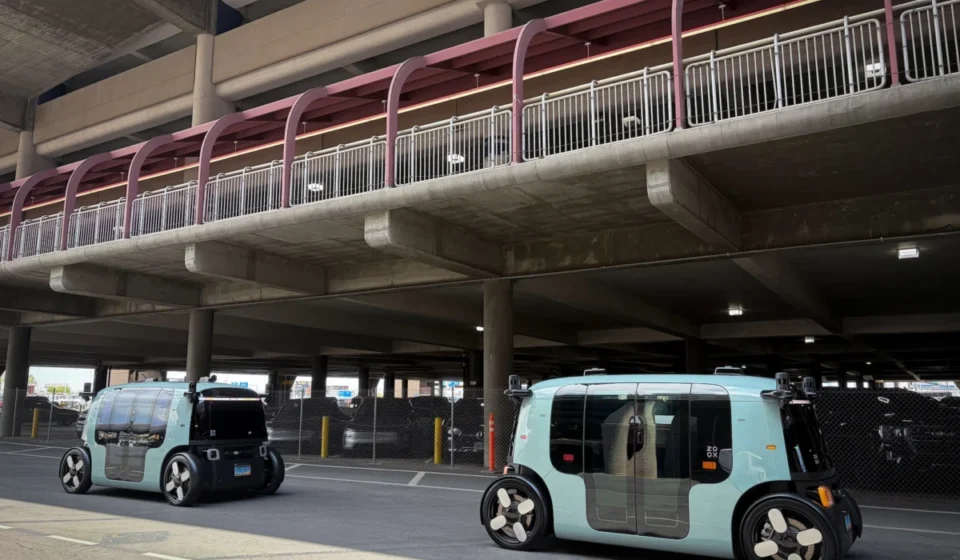
Zoox, the Amazon-owned autonomous vehicle pioneer, has hit a major operational milestone. Having spent over a decade perfecting its carriage-style, steering-wheel-free robotaxi, the company is wasting no time pivoting from research and development to high-stakes commercial scaling. As of this Thursday, Zoox has officially extended its Las Vegas robotaxi service to include direct transit to and from Harry Reid International Airport, marking a significant evolution in autonomous mobility and a direct challenge to established ride-hailing giants.
This development follows a series of pivotal regulatory and operational victories that have effectively removed the training wheels from the Zoox business model. By securing the ability to operate at a major transport hub, Zoox is no longer merely a "testing" entity; it is a full-fledged competitor in the hyper-competitive Las Vegas transportation market.
A Chronology of Innovation and Regulatory Clearance
The journey to this week’s airport launch has been characterized by meticulous engineering and grueling regulatory advocacy.
- 2014–2023: The Formative Decade: Zoox spent the better part of ten years developing a vehicle from the ground up. Unlike competitors who retrofitted existing consumer sedans with LiDAR and sensor suites, Zoox designed a purpose-built "carriage" robotaxi—a vehicle symmetrical in design, lacking traditional controls, and optimized for passenger experience rather than human operation.
- 2023–2025: The Testing Phase: The company began limited public trials in Las Vegas, allowing passengers to experience the vehicle in a controlled environment. However, these rides were strictly non-commercial, as the company lacked the necessary federal exemptions to charge for the service.
- August 2026: The Regulatory Breakthrough: In a landmark decision, federal safety regulators granted Zoox a two-year temporary exemption from specific Federal Motor Vehicle Safety Standards (FMVSS). This exemption was the "green light" the company needed, covering eight critical standards—including those related to windshield defrosting and braking systems—that are difficult to reconcile with a vehicle that lacks a manual steering wheel or brake pedal.
- August 10, 2026: Commercialization: With the regulatory hurdle cleared, Zoox began charging passengers for rides in Las Vegas, transitioning from a research project to a revenue-generating service.
- September 2026: The Airport Expansion: Less than a month after initiating paid services, the company announced its expansion to Harry Reid International Airport, effectively integrating itself into the city’s most critical transit artery.
Supporting Data: By the Numbers
The scale of this operation is significant, reflecting both the ambition of the company and the magnitude of the regulatory support it has garnered.
- Fleet Capacity: Under the current federal exemption, Zoox is authorized to deploy up to 2,500 custom-built robotaxis across its operational zones.
- Regional Growth: Beyond Las Vegas, the company is actively preparing to launch testing operations in San Diego and Houston, signaling a rapid geographic diversification strategy.
- Market Saturation: The Nevada Transportation Authority has recently issued permits to several heavy hitters in the autonomous space, including Tesla, Uber, and Waymo. Collectively, these permits allow for the deployment of up to 8,000 autonomous vehicles across Clark County within the next 12 months.
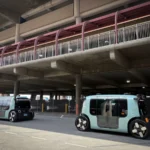
- Logistical Advantage: Zoox’s service at Harry Reid International is uniquely positioned. While ride-hailing incumbents like Uber and Lyft require passengers to walk five to ten minutes to an upper-level parking garage for pickups, Zoox is facilitating direct pick-up and drop-off at terminal baggage claims, offering a frictionless "door-to-curb" experience that significantly enhances the value proposition for travelers.
The Competitive Landscape: Uber, Waymo, and the Future of Transit
The arrival of Zoox at the airport is not happening in a vacuum. Las Vegas has long been the "living laboratory" for autonomous driving, but the shift toward full-scale commercialization has turned the city into a battlefield.
The entry of Uber, Tesla, and Waymo into the Clark County market creates a complex web of cooperation and competition. Uber, for example, is hedging its bets by pursuing a hybrid strategy: they are partnering with Motional (a Hyundai subsidiary) and Zoox itself to provide autonomous options within their existing app ecosystem. This indicates that while the "robotaxi" market is nascent, the incumbent ride-hailing leaders view integration as a survival strategy rather than a secondary feature.
For Zoox, the advantage lies in its purpose-built hardware. By removing the driver’s seat, the vehicle provides a more spacious, social interior layout that is fundamentally different from the "Uber-in-a-Toyota" experience. However, this is also a vulnerability; if a vehicle experiences a technical fault, there is no human operator to take over. This is why the company’s recent release of its comprehensive "Safety Framework" was so vital—it serves as the public-facing assurance that the AI, not a human, is capable of managing complex airport traffic patterns and unexpected pedestrian behavior.

Implications for Urban Mobility and Regulation
The success of Zoox’s expansion carries profound implications for the future of urban infrastructure.
The Death of the "Garage Walk"
The most immediate consumer benefit is the efficiency of the pick-up location. The "five-to-ten-minute walk" to ride-share zones is a notorious friction point at major airports. By negotiating access to terminal curbs, Zoox is effectively elevating the standard for passenger convenience. If this model proves safe and scalable, other airports may face pressure to adapt their infrastructure to accommodate autonomous fleets, potentially reducing the massive congestion caused by thousands of individual drivers circling terminal loops.
Regulatory Precedent
The federal exemption granted to Zoox is a litmus test for the Department of Transportation. By allowing a vehicle that deviates from standard safety requirements, the government is signaling a shift toward performance-based regulation. If Zoox maintains a clean safety record over the next two years, it will likely pave the way for other companies to deploy unconventional vehicle designs, potentially leading to a new class of "low-speed/high-density" transport pods.
The Amazon Factor
Zoox’s ownership by Amazon cannot be overlooked. While the company operates independently, its integration into the Amazon ecosystem provides it with deep capital reserves and potentially unique logistical data. As Amazon continues to optimize its "last mile" delivery, the lessons learned in navigating complex, high-traffic environments like Las Vegas airports could eventually inform a broader shift toward autonomous delivery services, further cementing the company’s influence over urban logistics.
Conclusion: A New Era for Las Vegas
As of this week, the sight of a steering-wheel-less robotaxi pulling up to the baggage claim at Harry Reid International will be the new normal. While the competition is heating up, and the deployment of 8,000 robotaxis will certainly test the limits of local traffic management and public perception, the momentum is clearly with the pioneers.
Zoox has transitioned from a theoretical concept to a tangible, revenue-generating service. The next two years will be the "prove-it" phase. If the company can maintain its current pace of expansion without compromising safety, it won’t just be the leader in the Las Vegas market—it will have set the global template for how cities interact with autonomous, driverless fleets. The robotaxi has arrived, and it’s heading straight for the airport gate.