


















































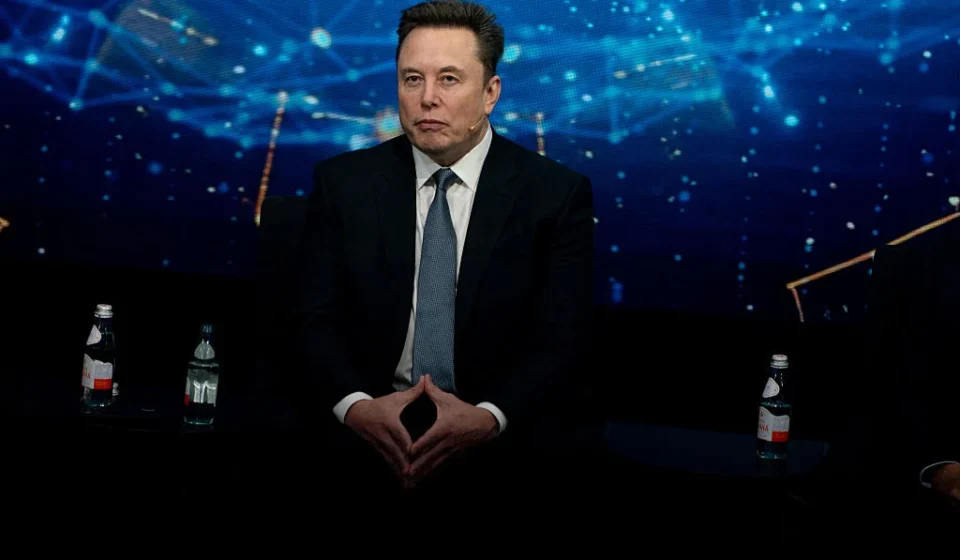

In the high-stakes race for artificial intelligence supremacy, the primary obstacle has shifted from the microscopic to the monumental. While the world’s leading tech giants continue to grapple with the scarcity of advanced GPUs—with Nvidia’s Blackwell chips still hampered by significant lead times—a new, more physical bottleneck has emerged: the power grid. As data centers balloon in energy consumption, the global infrastructure required to feed them is straining at the seams. Now, Elon Musk has unveiled a bold, vertically integrated solution: a secret SpaceX foundry in Bastrop, Texas, aimed at producing the very components that currently constrain the entire energy sector.
The Bottleneck: Why Gas Turbines are the New Gold
The International Energy Agency (IEA) projects that global electricity demand from data centers will roughly double by 2030. To meet this voracious appetite, major hyperscalers—including Amazon, Google, Meta, Microsoft, and OpenAI—have pivoted away from relying solely on the public grid. Instead, they are increasingly deploying private, gas-fired power plants adjacent to their data centers.
However, the supply chain for these power plants is broken. GE Vernova, one of the primary manufacturers of gas turbines, has reported that its production capacity is effectively sold out through 2030. The reason for this stagnation lies in a highly specialized, industrial-scale manufacturing challenge: the production of turbine blades and vanes.
These blades must operate in the "hottest section" of a gas turbine, where temperatures reach between 3,000 and 3,600 degrees Fahrenheit. This is approximately 800 degrees higher than the melting point of the superalloy metals from which they are constructed. To survive these conditions, the blades require sophisticated internal cooling channels and precision thermal-barrier coatings. More importantly, they must be cast as a single, unbroken crystal grown within a vacuum furnace. This process eliminates the microscopic seams that would otherwise cause standard cast metal to fracture under extreme thermal stress. Currently, only a handful of companies globally have mastered this manufacturing feat at scale, and they are currently unable to keep pace with the explosion in demand.
Chronology of a Secret Strategy
The scope of SpaceX’s involvement was revealed in pieces throughout 2024 and 2025. The realization began with the investigative work of Corey Trinetti, a specialist in AI infrastructure, who tracked the acquisition of roughly 830 acres of land near SpaceX’s existing Starlink factory in Bastrop, Texas.
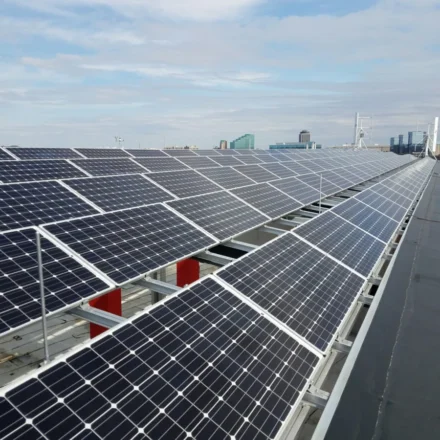
The strategy came into sharp focus on a Saturday when The Information published an exclusive report detailing job listings at the site for a "blades and vanes foundry." Facing the mounting evidence, Elon Musk confirmed the initiative on X (formerly Twitter). Musk clarified that while SpaceX and Tesla are aggressively expanding solar production, natural gas remains an essential "bootstrap" technology to bridge the power gap for the next several years.
By bringing the casting process in-house, Musk claims SpaceX can bypass the current industrial oligopoly, potentially accelerating the deployment of gas-fired power capacity by up to 18 months. "The limiting factor for nat gas turbine production is casting the blades & vanes," Musk noted, framing the initiative as a "profound game-changer" for the AI industry.
Supporting Data: The Infrastructure Crisis
The urgency behind Musk’s move is underscored by a wealth of data regarding energy demand and industrial capacity.
The Scale of the Power Gap
- Capacity Constraints: With GE Vernova and other major turbine manufacturers backlogged until the end of the decade, the ability to build new power plants is effectively capped.
- The "Hyperscaler" Strategy: Major tech firms are increasingly bypassing regional utility providers to build private power generation. This shift has turned natural gas from a transition fuel into a critical component of AI infrastructure development.
- Technical Difficulty: The "single-crystal" casting process is notoriously unforgiving. Even in the aerospace industry, where jet engine blades share similar manufacturing requirements, production yields are notoriously volatile. Scaling this to the much larger blades required for industrial power plants presents an engineering challenge that has thwarted many established manufacturing entities.
The Environmental Toll
While the foundry promises a solution to power shortages, it also highlights the growing environmental friction between AI development and local communities. Research—such as the study commissioned by the Piedmont Environmental Council regarding "Data Center Alley" in Virginia—demonstrates the massive regional impact of on-site gas generation. Using the EPA’s COBRA health-impact model, researchers found that a single facility’s fleet of gas turbines could negatively impact the health of over 2.5 million people, leading to significant annual health-related damages and premature deaths.
Official Responses and Public Scrutiny
The rapid deployment of gas-powered data centers has already triggered significant legal and social backlash. The most prominent example is in Memphis, where Musk’s xAI has been operating turbines to power its "Colossus" data center cluster.
The NAACP and local community advocacy groups have launched repeated protests and legal threats against the company, alleging that these turbines operate without the necessary permits or robust pollution controls. Critics point to the emission of formaldehyde and smog-forming compounds as a direct threat to the health of residents in surrounding neighborhoods, which are already classified as industrial zones.
University of Memphis researchers, in a limited environmental assessment, noted that air quality in the vicinity of the Colossus site had degraded since the commencement of operations. Despite these concerns, companies like Microsoft, Amazon, and Meta continue to double down on gas-fired on-site power, arguing that the immediate necessity of AI compute capacity outweighs the slower, more complex integration of green energy alternatives.
Strategic Implications: A New Era of Vertical Integration
Should SpaceX successfully master the casting of turbine blades, the implications for the tech landscape are profound.
1. The End of the Oligopoly
Currently, every company building an AI data center is beholden to a tiny group of manufacturers. If SpaceX captures this capability, it gains a massive lever over the entire AI supply chain. A Musk-controlled entity would essentially own the "picks and shovels" of the next industrial revolution, allowing SpaceX to prioritize its own projects or exert influence over which AI competitors receive power capacity first.
2. The "Speed-to-Market" Advantage
In the AI race, the firm that trains its models first often achieves a massive, compounding advantage. If Musk’s foundry can indeed cut 18 months off the deployment time for power plants, he effectively secures an 18-month lead in training future generations of AI models compared to peers who remain reliant on the slow-moving, third-party turbine supply chain.
3. Regulatory and Public Relations Risk
The flip side of this vertical integration is a heightened target on Musk’s back. By directly managing the power production for his data centers, Musk absorbs the full force of the public backlash against fossil fuel emissions. As federal lawsuits and state-level environmental regulations tighten, the "privatized" power model may prove to be a legal minefield.
4. The Future of Energy
Ultimately, this foundry represents a cold, pragmatic calculation: AI needs more energy than the current grid can provide, and the current manufacturing sector is too slow to build the necessary hardware. Musk is betting that by merging the precision of rocket-science manufacturing with the brute-force energy needs of the AI industry, he can force a structural change in how data centers are powered.
As the Bastrop foundry begins to take shape, the industry watches with a mixture of skepticism and necessity. If the venture succeeds, it may well prove that in the age of AI, the ultimate "hardware" isn’t just the chip—it’s the fire required to run it.