


























































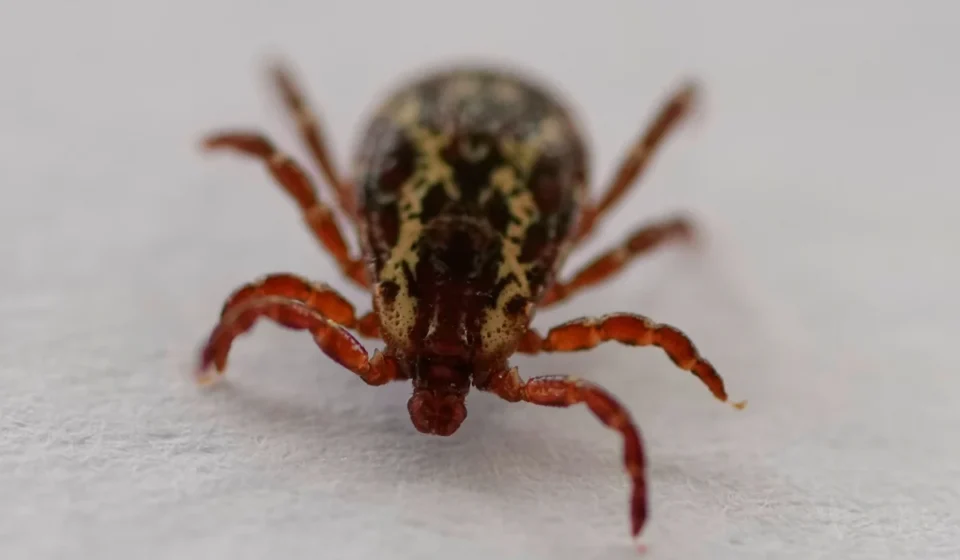

As spring arrives, the warming climate is doing more than coaxing flowers from the soil; it is creating a perfect storm for one of the most persistent public health challenges in North America: Lyme disease. With tick populations surging across the continent, the 2026 season is already showing signs of being one of the most active in recent history. For those who enjoy the outdoors, awareness is no longer just a recommendation—it is a critical necessity.
Main Facts: The Silent Epidemic
Lyme disease, which was first identified in the town of Lyme, Connecticut, in 1975, is a multisystemic bacterial infection caused by Borrelia burgdorferi. This pathogen is transmitted to humans through the bite of an infected black-legged tick, commonly known as a deer tick.
While public health records reported over 89,000 cases in 2023, experts within the medical community suggest that the actual incidence is significantly higher. Estimates indicate that nearly 500,000 people in the United States contract Lyme disease annually. The discrepancy between reported cases and real-world numbers stems from the stealthy nature of the illness: many tick bites go unnoticed, and early symptoms are often mild enough to be mistaken for common seasonal ailments.
A Chronology of the 2026 Surge
The 2026 tick season has arrived with alarming intensity. On April 23, 2026, the Centers for Disease Control and Prevention (CDC) issued a stark warning: emergency room visits specifically linked to tick bites have reached their highest levels since 2017.
This surge is not a random anomaly but the result of a compounding series of environmental factors. Shorter, milder winters have allowed ticks to emerge from dormancy earlier than in previous decades. In regions where temperatures rarely drop below freezing, these arachnids are increasingly active year-round. Public health officials are tracking these trends closely, noting that the combination of early emergence and high population density suggests a season of elevated risk for Lyme disease and other tick-borne conditions, such as the emerging alpha-gal syndrome—a meat allergy linked to tick bites.
Supporting Data: Climate and Geography
The geography of Lyme disease is shifting. Historically, the disease was concentrated in the Northeast and the Upper Midwest. However, as rainfall patterns change and temperatures rise, ticks are expanding their habitats.
Currently, roughly 90% of U.S. cases are reported in the Northeast, the mid-Atlantic corridor (stretching from Virginia to eastern Canada), and the Upper Midwest, including states like Wisconsin, Michigan, and Minnesota. Despite these strongholds, cases are being reported with increasing frequency in the Pacific Northwest, including Oregon and Washington.
Data shows that the incidence of Lyme disease in the U.S. has nearly doubled since 1995. This increase is driven by two primary factors:
- Environmental Expansion: Warmer climates allow ticks to survive in areas that were once too cold for them to colonize.
- Habitat Fragmentation: As woodland areas are cleared for residential development, human habitats increasingly overlap with the natural environments of deer and mice—the primary hosts that facilitate the tick life cycle.
Official Responses and Medical Perspectives
As an infectious disease specialist who has treated patients suffering from the long-term, debilitating outcomes of Lyme disease, I emphasize that the condition is often deceptive. The bacterium typically requires 24 to 48 hours of attachment to transmit the infection.
The CDC continues to refine its guidance as new data emerges. While blood tests for antibodies are standard for diagnosis, they are not foolproof. These tests often return false negatives during the first two weeks of infection, as the body has not yet produced a detectable level of antibodies. Consequently, clinicians are urged to prioritize clinical symptoms—such as the classic "bull’s-eye" rash (erythema migrans)—over laboratory results when deciding to initiate a two-to-four-week course of antibiotics.
In a promising development for the future, Pfizer and Valneva announced in March 2026 that their late-stage clinical trial for a new Lyme disease vaccine showed 70% efficacy in preventing the disease. While this offers a glimmer of hope, it is not yet available for public use, making preventative vigilance the current standard of care.
Implications: The Risks of Untreated Lyme Disease
The danger of Lyme disease lies in its ability to progress if left untreated. While many individuals recover fully with prompt antibiotic therapy, those who go undiagnosed face a spectrum of severe health consequences.
The Progression of Illness
Early symptoms typically manifest within 3 to 30 days of a bite, including fever, fatigue, and muscle aches. However, if the infection spreads, the implications become far more severe. Approximately 60% of untreated patients will develop Lyme arthritis, characterized by painful, swollen joints.
In rarer instances, the bacteria can infiltrate the heart and nervous system. Neuroborreliosis, or Lyme of the nervous system, can lead to inflammation of the meninges, resulting in excruciating headaches, neck stiffness, memory loss, and behavioral changes. Patients may also experience peripheral nerve damage, manifesting as numbness, tingling, or muscle weakness.
The Mystery of Long-Term Symptoms
Perhaps the most frustrating aspect of the disease is the persistence of symptoms even after the bacteria have been eliminated by antibiotics. Researchers have identified several theories for why this occurs:
- Cell Wall Debris: Some studies suggest that fragments of the bacteria’s cell wall can remain in the joints, triggering a chronic inflammatory response.
- Autoimmune Triggering: Lyme disease can sometimes prompt the immune system to misidentify the body’s own tissues as threats, leading to a secondary autoimmune condition.
- Nervous System Sensitivity: Because the nervous system is highly sensitive to the inflammation caused by Borrelia, it may require an extended period to recover, and in some cases, the damage may be irreversible.
Essential Prevention Strategies
Until a vaccine is widely available, the burden of prevention rests on individual behavior. To mitigate your risk during the 2026 season, consider the following protocols:
Personal Protection
- Dress for Protection: When hiking or working in wooded areas, wear long sleeves and pants tucked into socks. Light-colored clothing makes it easier to spot ticks before they attach.
- Use Repellents: Apply EPA-registered insect repellents containing DEET, picaridin, or IR3535. For clothing and gear, permethrin-treated items are highly effective.
- Perform "Tick Checks": Upon returning from the outdoors, conduct a full-body scan. Ticks often hide in hard-to-see areas like the scalp, behind the ears, the armpits, and the groin.
Environmental Management
- Create a Barrier: Keep your lawn mowed and clear away leaf litter where ticks thrive.
- Create a "Tick-Safe" Zone: Use wood chips or gravel to create a barrier between wooded areas and your patio or lawn to discourage ticks from migrating into your recreation space.
- Manage Wildlife: While difficult, limiting the presence of mice and deer in your immediate yard can reduce the local tick population.
Conclusion
The 2026 tick season is a potent reminder that our relationship with the environment is changing. As ticks expand their range and their activity period grows, our public health strategies must evolve accordingly. By remaining vigilant, performing regular tick checks, and seeking medical attention the moment a suspicious rash or flu-like symptom appears, we can significantly reduce the risk of this debilitating disease. Awareness is our first line of defense; let us ensure it is sharp and informed.