





















































By [Your Name/Journalistic Desk]
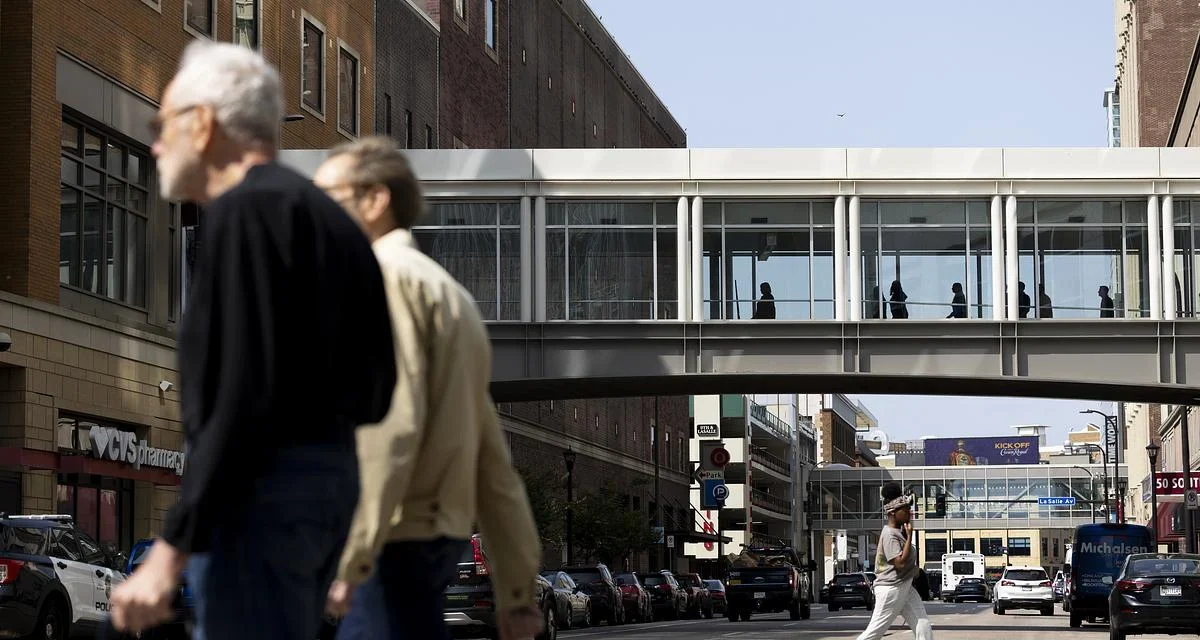
The landscape of professional football as it exists today—a multi-billion-dollar juggernaut defined by competitive parity, high-stakes free agency, and constant labor negotiation—was fundamentally reshaped not in a stadium, but in a federal courtroom in Minneapolis.
David Doty, the U.S. District Judge whose gavel served as the final arbiter for some of the NFL’s most pivotal legal battles, has passed away at the age of 96. His death, announced by the District of Minnesota, marks the end of an era for both the American judiciary and the National Football League. A man defined by a humble demeanor and a sharp, incisive legal mind, Doty leaves behind a legacy that transformed the relationship between labor and management in the most powerful sports league in the world.
A Life of Service and Jurisprudence
Before he became the de facto overseer of NFL labor relations, David Doty lived a life of distinguished public service. Born in 1929, his formative years were shaped by the ethos of the "Greatest Generation." He served a six-year tenure in the United States Marine Corps, an experience that colleagues noted instilled in him a disciplined, no-nonsense approach to the law.
Following his military service, Doty pursued legal education at the University of Minnesota, graduating in 1961. He spent the next 26 years in private practice, honing the skills that would eventually catch the eye of the Reagan administration. In 1987, he was appointed to the federal bench. While he presided over thousands of civil and criminal cases—ranging from mundane litigation to high-profile federal trials—it was his role in the courtroom regarding the NFL that solidified his historical footprint.
The 1992 Ruling: Birth of the Modern NFL
To understand the NFL’s current dominance, one must understand the environment of the late 1980s. The league was a closed system, characterized by rigid control and the absence of true player movement. The "Plan B" system, which allowed teams to protect only a handful of players while restricting the rest, had created a suffocating environment for athletes.
When the NFL Players Association (NFLPA) sued the league following a bruising 1987 strike, the case landed on Judge Doty’s desk. His trajectory in this matter was measured. Initially, he showed hesitation, urging the parties toward collective bargaining rather than judicial intervention. He famously refused to trigger an immediate, chaotic release of 300 players into free agency, recognizing the potential for systemic collapse.
However, as the league continued to stall, Doty’s patience wore thin. In 1990, he ruled that players had the right to pursue individual antitrust claims against the league. By 1992, the dam had broken. A jury of eight women, acting under the framework of Doty’s rulings, struck down the restrictive "Plan B" system.
This was the watershed moment. It forced the league to the negotiating table, leading to the landmark 1993 collective bargaining agreement. That agreement, championed by legends like Reggie White, not only introduced unrestricted free agency but also established the salary cap structure. This balance of power allowed teams to remain competitive, preventing the formation of dynasties built solely on deep pockets and ensuring the league’s economic parity—a hallmark of its current popularity.
A Chronology of Judicial Oversight
Judge Doty’s influence did not end with the 1993 settlement. He remained the "special master" of sorts for NFL labor disputes for decades, retaining jurisdiction over the terms of the settlement long after others might have relinquished it.
- 1987–1990: The initial legal skirmishes following the player strike. Doty balances judicial restraint with a growing recognition of antitrust violations.
- 1992: The collapse of "Plan B." Doty presides over the trial that effectively ends the era of total team control over player movement.
- 1993: The Reggie White settlement. A new CBA is signed, establishing the salary cap and modern free agency.
- 2008: The Michael Vick case. Doty rules in favor of the player, allowing Vick to retain over $16 million in bonus money despite his legal troubles, emphasizing the importance of specific contractual language over league moralizing.
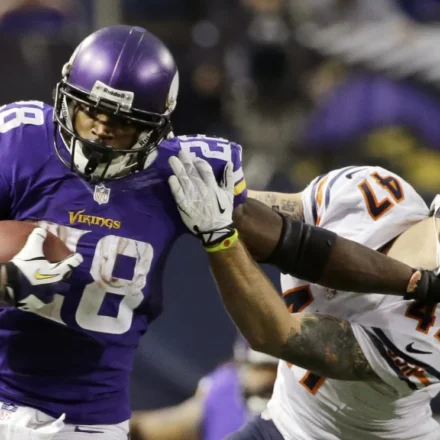
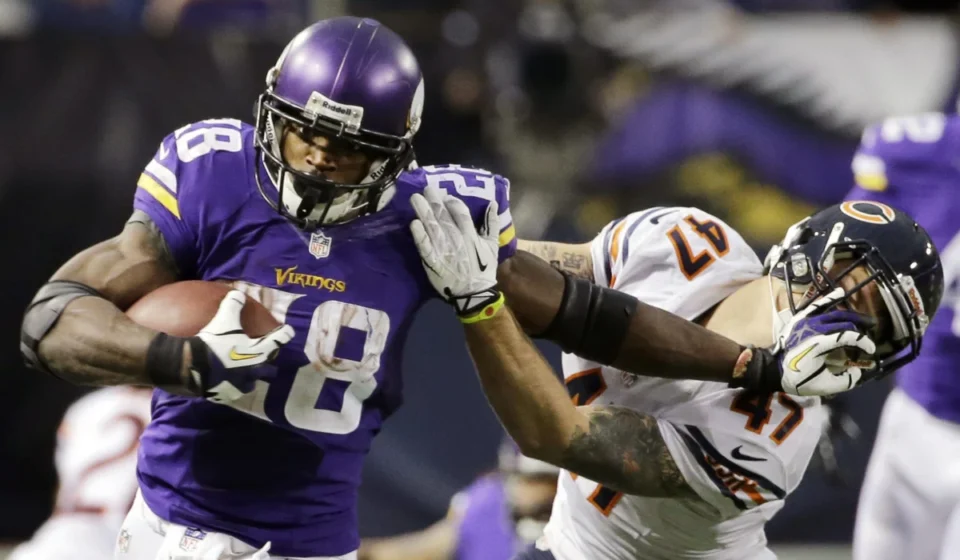
- 2015: The Adrian Peterson appeal. In a high-profile disciplinary case, Doty sides with the NFLPA, overturning elements of the league’s suspension of the star running back.
- 2014: Doty recuses himself from a major collusion case, marking the conclusion of his most direct involvement in the league’s deep-seated labor conflicts.
The Man Behind the Robe: Character and Compassion
Despite his monumental impact on a multi-billion-dollar industry, those who worked with Judge Doty describe a man of profound humility. Chief U.S. District Judge Patrick Schiltz highlighted that Doty’s character was not defined by his rulings, but by his interactions with the people in his orbit.
"He treated everyone—from the guy who shined his shoes to Justices of the U.S. Supreme Court—the same way: with kindness and compassion," Schiltz remarked.
This "down-to-earth" nature was a trademark of his courtroom. While he could be stern when attorneys failed to respect the gravity of the proceedings, he was equally known for his wit and his ability to humanize the often-sterile environment of federal litigation. He was a man who believed that the law was a tool for fairness, and he approached every case with a sincere interest in the human lives at stake.
Implications for the League
The NFL today is a product of the structures David Doty helped create. The parity that allows a team to go from "worst to first" in the span of two years is directly traceable to the salary cap and free agency rules he helped oversee.
By refusing to allow the NFL to operate as a completely unregulated monopoly, Doty forced the league to evolve into a sustainable business model. The stability provided by the 1993 CBA, and his subsequent oversight of the interpretation of those rules, provided the bedrock upon which the league’s massive media deals and international expansion were built.
Even in his later years, as he took senior status in 1998, Doty remained a vital presence in the legal community. He continued to handle cases with a vigor that defied his age, working until just months before his passing.
Legacy and Official Response
The NFL, an organization that frequently found itself at odds with Doty’s courtroom, issued a statement reflecting the respect he commanded across the aisle. "Judge Doty devoted his life to public service and the law, presiding over NFL-related litigation for many years during his distinguished career," the league stated. "We express our sincere condolences to his family, friends and colleagues."
As the football world moves into a new era, the shadow of David Doty remains. He was a guardian of fairness in a sport defined by brute force. His legacy is not found in a trophy case or a highlight reel, but in the contracts that define the careers of thousands of athletes and the stable, competitive league that millions of fans enjoy every Sunday.
David Doty was 96 years old, leaving behind a family, a community in Minnesota that revered him, and a permanent, indelible mark on the history of American sports. He was, by all accounts, a gentleman of the law—a judge who understood that while the game is played on the field, its integrity is maintained in the court.