















































Minnesota’s 1st District: A Teacher’s Bid to Replicate History in a Shifting Political Landscape

NEW ULM, Minn. – Two decades ago, a political newcomer and educator named Tim Walz defied expectations, unseating a long-term Republican incumbent in Minnesota’s 1st Congressional District. His victory in 2006, in a largely rural southern district known for its conservative leanings, sent ripples through the state’s political establishment. Now, as the 2026 election cycle heats up, another teacher, Jake Johnson, is attempting to echo Walz’s historic upset, challenging Republican Rep. Brad Finstad for the same seat.
Johnson, a 42-year-old high school math teacher, enters the political arena with a profile strikingly similar to Walz’s early career. His vigorous campaigning and surprising fundraising prowess have already garnered significant attention from the national Democratic Party, earning him a coveted spot on the Democratic Congressional Campaign Committee’s (DCCC) "Red to Blue" list. However, the political terrain of Minnesota’s 1st District, and indeed the broader American political landscape, has undergone profound transformations since Walz’s groundbreaking win. This election is not merely a rerun of 2006; it is a test of whether a potent personal narrative and strategic national backing can overcome entrenched Republican dominance in an era defined by deep partisan divides and shifting rural allegiances.
A Familiar Echo: The Walz Precedent and Johnson’s Challenge
The narrative of a dedicated teacher stepping out of the classroom and onto the campaign trail to challenge a Republican incumbent is deeply embedded in the modern political history of Minnesota’s 1st Congressional District. In 2006, Tim Walz, then a history teacher and football coach from Mankato, launched an audacious bid against Republican Rep. Gil Gutknecht. Gutknecht, a moderate Republican, had held the seat for 12 years and seemed to possess an unshakeable grip on the district. Walz, running as a moderate Democrat, captivated voters with his accessible demeanor, leveraging his years as an educator to connect with former students, parents, and the politically influential teachers’ unions. His victory was a significant upset, turning a seemingly safe Republican seat blue and propelling Walz into the national spotlight, eventually leading him to the Governor’s Mansion.
Fast forward to 2026, and Jake Johnson is attempting to write a similar chapter. A high school math teacher from Stewartville, Johnson shares Walz’s professional background and a commitment to direct constituent engagement. His campaign strategy emphasizes accessibility, with a promise to hold town halls in each of the district’s 21 counties – a grassroots approach reminiscent of Walz’s early efforts. Like Walz, Johnson is also positioning himself as a centrist Democrat, notably adopting a stance of fiscal conservatism by vowing to vote against any legislation that would increase the national debt until Congress balances its budget. "Members of both parties are not taking this seriously," Johnson stated, referring to the nation’s nearly $40 trillion debt, a clear appeal to fiscally conscious voters across the political spectrum.
Beyond their shared profession and moderate positioning, both men carry personal stories deeply rooted in the need for social safety nets. Walz experienced hardship as a youth, with his mother and younger brother relying on Social Security survivor benefits after his father’s death. Johnson’s upbringing in Stewartville, with ten siblings, saw his family frequently depend on support from their church, neighbors, and government programs. "I was a SNAP (food stamp) kid," Johnson openly shares. "We were a Medicaid family." These narratives provide a powerful resonance with working-class families and those who rely on social welfare programs, allowing both candidates to bridge ideological divides with shared human experiences. As Governor, Walz later championed and expanded social welfare initiatives, including universal school breakfasts and lunches and a generous paid family leave program, reflecting the values forged in his youth.
However, the electoral landscape Johnson faces is far more challenging than the one Walz navigated. The district has undergone significant demographic and political shifts, becoming more rural and distinctly more conservative through redistricting and national political polarization. Rep. Brad Finstad, the incumbent Johnson seeks to unseat, represents a different brand of Republicanism than Gil Gutknecht. Finstad, 50, has closely aligned himself with former President Donald Trump, reflecting the Republican Party’s sharp turn to the right and Trump’s enduring influence in local elections, particularly in rural America.

A District Transformed: From Moderate to Staunchly Conservative
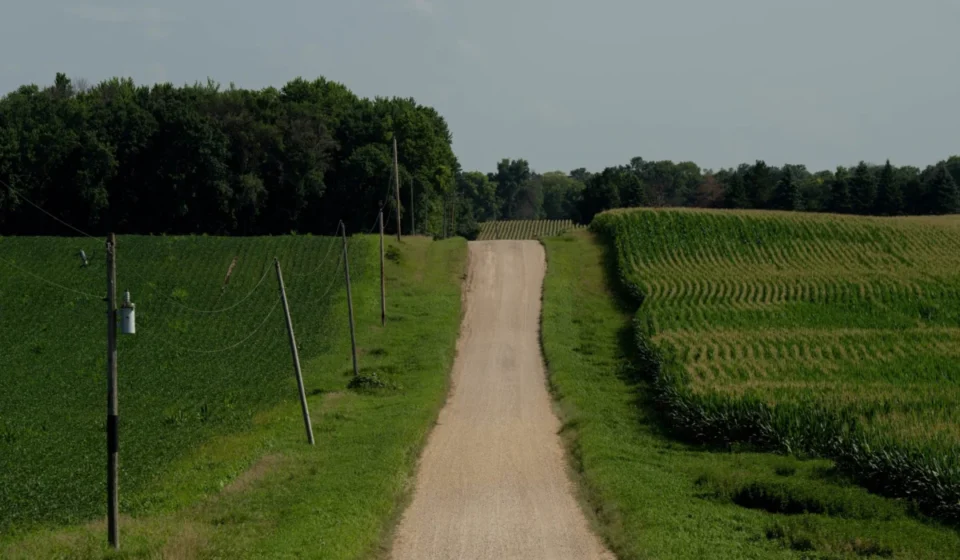
The 1st Congressional District of Minnesota in 2026 is not the same political entity that elected Tim Walz in 2006. The intervening years have seen profound changes, both in the district’s composition and in the broader currents of American politics. Following the Census-mandated redistricting, the district expanded further south along the Mississippi River, incorporating more intensely rural areas. This redrawing of boundaries solidified its conservative lean, making it an even tougher climb for any Democratic challenger.
Political science professor Kate Knutson of Gustavus Adolphus College notes, "It’s gotten a lot more conservative." This shift is not merely demographic; it’s cultural and ideological. Social scientists observe a national trend where rural areas are increasingly aligning with the Republican Party. Many rural residents express concerns that their core cultural values – centered on church, family, and freedom from government interference – are under threat in a rapidly changing nation. There’s also a growing perception, fueled by political rhetoric, that the Democratic Party is primarily composed of urban elites who look down on rural lifestyles and prioritize city or immigrant populations over the struggles of the rural working class. Knutson highlights this by stating that "the ‘farmer’ part of the Democratic-Farmer-Labor Party has peeled off."
New Ulm, the city where Rep. Brad Finstad resides, serves as a compelling microcosm of this conservative transformation. Steeped in German heritage since its founding in 1854, the city proudly displays its roots with landmarks like the towering Hermann monument, a daily chiming glockenspiel, and popular Oktoberfest celebrations at August Schell’s brewery. Local businesses often bear German names, and groups like the Junior Pioneers of New Ulm and Vicinity celebrate direct descendants of the original settlers. This deep connection to heritage, while fostering a strong community identity, has historically made it challenging for "auslanders" (outsiders) to fully integrate, though residents like Pat Booker note the community has become more open-minded over time. Nevertheless, New Ulm remains a deeply conservative, Republican-majority city. Brown County, its seat, overwhelmingly supported Donald Trump in 2024, a stark indicator of the district’s political lean.
This entrenched conservatism presents a formidable barrier for Johnson. When Walz won, he defeated a moderate Republican. Finstad, by contrast, is a staunch conservative deeply aligned with the Trump wing of the GOP. The district gave Trump 55% of the vote in 2024, and Finstad has successfully fended off Democratic challengers since winning a special election for the seat in 2022. The Cook Political Report, a respected non-partisan election analytical organization, rates the district as "Likely Republican," underscoring the uphill battle Johnson faces.
Strategic Moves and Incumbent Confidence
Despite the district’s challenging political landscape, Jake Johnson’s campaign has demonstrated a surprising vitality, catching the attention of national Democratic strategists. His inclusion on the DCCC’s "Red to Blue" list is a significant boost, signaling that the national party views him as a credible candidate capable of flipping a Republican-held seat. This designation provides access to critical resources, including fundraising support, strategic guidance, and campaign training, invaluable assets for an underdog challenger.
Johnson has already proven himself a formidable fundraiser. As of June 30, the latest reports filed with the Federal Election Commission show he has amassed nearly $1.9 million in campaign funds. This impressive figure puts him nearly on par with the incumbent, Brad Finstad, who has raised just under $2 million. For a first-time candidate challenging an entrenched incumbent in a "Likely Republican" district, Johnson’s fundraising prowess is a clear indicator of his campaign’s momentum and the national party’s investment.

His campaigning style is also drawing praise. Pat Booker, a military veteran and retired probation officer from New Ulm who closely followed Walz’s rise and now Johnson’s campaign, highlights a crucial commonality between the two teachers. "(Johnson) doesn’t hesitate to answer questions and doesn’t hesitate to meet with constituents, and that was the same way with Tim," Booker observed. She contrasts this with Finstad’s perceived inaccessibility, recounting her own frustrating eight-month attempt to get facetime with the Congressman to discuss concerns about SNAP and Medicaid cuts. "I got one pat letter saying thank you for your concerns," Booker stated, underscoring a potential vulnerability for Finstad.
Johnson is actively taking the fight to Finstad’s home turf, exemplified by his participation in New Ulm’s Bavarian Blast festival parade in July and a planned town hall in the city in August. This aggressive outreach in a conservative stronghold aims to broaden his appeal and demonstrate his commitment to representing all constituents, regardless of their political leanings.
Rep. Brad Finstad, however, projects an air of confidence, a stance political observers attribute to favorable internal polling. Kevin Parsneau, a political science professor at Minnesota State University in Mankato, suggests, "He’s certainly acting like internal (campaign) polls are telling him he has a wide lead." Finstad’s strategy appears to be one of reinforcing his base and maintaining a high profile through official business, rather than engaging directly with his challenger in potentially unscripted environments. His public appearances often involve meetings with police officers, farm groups, and local companies, allowing him to demonstrate his legislative engagement and commitment to district interests without straying into contentious debates.
Finstad also leverages his connection to the agricultural community, a vital demographic in the 1st District. While Johnson seeks to exploit farmer frustrations with Trump-era policies – such as tariffs and immigration sweeps that have impacted the meatpacking industry, and global events like Iran’s shutdown of the Strait of Hormuz affecting oil and fertilizer costs – Finstad largely deflects these criticisms. He attributes agricultural distress to the Biden administration rather than his party’s previous policies. "We’re heading in the right direction," Finstad told MinnPost after a veterans’ issues roundtable in Mankato. "We have come out of some tough times where the inputs have been really crippling for the last six years, and then on top of that we’ve had that stale market because of that lack of trade." This narrative allows him to speak directly to his base, validating their concerns while redirecting blame.
The Voices of the Campaign: Responses and Realities
The contrasting approaches of Jake Johnson and Brad Finstad offer a clear picture of their respective campaign strategies and perceptions of the race.
Johnson’s campaign is built on the premise that while the district is conservative, its residents are open to a candidate who understands their struggles and offers common-sense solutions. His fiscal conservatism, coupled with his commitment to the social safety net, is an attempt to resonate with voters who may feel economically squeezed but are wary of overtly liberal policies. His personal story of relying on SNAP and Medicaid is not just a biographical detail; it’s a core message designed to build empathy and trust across demographic lines. The DCCC’s "Red to Blue" endorsement serves as an external validation, signaling to donors and volunteers that Johnson’s campaign is a serious contender, despite the steep odds. The campaign believes that Finstad’s perceived inaccessibility, as highlighted by constituents like Pat Booker, creates an opening for Johnson to connect directly with voters who feel unrepresented.

Conversely, Rep. Finstad’s campaign exudes confidence, rooted in the district’s strong Republican lean and the advantages of incumbency. When pressed about his engagement with constituents, Finstad affirmed, "I’m always listening and communicating with constituents who agree and don’t agree with me. I’m having those conversations and I would say reach out to me, reach out to our office. I’m more than willing to have a conversation and answer questions." However, his strategy, as observed by Professor Parsneau, tends to favor controlled environments. "He’s speaking to his base," Parsneau notes, "He does not want to be in an unscripted situation." Finstad’s focus on "official business" events allows him to maintain visibility and reinforce his image as a dedicated public servant without providing his challenger a direct platform. His assertion that serving the 1st District’s 750,000 residents is "an honor of a lifetime," but his "goal is heaven, not Congress," underscores a deeply held conviction that resonates with his conservative, faith-based constituents, while also suggesting a detachment from typical political ambition. He concludes with a defiant declaration: "When November comes, the voters of southern Minnesota will decide, but no one is going to outwork me."
Expert analysis further illuminates the challenges. Kate Knutson’s observation that the "farmer part of the Democratic-Farmer-Labor Party has peeled off" highlights a fundamental shift that Johnson must address. However, she suggests an avenue for Johnson to potentially "depress" Republican enthusiasm among farmers: by consistently highlighting how Trump-era policies, embraced by Finstad, have negatively impacted the agricultural sector. The specific examples of tariffs, immigration sweeps hurting meatpacking, and the Strait of Hormuz crisis affecting farm input costs provide concrete talking points for Johnson to differentiate himself and potentially peel off some discontented rural voters.
Implications for the Future of Rural Politics
The contest in Minnesota’s 1st Congressional District carries significant implications extending beyond its borders. For the national Democratic Party, Johnson’s "Red to Blue" designation is a calculated risk and an investment in a broader strategy. Democrats are banking on several factors to regain control of the U.S. House: potentially low approval ratings for the sitting president (if it’s a midterm election year), an energized Democratic base, and the historical advantage the party out of power in the White House often holds in midterm cycles. Flipping a "Likely Republican" seat like MN-01 would be a monumental victory, demonstrating that even deeply conservative rural districts are not entirely out of reach. It would offer a template for future Democratic campaigns in similar areas, suggesting that a centrist message, combined with a compelling personal narrative and robust grassroots engagement, can still be competitive.
Locally, the outcome will significantly shape the political identity of southern Minnesota. A Finstad victory would reaffirm the district’s strong conservative lean and the enduring power of Trump-aligned Republicanism in rural areas. It would underscore the formidable challenge Democrats face in attempting to reclaim ground lost over the past two decades, particularly as rural voters increasingly align with the GOP based on cultural and economic grievances. Conversely, a Johnson upset would signal a potential crack in the red wall of rural America. It would suggest that despite national trends, local issues, candidate accessibility, and a focus on shared economic struggles can still override partisan divides. It would also reignite hope for the Democratic-Farmer-Labor Party in its historic heartland, demonstrating that the "farmer" component of its coalition might not be entirely lost.
Ultimately, while Jake Johnson draws inspiration from Tim Walz’s historic triumph, he faces a profoundly different political landscape. The district is more conservative, the national political climate more polarized, and the incumbent more closely aligned with a populist Republican movement. Johnson’s personal story, centrist platform, and national party backing offer a potent challenge. Yet, the deep-seated conservatism and Finstad’s strategic base-focused campaigning present an equally formidable defense. The 2026 election in Minnesota’s 1st District is a high-stakes battle that will test the enduring power of incumbency and partisan alignment against the determined efforts of a challenger hoping to replicate history in an era of unprecedented political change. The voters of southern Minnesota will ultimately decide whether a teacher can, once again, turn the tide.