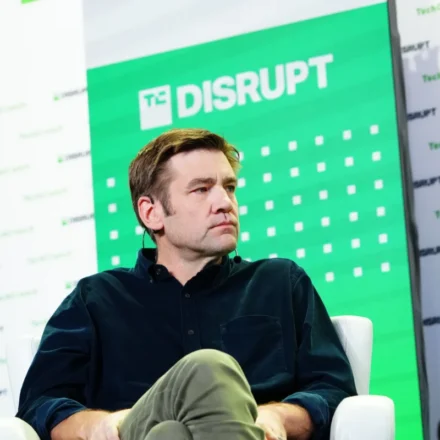



























































In the high-stakes, hyper-accelerated ecosystem of Silicon Valley, where artificial intelligence startups often burn bright and fade faster than a venture capital runway, one newcomer has managed to capture the industry’s collective attention in record time. Instinct, a startup incorporated only last year, has officially catapulted into the "unicorn" stratosphere. Helmed by 23-year-old founder Noah Shinn, the company announced on Wednesday that it has secured a massive $250 million in Series B funding, pushing its total valuation to an eye-watering $2.5 billion.
The funding round, co-led by venture capital heavyweights Index Ventures and Benchmark, signals a profound shift in investor confidence toward "agentic" AI—tools that move beyond simple chatbot functionality to actively execute tasks in the real world. However, as the capital pours in, so does the scrutiny. Despite the buzz surrounding its utility, Instinct is currently navigating a firestorm of controversy regarding its data privacy practices and the extent of the permissions it requires from its users.
Main Facts: The Anatomy of a Deal
The $250 million Series B injection brings Instinct’s total capital raised to $350 million. This rapid accumulation of resources within roughly 18 months of operation is a testament to the insatiable appetite of the venture community for the next generation of AI assistants.
Spear Street Technology, the parent entity behind the Instinct product, has marketed the platform as a comprehensive life-management tool. Unlike traditional AI models that function primarily as search engines or creative writing aids, Instinct is designed to be an "agent." By integrating directly with a user’s existing applications, devices, and digital ecosystems, the AI can perform complex, multi-step tasks. Users interact with the system via natural language through text and voice, effectively offloading the administrative burden of daily life to the algorithm.
Chronology: A Meteoric Ascent
To understand the significance of Instinct’s rise, one must look at the timeline of its emergence:
- 2025: Spear Street Technology is founded by Noah Shinn. Development begins on an "agentic" architecture capable of cross-app communication.
- Early 2026: Instinct enters a closed, private beta phase. Early adopters report high levels of satisfaction, with anecdotal evidence suggesting the AI is successfully managing complex workflows.
- Summer 2026: Word-of-mouth growth accelerates. The simplicity of the user interface—and the apparent capability of the back-end technology—draws interest from top-tier VC firms.
- August 24, 2026: Public reporting begins to highlight growing concerns regarding the app’s invasive permission requirements and potential security vulnerabilities.
- August 26, 2026: Instinct officially announces its $250 million Series B round, valuing the company at $2.5 billion, despite the mounting privacy questions.
Supporting Data: The Utility of the Agent
The value proposition of Instinct lies in its purported ability to act as a digital concierge. In a statement posted to X (formerly Twitter) on Wednesday, founder Noah Shinn highlighted the breadth of tasks the AI has successfully handled for its early user base.
"I’m thrilled with everything our early users are doing with Instinct," Shinn wrote. "They’ve told us they’ve planned cross-country road trips, bought weekly groceries and concert tickets, and cancelled hundreds of dollars of subscriptions. Someone’s even planning their wedding with Instinct."
The data points toward a shift in user behavior: moving away from "prompting" an AI for information and toward "delegating" tasks to an agent. By connecting to banking apps, travel booking platforms, and communication channels, Instinct is attempting to solve the "fragmentation problem" of modern digital life, where users are forced to hop between dozens of apps to manage a single outcome.
Official Responses and the "Lo-Fi" Aesthetic
Instinct has maintained a somewhat enigmatic public profile. Its website is notably "lo-fi"—a stark departure from the polished, motion-heavy landing pages typically associated with billion-dollar AI startups. This minimalist approach appears to be a deliberate branding choice, emphasizing utility and speed over corporate flash.

Noah Shinn’s public communication has remained optimistic, focusing heavily on user-generated success stories. However, the company has been noticeably quieter regarding the specific technical safeguards it has implemented to manage the sensitive data it collects. While the company acknowledges that privacy is a priority, it has yet to release a detailed white paper or third-party audit of its security architecture, leaving many in the cybersecurity community skeptical.
Implications: The Privacy Paradox
The $2.5 billion valuation creates a "privacy paradox." On one hand, the market is betting on the necessity of high-access AI agents that can deeply integrate with our personal data to function effectively. On the other, the privacy community has raised alarms about the "overly generous" permissions the app requires to operate.
The Security Concerns
Critics point to the app’s Terms of Service as a potential minefield for users. Because Instinct acts as an agent, it requires read/write access to sensitive information, including financial transactions, personal schedules, and private communications. Security researchers have expressed concern that if an agent has the power to spend money or cancel subscriptions, it also possesses a high-value target for bad actors. If a malicious entity were to compromise an Instinct account, the damage could be catastrophic, ranging from financial theft to identity fraud.
Regulatory and Ethical Headwinds
As Instinct scales, it will likely face increasing scrutiny from regulators in the U.S. and the EU. The European Union’s AI Act, for instance, places stringent requirements on high-risk AI systems—a category that would almost certainly include an agent capable of autonomous financial and social decision-making.
Furthermore, the rise of "agentic" AI forces a philosophical question: Are we comfortable trading absolute digital autonomy for increased efficiency? As Shinn and his team push forward, the challenge will be to prove that their technology is not only powerful but also trustworthy.
The Road Ahead
The success of Instinct’s Series B round proves that the market is willing to reward bold, disruptive technology even in the face of significant reputational risks. The company now has the war chest to scale its engineering team and refine its privacy protocols.
However, the road to a public offering or an acquisition will be fraught with challenges. The company must balance its rapid growth with a robust commitment to security that satisfies both the mainstream consumer and the skeptical cybersecurity establishment.
If Instinct succeeds, it could define the next decade of personal computing, turning every smartphone into a proactive assistant rather than a reactive tool. If it fails to address the underlying privacy anxieties, it risks becoming a cautionary tale of how high-velocity growth can sometimes outpace the fundamental safety requirements of the users it serves.
For now, the industry watches with bated breath. The summer of 2026 may be remembered as the moment when AI agents moved from the fringes of experimental research to the center of our personal lives, and Instinct is currently leading that charge—for better or for worse.