






















































The Buzzing Pocket: Inside the Relentless Rise of Political Text Message Fundraising

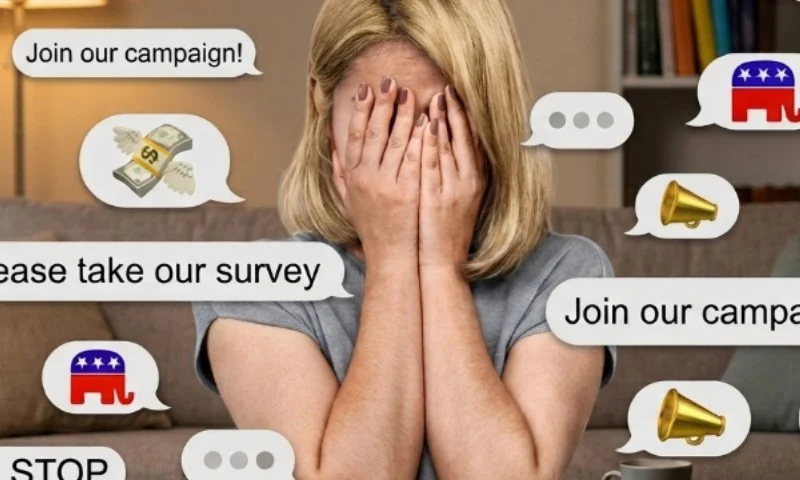
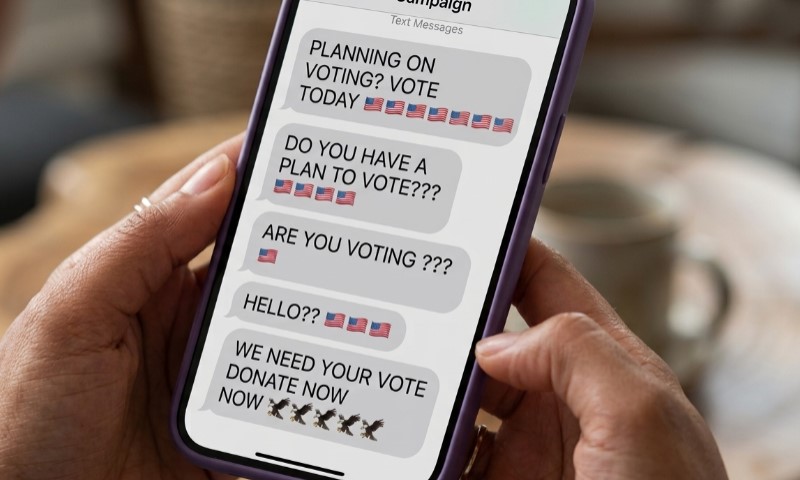
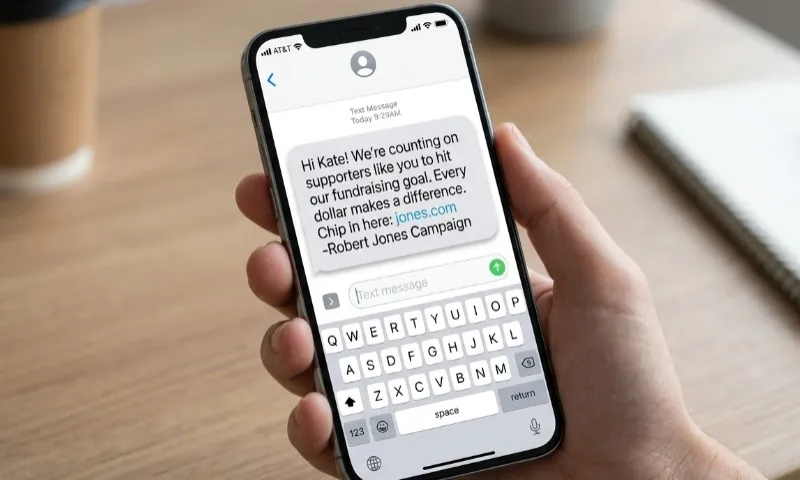
Political fundraising text messages have transitioned from an occasional campaign novelty into an inescapable feature of the modern democratic process. For millions of Americans, mobile phones buzz continuously throughout election cycles with urgent appeals, personalized warnings, and direct donation links.
By July 2024, the volume of political text messages sent to American voters had already eclipsed the total volume recorded for the entirety of 2023. This rapid escalation underscores a fundamental shift in how political operations engage with the electorate. As traditional media channels grow increasingly fragmented, political campaigns have turned to the most direct, personal, and ubiquitous medium available: the SMS inbox.
Main Facts: The Unavoidable Reality of Modern Campaigning
The ubiquity of political text messages is driven by a simple technological reality: nearly every voter carries a smartphone, and the vast majority of text messages are opened within minutes of receipt. For campaign strategists, this direct-to-device access is an invaluable asset. Unlike emails, which are frequently diverted by spam filters, or phone calls, which are routinely ignored or blocked, text messages appear directly on a user’s lock screen, demanding immediate cognitive attention.
Campaigns favor SMS fundraising because it is:
- Inexpensive: Sending a single text message costs fractions of a cent, making mass text distribution far cheaper than television advertisements, radio spots, or direct mail campaigns.
- Immediate: Messages can be drafted, targeted, and delivered to millions of voters within seconds, allowing campaigns to react in real-time to breaking news, debate performances, or legislative votes.
- Frictionless: By embedding direct donation links within the text, campaigns dramatically reduce the steps required for a recipient to make a financial contribution. A voter can transition from reading a text to completing a transaction in under thirty seconds.
- Data-Driven: Texting programs do not operate in a vacuum. They are powered by sophisticated database integrations that merge voter registration records with commercial consumer data, allowing campaigns to target highly specific demographic and behavioral groups.
The underlying economic engine of political texting is its low threshold for profitability. Because the overhead costs of SMS campaigns are minimal, political operations do not require a majority—or even a significant minority—of recipients to respond. A microscopic conversion rate is often more than enough to cover the cost of the entire outreach effort and generate substantial net revenue for the campaign.
Chronology: From Novelty to Digital Dominance
The rise of political texting is the result of a multi-decade evolution in campaign communication technology:
[Early 2000s] Email & TV Dominance
      │
      ▼
[2008] Obama's SMS Alert Program (The Vice-Presidential Announcement)
      │
      ▼
[2016] Emergence of Peer-to-Peer (P2P) Texting Platforms
      │
      ▼
[2020] Pandemic-Era Digital Shift & Hyper-Targeted SMS Campaigns
      │
      ▼
[2024] SMS Deluge: Volume Exceeds Prior Records; Advanced Carrier Filtering
The Early Digital Era (2000–2008)
In the early 2000s, political digital outreach was dominated by email newsletters and static website donations. The turning point occurred during the 2008 presidential campaign, when the Barack Obama campaign famously used SMS to announce Joe Biden as his running mate to millions of supporters simultaneously. This landmark event demonstrated the power of mobile messaging to build massive, direct-to-consumer distribution lists outside of traditional media channels.
The Peer-to-Peer (P2P) Revolution (2016)
Prior to 2016, automated mass texting faced significant legal hurdles under the Telephone Consumer Protection Act (TCPA), which restricted the use of autodialers to send messages to mobile phones without prior consent. To bypass these restrictions, technology firms developed Peer-to-Peer (P2P) texting platforms (such as Hustle and GetThru).
These systems required a campaign staffer or volunteer to manually click "send" for each individual message. Because a human hand initiated every text, regulatory bodies did not classify these platforms as "autodialers," allowing campaigns to legally text millions of unregistered voters without their prior opt-in consent.
The Pandemic and Hyper-Digitalization (2020)
The COVID-19 pandemic severely restricted traditional, in-person campaign activities such as door-to-door canvassing, town halls, and physical rallies. Consequently, campaigns diverted hundreds of millions of dollars into digital infrastructure. SMS became the primary substitute for face-to-face voter contact, resulting in a historic surge in text volume during the 2020 presidential cycle.
The Current Deluge (2024)
By 2024, the political texting ecosystem had reached a state of hyper-saturation. Technological automation, coupled with highly sophisticated voter databases, allowed campaigns to scale their operations to unprecedented heights. By mid-summer 2024, the sheer volume of political texts had already surpassed the total count of the previous year, prompting growing public backlash and increased scrutiny from telecom carriers and federal regulators.
Supporting Data: The High-Yield Economics of Digital Outreach
The financial viability of political texting is illuminated by campaign finance reports and digital marketing metrics. While traditional marketing campaigns measure success through brand engagement and long-term customer loyalty, political SMS campaigns operate on a transactional model optimized for immediate return on investment (ROI).
A concrete example of this high-yield dynamic is documented in a donor conversion study by Political Comms, which analyzed a six-week fundraising push by a statewide gubernatorial campaign:
| Metric | Campaign Data |
|---|---|
| Total Program Cost | $73,500 |
| Total Funds Raised | $427,000 |
| Conversion Rate | 8.3% |
| Average Donation | $47.00 |
In this scenario, the campaign achieved an extraordinary return on investment, demonstrating that personalized, targeted peer-to-peer texting can yield substantial financial rewards far outweighing the operational costs.
However, even when conversion rates are significantly lower, the economics remain highly favorable. If a campaign sends 1,000,000 text messages at an estimated cost of $0.02 per message, the total operational cost is $20,000. If only 0.1% of recipients (1,000 people) donate an average of $25 each, the campaign generates $25,000 in gross contributions, clearing a $5,000 net profit. This mathematical reality explains why campaigns are incentivized to maintain high message volumes, even when the vast majority of recipients ignore or delete the messages.
Partisan Variations in Message Volume
Data tracking also reveals distinct strategic variations between political parties. Throughout much of the 2024 election cycle, messaging-volume tracking indicated that Republican campaigns and affiliated political action committees (PACs) were sending political texts at least twice as often as their Democratic counterparts.
While this aggressive volume generated significant short-term revenue, it also heightened the risk of recipient fatigue, forcing strategists to balance immediate fundraising goals against the long-term erosion of their voter lists.
Official Responses: Regulating the Digital Wild West
The explosive growth of political texting has drawn reactions from federal regulatory bodies, telecommunications carriers, and consumer advocacy groups, all seeking to establish boundaries in a rapidly evolving digital landscape.
                  ┌──────────────────────────────┐
                  │ Federal Communications Comm. │
                  │  (TCPA Rules & Auto-Dialers) │
                  └──────────────┬───────────────┘
                                 │
                                 ▼
                  ┌──────────────────────────────┐
                  │    Mobile Network Carriers   │
                  │   (10DLC & Spam Filtering)   │
                  └──────────────┬───────────────┘
                                 │
                                 ▼
                  ┌──────────────────────────────┐
                  │  Political Campaigns & PACs  │
                  │   (Compliance & P2P Texts)   │
                  └──────────────────────────────┘
Federal Communications Commission (FCC) and the TCPA
The Federal Communications Commission (FCC) enforces the Telephone Consumer Protection Act (TCPA), which protects consumers from unwanted robocalls and automated texts. Historically, the FCC has maintained a strict distinction between fully automated texts (which require prior express consent) and peer-to-peer texts (which do not).
However, in recent years, the FCC has cracked down on "robotexts" by requiring mobile wireless providers to block text messages from highly suspicious sources, including invalid, unallocated, or unused numbers.
The Mobile Carriers’ Self-Regulation (10DLC)
Frustrated by consumer complaints and the strain on their networks, major telecommunications carriers (such as AT&T, Verizon, and T-Mobile) took matters into their own hands by implementing the 10-Digit Long Code (10DLC) registration system. Under these industry-enforced rules:
- All campaigns, political organizations, and brands must register their identity and messaging use cases with a centralized entity known as the Campaign Registry.
- Unregistered traffic is subject to heavy filtering, high surcharges, or outright blocking by the carriers.
- Carriers have implemented sophisticated, AI-driven spam filters that scan message content for flags such as excessive capitalization, repetitive links, and aggressive, scam-like language.
Consumer Advocacy and Privacy Deficit
Consumer advocacy organizations, such as the Electronic Frontier Foundation (EFF), have consistently raised alarms over how political organizations acquire voter phone numbers. Unlike commercial entities, which are tightly bound by state and federal privacy laws (such as the CCPA in California), political campaigns enjoy broad exemptions.
Advocates point out that voter registration files—which often include home addresses, phone numbers, and party affiliations—are public records. These files are routinely merged with commercial data dossiers purchased from third-party data brokers, leaving voters with little to no control over how their personal contact information is bought, sold, and targeted by political actors.
Implications: Voter Fatigue, Privacy Concerns, and the Rise of "Smishing"
The relentless bombardment of SMS inboxes carries profound implications for political discourse, voter behavior, and the security of digital communications.
The Threat of Voter Fatigue
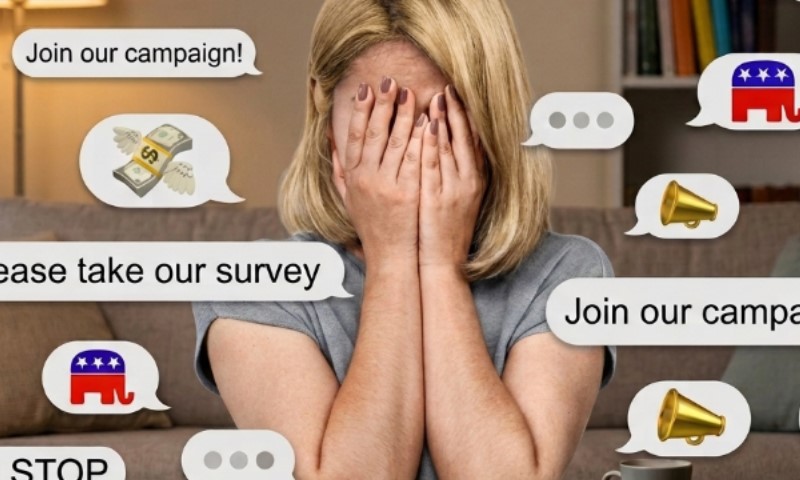
The most immediate consequence of mass political texting is psychological fatigue. When voters are inundated with dozens of urgent, high-stakes messages every day, the psychological impact of those appeals diminishes. Over time, recipients develop a cognitive defense mechanism, mentally classifying all political communications as spam.
This fatigue presents a major challenge for grassroots organizers. If voters routinely mute or delete text messages, campaigns lose a vital channel for authentic, non-fundraising communication, such as volunteer recruitment, polling place reminders, and critical updates on voting rights.
The Dilution of Campaign Finance Transparency
A significant portion of political texting is conducted not by actual candidate campaigns, but by independent Political Action Committees (PACs) and "dark money" groups. Some of these organizations operate under deceptive, highly patriotic-sounding names, sending alarmist texts to solicit donations from unsuspecting supporters.
In many cases, only a small fraction of the money raised by these PACs actually supports the candidates or causes mentioned in the texts. Instead, the bulk of the funds is cycled back into administrative costs, consultant fees, salaries, and further fundraising efforts, creating a self-perpetuating loop of digital solicitations that exploits donor goodwill.
The Rise of Campaign "Smishing" Scams
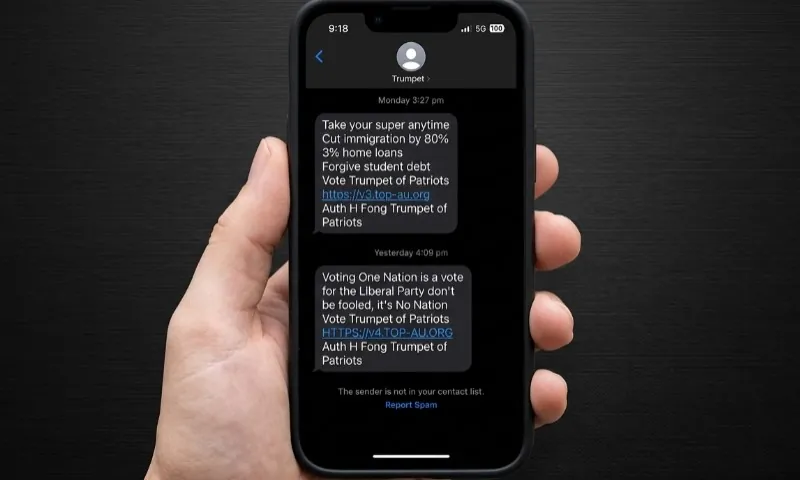
Perhaps the most dangerous byproduct of the political texting boom is the rise of SMS phishing, or "smishing." Because legitimate political texts frequently utilize urgent, emotional language and direct links to payment portals, they have created a perfect blueprint for cybercriminals.
[Legitimate Campaign Text]
"URGENT: Democracy is on the line! Double your impact in the next 10 mins. Click here to donate: [Shortened Link]"

[Fraudulent "Smishing" Text]
"ALERT: Your voter registration is INCOMPLETE! Fix it now to secure your vote: [Malicious Spoof Link]"
Fraudsters regularly impersonate prominent political figures or mimic official campaign branding, setting up lookalike donation pages to steal credit card numbers, bank routing information, and highly sensitive personal data. Because the political texting environment is so saturated and chaotic, many voters struggle to distinguish between a legitimate campaign appeal and a malicious phishing attempt.
Consequently, cybersecurity experts increasingly advise voters to bypass text links entirely. Instead, security professionals recommend that donors navigate directly to a candidate’s official, verified website to make contributions securely.
As the digital landscape continues to evolve, the tension between campaigns seeking cheap, direct voter access and a public demanding digital privacy will only intensify. Until regulatory frameworks or carrier restrictions impose strict limits on political exemptions, the mobile phone will remain a central, highly contested battleground in American politics.