










































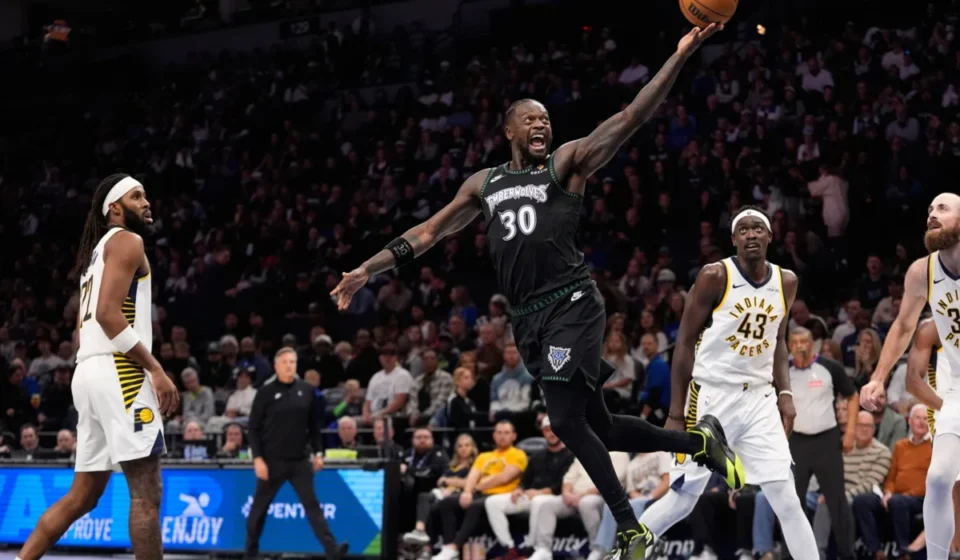

In the high-stakes environment of the NBA playoffs, there exists a specific, agonizing archetype of player: the tantalizing enigma. This is not the player who lacks effort, nor the one who plays with selfish intent. Rather, it is the player who seduces a fanbase with three possessions of sheer, unadulterated dominance—bulldozing through traffic, dominating the glass, and creating offense from thin air—only to spend the subsequent eight minutes drifting on the perimeter, spinning into defensive traps, or reacting a half-second too late to critical rotations.
For the Minnesota Timberwolves, that player is Julius Randle. Following a premature and disappointing exit from the 2026 postseason, the frustration in the Twin Cities has moved past simple critique. It has curdled into a palpable, collective exhaustion. The scrutiny directed at Randle is no longer just about missed shots; it is about the "sinkhole" effect—the perception that whenever a playoff game begins to tilt against Minnesota, the momentum inevitably collapses around his presence on the floor.
The Statistical Reality of a Postseason Downfall
To understand the vitriol, one must look at the cold, hard numbers that define Randle’s recent postseason. During Minnesota’s opening-round series, Randle was serviceable but pedestrian, averaging 15.5 points on 43% shooting from the field and a lackluster 30% from beyond the arc. However, it was the second-round series against the San Antonio Spurs that solidified the narrative of his decline.
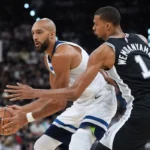
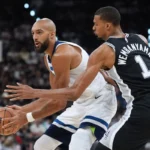
The nadir came in Game 6—a season-ending blowout that saw Randle contribute a mere three points in under 24 minutes of action. It was not merely a "bad night" in the traditional sense; it appeared to be a public unraveling of his utility on the floor. When the postseason lights reach their brightest, the margin for error evaporates, and Randle’s historical flaws—ball-stopping, erratic defensive focus, and a heavy reliance on contested isolation scoring—become glaring liabilities rather than acceptable quirks.
A Chronology of the "Randle Riddle"
The NBA has spent a decade attempting to solve the mystery of Julius Randle. His career has been a tapestry of immense physical gifts woven with persistent inconsistency.
- The Lakers Era (2014–2018): Randle entered the league as a raw, high-motor prospect, often characterized by his explosive athleticism but lacking in refined decision-making.
- The Pelicans Evolution (2018–2019): Under the tutelage of then-assistant coach Chris Finch, Randle posted what was, at the time, the best season of his career. He transformed into a more dynamic offensive engine, proving he could function in a high-octane system.
- The Knicks Tenure (2019–2024): In New York, Randle became a polarizing figure. He was the primary catalyst for the franchise’s return to relevance, yet simultaneously became the symbol of their perceived ceiling, ultimately failing to guide the team to the championship heights demanded by the market.
- The Minnesota Experiment (2024–2026): Inheriting the volatility of his previous stops, the Timberwolves leaned into the familiarity between Randle and head coach Chris Finch. Despite public backing from his coach, the "Randle experiment" has now reached a critical inflection point as the team looks to realign its core.
The Finch Factor: Trust vs. Tactical Necessity
Perhaps the most compelling subplot in this saga is the unwavering bond between Julius Randle and head coach Chris Finch. Their history dates back to New Orleans, and that familiarity has served as a bedrock for Randle’s tenure in Minnesota. Finch has repeatedly shielded Randle from media criticism, viewing him through a lens of potential that many fans have long since abandoned.
Finch’s perspective is rooted in the "best-case" version of Randle: a 250-pound, left-handed force who can bully his way to the rim, relieve secondary playmaking duties from Anthony Edwards, and stabilize an offense when spacing breaks down. During the regular season, this formula worked, with Randle averaging 21.1 points, 6.7 rebounds, and 5 assists.
However, the disconnect lies in the transition from regular-season basketball to the postseason. The playoffs strip away the ambiguity of the 82-game schedule. When the game slows down and defenses tighten, the limitations of a player who relies on physicality over finesse become magnified. While Finch sees the veteran who can carry a team, the postseason reality often presents a player who slows the pace, clogs the lane, and disrupts the rhythm that allows Anthony Edwards to thrive.
Supporting Data: The Cost of Expectation
To categorize Randle as a "bust" is a fundamental misreading of the situation. The issue is not that Randle lacks talent; it is that he is profoundly overextended.
NBA teams are often blinded by the "flashes." The league is addicted to the illusion of self-created offense, and Randle’s ability to barrel into a defense and score creates a projection of superstar status that he may not be equipped to sustain. He did not ask to be the second-most important player on a championship-contending roster; he did not orchestrate the trade that brought him to Minnesota in place of franchise staples. The organization saw his physical profile and the potential for a "big three" dynamic, effectively paying him and positioning him as a cornerstone.
When those projections fail, the blame is often misdirected at the player for failing to be a superstar, rather than at the front office for banking on a player to be something he has never consistently been.
Off-Court Maturity vs. On-Court Performance
It is crucial to note the dissonance between the public narrative of Randle’s play and his reputation behind the scenes. Unlike many players who struggle with the spotlight, Randle is widely regarded by teammates and coaching staff as a consummate professional. He has been candid about his journey toward mental clarity, the importance of his family, and his efforts to mature as he enters the veteran stage of his career.
This human element makes the "pile-on" from fans feel disproportionate. There is a strange dishonesty in treating a player as a villain for failing to meet an external expectation that was arguably unrealistic from the start. Randle remains a player of significant skill, yet he is trapped by the narrative of his own compensation and draft pedigree.
Strategic Implications for the Timberwolves
As the Timberwolves enter a pivotal offseason, the implications of the Randle situation are clear: the team is at a crossroads. The future of the franchise is tethered to the explosive, improvisational, and fast-paced brilliance of Anthony Edwards. For Minnesota to reach the next level, the roster must be built to maximize that fluidity.
Randle’s current role creates "sticky" possessions—moments where the ball stops, the defense sets, and the flow of the game grinds to a halt. The harsh truth is that the Timberwolves do not need Randle to be a failure to realize he is a poor fit; they simply need him to be limited.
The team’s success depends on a roster that complements Edwards’ pace. If the floor is not open, and if the ball is not moving, the chaos that usually works in Minnesota’s favor begins to work against them. Whether through a trade, a shift in his usage rate, or a complete reimagining of his role, the Timberwolves must address the mismatch between their tactical needs and their current personnel.
Conclusion: A Lesson in Projection
The story of Julius Randle in Minnesota is a cautionary tale for the modern NBA. It is a story of a player talented enough to convince a front office, flawed enough to frustrate a fanbase, and human enough to be unfairly vilified for the team’s collective shortcomings.
Randle is not the sole architect of Minnesota’s postseason failure, but he is undeniably its clearest symbol. He serves as a reminder that in a league obsessed with the "next big thing" and the potential of physical outliers, the most important trait remains the ability to fit into a coherent, functioning system. For the Timberwolves, the task is no longer to "solve" Randle, but to build a future that can exist independently of his inconsistencies. The fans’ frustration is earned, the playoff tape is unforgiving, and the path forward requires a cold, clinical look at what the team needs—not what it was promised.