









































The Green Frontier: Navigating the Complex Zoning and Regulatory Landscape of Minnesota’s Cannabis Industry

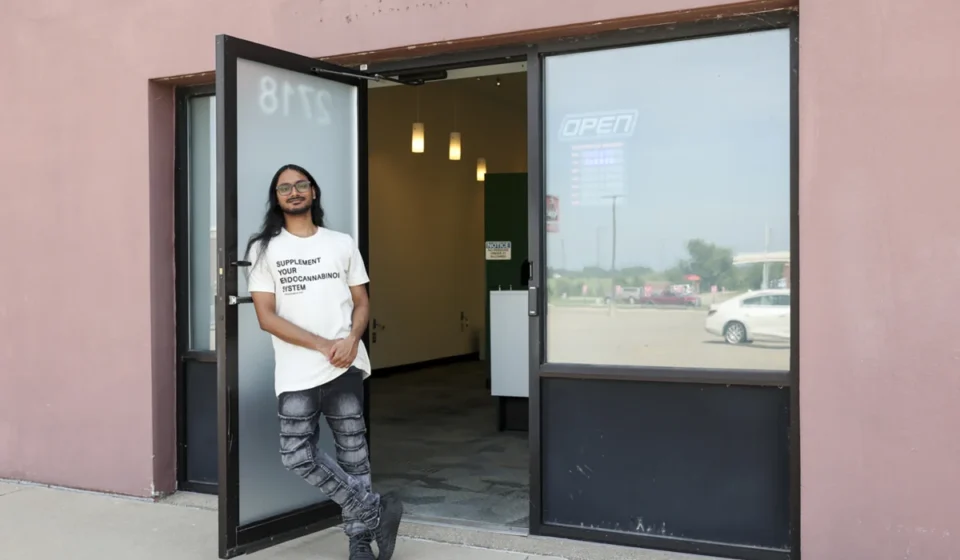
ALBERT LEA, MN – In the quiet northern reaches of Albert Lea, just a short drive from the Iowa border, Jacob Schlichter stands before a retail space that represents more than just a business venture; it is the culmination of a grueling navigational exercise through a labyrinth of local and state regulations. Schlichter, the 29-year-old owner of "The Smoking Tree," spent months scouting nearly two dozen properties, only to be rebuffed by a recurring trio of obstacles: landlord hesitation, insurance complications, and, most frequently, the rigid boundaries of municipal zoning.
As Minnesota’s legal cannabis market moves from legislative theory to retail reality, Schlichter’s experience has become a blueprint for the challenges facing a new generation of "social equity" entrepreneurs. His journey highlights a unique friction in Minnesota’s law: while cities and counties are prohibited from banning cannabis businesses entirely, they possess significant power to dictate exactly where those businesses can plant their roots.
Main Facts: The Framework of Local Control
Minnesota became the 23rd state to legalize recreational cannabis in 2023, establishing the Office of Cannabis Management (OCM) to oversee a market designed to prioritize social equity and local access. However, the state’s approach to municipal authority is distinct from many of its predecessors. Unlike Michigan or New York, where hundreds of municipalities "opted out" of the retail market, Minnesota law mandates that local governments allow a minimum number of cannabis retailers based on population.
The statutory floor is set at one retail registration for every 12,500 residents. For sparsely populated regions like Traverse and Lake of the Woods counties, this means only a single dispensary may be required to serve the entire jurisdiction. In larger hubs like Duluth, St. Cloud, and Rochester, the math allows for a handful of licenses, yet the actual placement of these shops remains a contentious issue.
Cities have utilized "buffer zones" as their primary tool for regulation. These zones create a mandatory distance between cannabis businesses and "sensitive" locations such as schools, parks, daycares, and houses of worship. While the state provides a framework, the specifics vary wildly:
- Albert Lea and Rochester: Maintain a 1,000-foot buffer from schools.
- Duluth: Opted for a more compact 400-foot buffer.
- Faribault: Established a 250-foot minimum.
- Moorhead: Stands as a notable outlier, choosing not to implement specific buffers or caps on the number of businesses, leaning instead into a free-market approach.
Chronology: From Legislation to the "First-in-State" Milestone
The path to Schlichter’s nearly-open dispensary began in May 2023, when Minnesota Governor Tim Walz signed the recreational cannabis bill into law. The legislation was designed with a "slow-roll" strategy, intended to prevent a corporate "gold rush" and ensure that local residents and those disproportionately affected by previous prohibition had a fair shot at the market.
Summer 2023 – Early 2024: The OCM began the arduous task of drafting thousands of pages of regulations, covering everything from seed-to-sale tracking to packaging requirements. During this period, municipalities across Greater Minnesota began drafting their own ordinances, often debating late into the night about the definition of a "public park" or the appropriate distance from a church.

Late 2024: The state launched its Social Equity Program. This initiative targeted military veterans, residents of high-poverty areas, and individuals with prior marijuana-related convictions. Schlichter, a designer and photographer by trade, qualified under the high-poverty census tract criteria for his area.
June 2025: Schlichter achieved a significant milestone, becoming the first micro-retail applicant in the state’s social equity program to pass a final licensing inspection. His success marked a turning point for the OCM, proving that the social equity framework could successfully move an applicant from the "lottery" phase to a physical, inspected storefront.
July 2025: Currently, Schlichter and several other entrepreneurs are in the "waiting game." With inspections complete, the final hurdles involve paying state licensing fees and obtaining local municipal permits to begin sales.
Supporting Data: The Math of the Market
The OCM’s population-based formula has created a predictable, if limited, ceiling for the number of dispensaries in Minnesota’s major cities. Based on current census data and local ordinances:
- Rochester: Under the authority of Olmsted County, the cap has been set at 14 registrations. However, the policy allows individual townships and cities within the county to expand that number if they choose.
- Duluth: With its population ratio, the city is slated for approximately seven retail shops.
- St. Cloud: The limit stands at six licenses.
- Mankato: The city is currently prepared to host four dispensaries.
- Small-Town Minimums: In towns like St. Joseph (population ~7,000), the city is only required to allow one license, though they have chosen to pursue a unique "municipal" model.
The economic implications of these caps are significant. By limiting supply, cities hope to prevent the "clustering" of cannabis shops that has occurred in states like Oregon or Colorado, which some local officials argue can lead to neighborhood blight. Conversely, advocates like the Marijuana Policy Project argue that overly restrictive zoning—such as Albert Lea’s 1,000-foot buffer—can effectively create a "de facto" ban by making it nearly impossible to find a compliant building that is also commercially viable.
Official Responses: Revenue vs. Regulation
The perspective of local officials varies from cautious pragmatism to enthusiastic embrace. In St. Joseph, Mayor Adam Scepaniak has led the charge for a municipal dispensary—a model where the city itself owns and operates the store, similar to a municipal liquor store.
"We see cannabis and cannabinoid products through the lens of what they can provide," Scepaniak stated. "It is an alternative to pharmaceutical drugs for pain management and a holistic product to manage ailments."

From a fiscal standpoint, Scepaniak is even more direct: "It is an opportunity to acquire revenue that doesn’t involve taxing our residents more, which opens the door for funding projects we couldn’t otherwise entertain due to lack of funds."
However, the state-level perspective emphasizes the social corrective nature of the law. Karen O’Keefe, director of state policies at the Marijuana Policy Project, notes that Minnesota’s refusal to let cities "opt out" is a strategic move to kill the illicit market.
"Minnesota is a little bit more in favor of having local access than other states," O’Keefe said. She pointed to her home state of Michigan, where widespread municipal opt-outs served only to "prop up illicit markets in prohibition areas." By ensuring every Minnesotan is within a reasonable distance of a legal shop, the OCM hopes to ensure product safety and tax compliance.
Implications: Social Equity and the Future of Rural Retail
The success or failure of entrepreneurs like Jacob Schlichter carries heavy implications for the "Minnesota Model" of legalization. Schlichter’s motivation is deeply personal; he views legal, regulated cannabis as a vital alternative to the lethal street drugs—specifically heroin and fentanyl-laced meth—that have claimed the lives of his friends in the Albert Lea and Austin areas.
"Friends overdosed and died… I was like, ‘Hey, maybe we should do something else about this,’" Schlichter remarked. His "The Smoking Tree" dispensary aims to offer a safe, tested environment that contrasts sharply with the dangerous uncertainty of the black market.
The implications of the current regulatory environment include:
- The Barrier of Entry: Even with social equity status, the "laborious process" of finding a location remains a major hurdle. If only those with significant capital can afford the long wait times and the high costs of "compliant" real estate, the social equity goals of the state may be undermined.
- The Rural-Urban Divide: While Moorhead is taking a "hands-off" approach, other rural cities are being much more restrictive. This could lead to a "cannabis tourism" effect where residents of more restrictive towns travel to places like Moorhead or St. Joseph to make their purchases, shifting tax revenue away from more conservative municipalities.
- The Municipal Experiment: If St. Joseph’s municipal dispensary proves profitable and socially responsible, it could trigger a wave of city-owned cannabis stores across the Midwest, fundamentally changing how local governments view "vice" industries as revenue streams.
As Schlichter prepares to hang the "Open" sign on his door, the state watches closely. His experience suggests that while the "Green Frontier" is open, the path is narrow, heavily regulated, and requires a level of persistence that only a local entrepreneur with a stake in the community’s health can maintain. For Schlichter, the slow rollout wasn’t an obstacle—it was the only reason he had a seat at the table. "For someone like me to be in this position," he said, "it says a lot."