




















































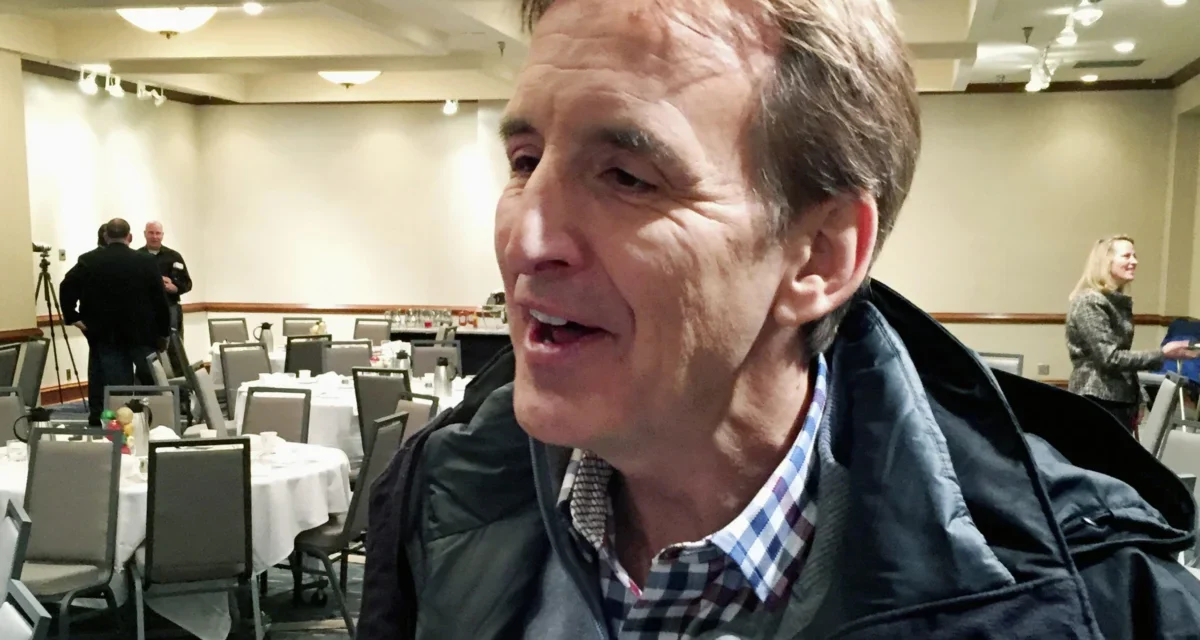






In the high-stakes arena of Washington energy policy, few figures represent as stark a shift in tactical alignment as Tim Pawlenty. The two-term former Republican governor of Minnesota and 2012 presidential contender—a man once synonymous with the fiscal conservatism of the mid-western GOP—has reemerged not as a candidate, but as the premier evangelist for the American solar industry.
As the newly appointed president and CEO of the Solar Energy Industries Association (SEIA), the nation’s largest solar-specific trade group, Pawlenty finds himself navigating a paradox. He has stepped into the leadership role at a moment of profound political volatility, tasked with guiding a sector that is simultaneously breaking records for deployment while reeling from a legislative gut-punch in the nation’s capital.
The Political Landscape: A Post-IRA Reality
The solar industry entered the mid-2020s with high expectations, buoyed by the historic tailwinds of the 2022 Inflation Reduction Act (IRA). For a brief window, it appeared that federal support would provide an ironclad foundation for a green energy transition. However, the 2024 election cycle brought a sweeping Republican victory in Washington, leading to the enactment of the "One Big Beautiful Bill" Act—a legislative maneuver that effectively dismantled key pillars of the previous climate law.
Speaking during a keynote interview at Canary Media’s Climate Week NYC summit, Pawlenty did not mince words regarding the current climate in Washington. "The current state is relatively bleak," he admitted, characterizing the industry’s immediate political clout as having been significantly diminished by the recent legislative reversal.
However, Pawlenty’s tenure is defined by a characteristic pragmatic optimism. "Nothing stays the same in politics, and there’s hope in what’s to come in the future," he noted. For an industry that has become accustomed to the aggressive, top-down policy support of the early 2020s, Pawlenty’s arrival signals a pivot toward a more durable, bipartisan, and politically resilient strategy.
A Chronology of Change: From 2012 to Today
To understand Pawlenty’s current role, one must look at the arc of his political evolution. During his 2012 presidential run, energy debates were largely focused on traditional fossil fuels and the budding debate over hydraulic fracturing. Pawlenty was a conventional voice of the Republican establishment, focused on economic growth and regulatory restraint.
Following his exit from the presidential race and his subsequent time in the private sector, Pawlenty observed the tectonic shifts in the energy market. By the time he took the helm at SEIA in June 2026, the energy sector had moved past the ideological debates of 2012. Solar is no longer an alternative energy; it is the dominant form of new capacity added to the U.S. grid.

- 2012: Pawlenty competes in the Republican presidential primary, where energy policy centers on domestic oil and gas production.
- 2022: The Biden administration passes the Inflation Reduction Act, sparking a massive, government-incentivized solar boom.
- 2024: A Republican wave in D.C. leads to the "One Big Beautiful Bill" Act, which pivots away from climate-centric incentives.
- 2026: Tim Pawlenty takes over SEIA, aiming to translate solar’s economic success into a language that resonates with the new, more conservative political consensus.
Supporting Data: Why the Business Case Holds
Despite the legislative turbulence, the fundamental business case for solar remains overwhelmingly strong. Solar is, by a wide margin, the largest source of new electricity generation currently under construction in the United States.
The primary driver is an "unbelievable, exploding demand for energy" across the country, fueled by the rise of AI data centers, the electrification of the transport sector, and the domestic manufacturing resurgence. Pawlenty argues that the industry’s greatest asset is not federal policy, but economic reality.
"Solar and storage is the most cost-effective form of energy in the country, without question," Pawlenty stated. "Eventually, the policymakers catch up to the facts. We have really good facts on our side. Some of the old narratives—some of the old spins—are out of date."
One of the most persistent political critiques of solar—that it is a conduit for Chinese manufacturing dominance—is also being challenged by shifting trade realities. According to Pawlenty, U.S. trade policy and a surge in domestic manufacturing capacity have effectively decoupled the domestic solar supply chain from reliance on Chinese imports. By focusing on "American-made" as a pillar of energy security, the industry is aligning itself with the current administration’s protectionist leanings.
Official Strategy: The Bipartisan Pivot
Pawlenty’s strategy at SEIA is to move away from the "all-or-nothing" legislative approach of the past. He advocates for policies that are "durable"—those that can survive the pendulum swings of American electoral politics.
"While it’s very tempting to just say, ‘Let’s roll whenever we can roll,’ I think it’s wise to at least take a half a step back and say, ‘Are we advocating for policies that are likely to survive political turbulence and change?’" he explained.
This approach involves two key prongs:

- Turbocharging Domestic Manufacturing: By leaning into the incentives that survived the "One Big Beautiful Bill" Act, the industry is positioning itself as an engine of American industrial policy.
- National Security Messaging: Pawlenty is reframing solar through the lens of sovereignty. "Iran can’t block the sun," he noted, highlighting that solar energy provides a level of grid independence that fossil fuels, vulnerable to global supply chain disruptions and geopolitical instability, cannot guarantee.
The Rural Frontier and Property Rights
Perhaps the most significant challenge facing the solar industry is the "Not In My Backyard" (NIMBY) sentiment in rural communities. With 87% of U.S. clean energy generation now located in rural areas, the industry is physically encroaching on traditional landscapes.
Misinformation on social media has exacerbated tensions, painting solar developers as encroachers on legacy farmland. Pawlenty, who hails from a farm state, is uniquely positioned to bridge this divide. He intends to rebrand solar deployment as a champion of private property rights.
"From a conservative standpoint, land rights are pretty important," Pawlenty argued. "We want to make sure that those are not lost in the shuffle either, as we talk about what farmers can do with their land as the owners of land." By positioning solar as a voluntary economic opportunity for farmers—allowing them to harvest sunlight as they would crops—the industry is attempting to turn local opposition into local partnership.
Implications for the Future
The arrival of Tim Pawlenty at the head of SEIA is a clear signal that the solar industry has matured. It is moving away from its reliance on climate-change-centric lobbying and toward a more traditional, bipartisan, and economically focused advocacy model.
If Pawlenty succeeds, he will turn the solar industry into a staple of the American right-leaning economic agenda, rooted in the values of national security, property rights, and domestic manufacturing. The "bleak" political reality he inherited may prove to be the crucible in which the industry finds its most enduring voice.
For now, the sector watches and waits. The data is on the side of solar, the demand is unprecedented, and the technology is cheaper than ever. Whether that will be enough to convince a skeptical political class remains the central question of Pawlenty’s tenure. As he noted, "If you bring policymakers to the current story with current facts," the narrative of American energy is destined to change—and Pawlenty is betting his reputation that he is the man to lead that transition.