






















































Steady Hand in a Budding Market: Eric Taubel Named Permanent Director of Minnesota’s Office of Cannabis Management

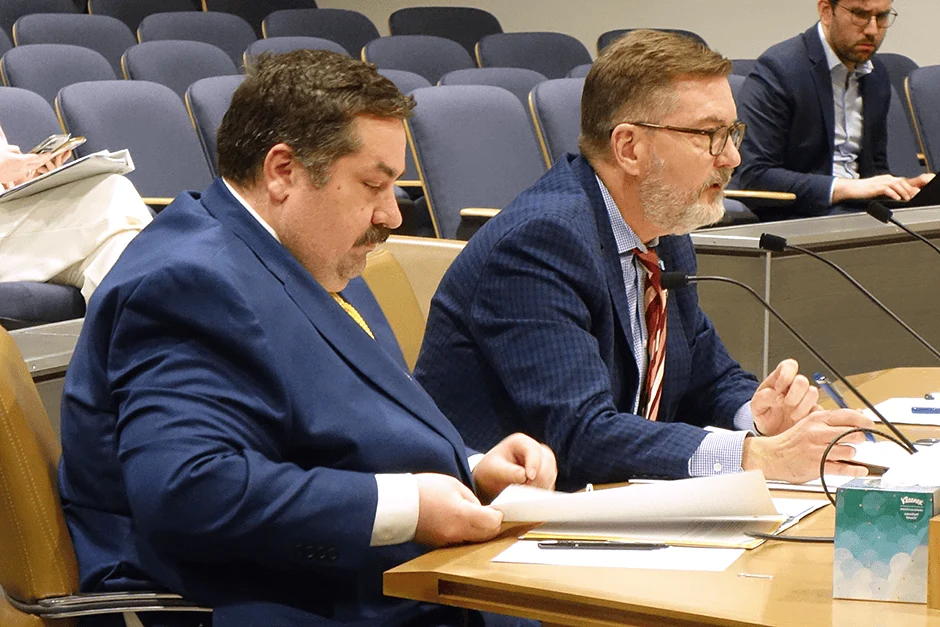
ST. PAUL, MN — In a move signaled by months of administrative stabilization and high-level political praise, Governor Tim Walz officially announced on Wednesday that Eric Taubel will serve as the permanent Executive Director of the Minnesota Office of Cannabis Management (OCM). Taubel, who has led the agency in an interim capacity since January, is tasked with overseeing the complex rollout of the state’s burgeoning adult-use marijuana market—a process that has faced significant logistical hurdles and leadership transitions since legalization was signed into law in 2023.
The appointment marks a pivotal moment for Minnesota’s cannabis industry. After a "rocky" start characterized by a high-profile leadership vacancy and a regulatory framework still in its infancy, Taubel’s elevation is seen as a commitment to continuity and legal rigor.
Main Facts: A Permanent Leader for a New Frontier
Governor Walz’s decision to remove the "interim" tag from Taubel’s title follows a period of intense scrutiny for the OCM. Taubel previously served as the agency’s general counsel, a background that Walz highlighted as essential for navigating the dense legal thicket of the state’s cannabis statutes.
“I think he’s done a fantastic job,” Governor Walz stated in a recent interview, acknowledging the difficulties of the initial rollout. In a formal statement released Wednesday, Walz added that over the past eight months, Taubel has "ensured that the priorities that drove cannabis legalization in Minnesota are reflected in Minnesota’s emerging market."
The OCM is responsible for nearly every facet of the industry, from licensing cultivators and retailers to enforcing safety standards and managing the state’s social equity program. Taubel’s permanent appointment provides a sense of certainty to investors, municipal leaders, and advocates who have been waiting for the state to move from the "exploratory" phase to a fully operational retail market.
Chronology: From Legalization to Leadership Stability
The path to Taubel’s appointment has been anything but linear. To understand the significance of this leadership choice, one must look at the timeline of Minnesota’s cannabis journey:
- May 2023: Governor Walz signs House File 100 into law, making Minnesota the 23rd state to legalize recreational marijuana for adults 21 and older. The law established the OCM and set a target for a full retail market launch in 2025.
- September 2023: The search for an inaugural director hits a major snag. The first appointee, Erin DuPree, resigned just one day after her appointment following reports regarding her previous business practices and the sale of products that exceeded state limits on THC.
- Late 2023: The OCM operates under temporary administrative leadership while the Governor’s office reopens the search and strengthens the vetting process.
- January 2024: Eric Taubel, then the agency’s general counsel, is named interim director. His background in law and his familiarity with the specific language of the Minnesota cannabis act allowed him to hit the ground running.
- Spring 2024: The OCM focuses on "social equity" applicants, holding lotteries and issuing pre-approvals to ensure that communities disproportionately affected by previous prohibition have a foothold in the new market.
- May 2024: The state enters a historic agreement with the White Earth Nation, allowing the tribe to operate dispensaries in off-reservation locations like St. Cloud and Moorhead, signaling a collaborative approach with tribal sovereignty.
- August 2024: Following months of administrative progress and the successful launch of several tribal and municipal initiatives, Walz officially names Taubel the permanent director.
Supporting Data: The Current State of the Market
While the general retail market is not expected to be fully operational for non-equity applicants until 2025, several data points illustrate the scale of the task currently under Taubel’s purview:
Tribal Leadership
Minnesota’s 11 tribal nations have been the vanguard of the retail market. Because of their sovereign status, tribes like the Red Lake Nation and White Earth Nation were able to open dispensaries shortly after legalization. As of August 2024, tribal dispensaries remain the primary source for legal adult-use cannabis in the state.
Municipal Exploration
The OCM is currently working with at least 13 Minnesota cities that are in the exploratory stages of opening publicly owned "municipal" pot shops. This model, similar to municipal liquor stores, allows local governments to retain profits for community reinvestment.
The Licensing Pipeline
In a recent interview, Taubel provided an ambitious outlook for the remainder of the year. He predicted that the OCM would grant final license status to between 100 and 150 cannabis retailers by the end of the 2024 calendar year. This represents a significant acceleration of the regulatory process.
Recent Approvals and Friction
Last month, the OCM granted final approval for five businesses to begin operations. however, this progress has met localized resistance. In Albert Lea, the City Council recently denied a business registration license to "The Smoking Tree," despite the business having state-level approval. This 3-3 tie vote (resulting in a denial) highlights a growing tension between state authority and local zoning or licensing powers.
Official Responses: Shifting the Onus to the Industry
The rhetoric from the OCM has shifted under Taubel’s leadership from one of "building the plane while flying it" to one of strict regulatory adherence. Taubel has been clear that while the state is facilitating the market, the responsibility for success lies with the entrepreneurs.
“We’ve transitioned to the point where the onus is on the applicant and a prospective business owner,” Taubel said. He emphasized that the regulatory framework is now established enough that delays in individual business launches are often due to the applicants’ inability to meet the rigorous standards set by the state.
Advocates for social equity have largely praised Taubel’s steady hand but remain cautious. "Stability at the top of the OCM is good for everyone," said one industry consultant. "But the real test will be how Taubel handles the ‘Albert Lea problem’—ensuring that local governments don’t use technicalities to de facto ban a legal state industry."
Governor Walz’s endorsement remains the strongest signal of Taubel’s performance. By praising Taubel for turning around a "rocky" process, Walz is signaling to the legislature and the public that the OCM has moved past its initial growing pains.
Implications: Challenges on the Horizon
The transition from interim to permanent director does not mean the road ahead is without obstacles. Several critical issues will define Taubel’s tenure over the next 18 months:
1. State vs. Local Authority
The situation in Albert Lea is likely a harbinger of future legal battles. Minnesota’s cannabis law (Chapter 342) limits the ability of local governments to ban cannabis businesses entirely, but it does allow for "reasonable" time, place, and manner restrictions. Defining what is "reasonable" will likely require Taubel’s legal expertise and potentially, intervention from the State Attorney General.
2. The 2025 General Launch
While social equity applicants are getting a head start, the "general" licensing round in 2025 will see a massive influx of applications from larger entities and out-of-state investors. Taubel will need to ensure the OCM infrastructure can handle the volume without the multi-year backlogs seen in states like New York or California.
3. Eliminating the Illicit Market
A primary goal of legalization was to dismantle the illicit market. However, if the state-approved shops are delayed by local bureaucracy or if the tax structure makes legal products significantly more expensive than "street" products, the illicit market will continue to thrive. Taubel’s ability to get 150 retailers open by year-end is a critical metric for this goal.
4. Supply Chain Integrity
As retail licenses are issued, the OCM must also ensure that cultivators and processors are ready to meet demand. A shortage of legal supply at the launch of the general market could lead to price spikes and consumer frustration.
5. Public Health and Safety
Beyond business, Taubel oversees the implementation of testing standards for pesticides and heavy metals, as well as youth prevention campaigns. Maintaining public trust in the safety of the legal supply is paramount to the OCM’s mission.
Conclusion
Eric Taubel’s appointment as the permanent director of the Office of Cannabis Management brings a much-needed sense of order to a department that began its life in chaos. With the full backing of Governor Walz and a clear mandate to accelerate licensing, Taubel is now the most influential figure in Minnesota’s newest multi-million dollar industry.
As the state moves toward the end of 2024, the focus will shift from the halls of the St. Paul bureaucracy to the storefronts of cities across the North Star State. Whether Taubel can meet his goal of 150 retailers by December—and whether he can navigate the simmering conflict with local municipalities—will determine if Minnesota’s cannabis experiment is remembered as a success or a cautionary tale of regulatory overreach. For now, the "onus," as Taubel says, is on the applicants—but the eyes of the state remain firmly on him.