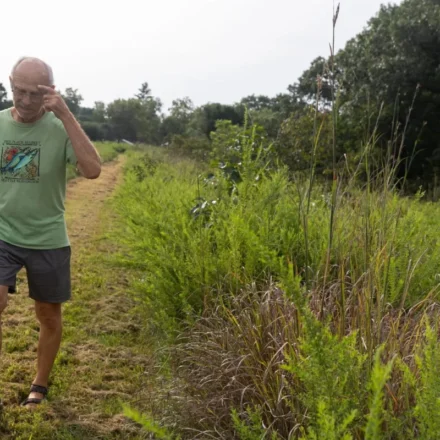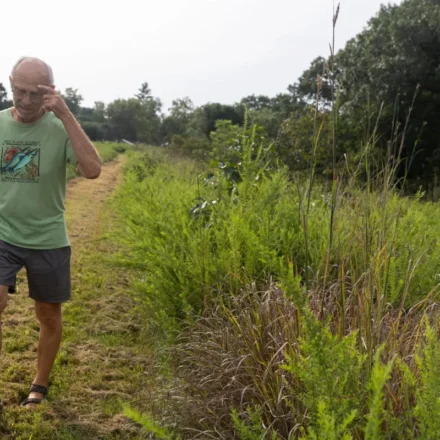




















































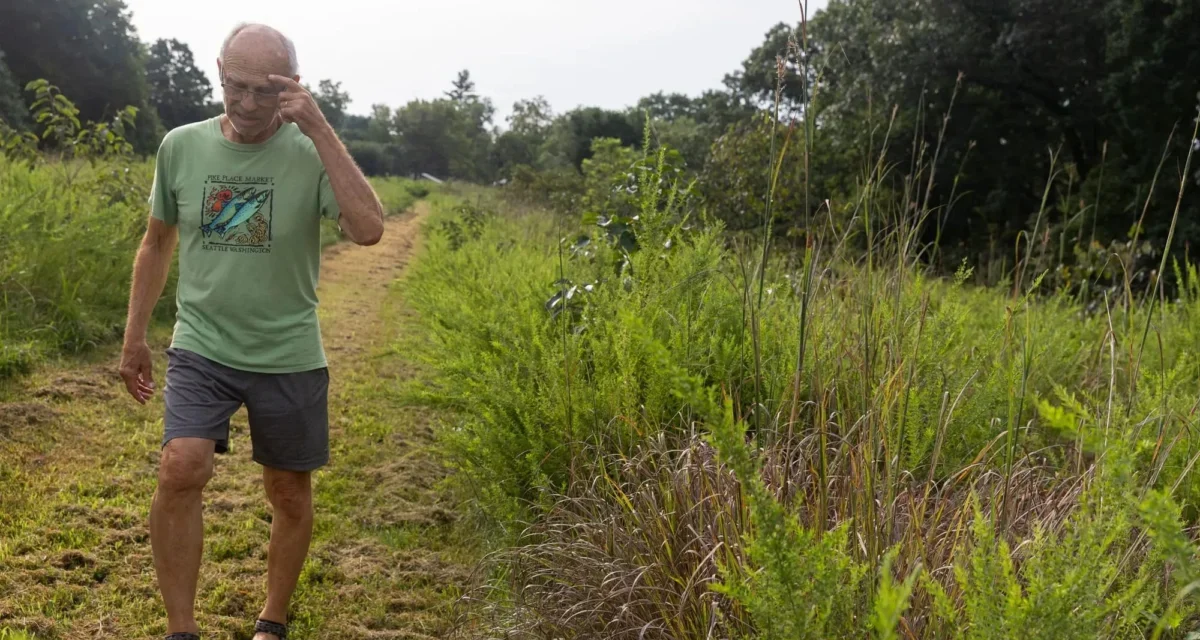





ASHLAND, Mo. — On a sweltering August morning, Dan Kuebler walks the perimeter of the 30-acre plot that defined his life for over three decades. The land, once a tapestry of diverse vegetable crops and the source of artisan ferments sold at the Columbia Farmers Market, remains peaceful. But the quiet belies a tectonic shift occurring across the American Midwest. As suburban sprawl pushes outward from cities like Columbia and Jefferson City, the very soil that has sustained local food systems is being traded for asphalt, suburban cul-de-sacs, and commercial development.
For farmers like Kuebler, the decision of what to do with their land as they approach retirement has become a moral and financial crossroads. The choice is stark: sell to the highest bidder—often a developer looking to carve the acreage into lucrative five-acre residential parcels—or commit to a permanent legal restriction that ensures the dirt remains dirt, forever.
The Shrinking Horizon: A Crisis of Land Use
The loss of American farmland is not merely a local inconvenience; it is a national trend with staggering implications. According to the American Farmland Trust, the United States loses approximately 2,000 acres of farmland every day to development. The organization projects that by 2040, an additional 18.4 million acres—a landmass roughly equivalent to the size of South Carolina—will be converted to non-agricultural uses.
This "urban sprawl" is compounded by a phenomenon known as low-density residential development. Between 2001 and 2016, nearly 7 million acres of agricultural land were consumed by rural housing projects. For the farmers who have spent lifetimes stewarding this soil, the encroachment feels like a slow-motion erasure of their legacy.
"People who have spent their entire lives working their land… you become so attached to it," says Josh Wright of the American Farmland Trust. "All of your effort could be snatched up and paved over as soon as you sell the property."
Chronology of a Commitment
Dan Kuebler’s journey to preservation began long before the concrete reached his doorstep. When he purchased his Ashland farm in 1977, the town was a sleepy rural outpost. A late-bloomer to agriculture, Kuebler began farming at 40, balancing the labor-intensive demands of a 30-acre vegetable operation with his career as an in-home physical therapist.
Over the next 33 years, his farm became a fixture of the regional food economy. He was a vocal advocate for the Columbia Farmers Market, pushing for the permanent, modern shelter that now serves as the community’s agricultural hub. However, as the dead-end road leading to his property began to see its neighboring plots sold and subdivided, Kuebler realized his retirement plans would require a protective strategy.
"I don’t want it split up into five-acre plots and become a development," Kuebler said. "That is just like… that’s sacrilege."
In the final years of his ownership, Kuebler engaged with the Greenbelt Land Trust of Mid-Missouri. The result was an agricultural easement—a legal instrument attached to the property deed that permanently prohibits subdivision and non-agricultural development. While the legal process took years and cost approximately $20,000 in appraisals and surveys, it achieved his primary goal: the land is now legally bound to stay in production, regardless of who holds the title.
The Economic Paradox: Why Farming is Labeled the "Worst Use"
The primary obstacle to widespread land preservation is the brutal math of the real estate market. In the eyes of an appraiser, farmland rarely represents the "best use" of a property. When land is valued based on its potential for residential or commercial development, the price tag skyrockets.
Placing a conservation easement on a property strips away these development rights, which can reduce the land’s appraised value by as much as 65%.
"Whenever you go to sell your property, it’s going to be appraised, and that’s going to be judged at best, highest dollar—and they call it ‘best use’ in the industry," Wright explains. "Unfortunately, farming is probably considered the worst use."
For many aging farmers, their land is their primary retirement fund. The choice to preserve the land is effectively a choice to leave hundreds of thousands of dollars on the table. This is the reality faced by Rick Mareske, who has operated a 40-acre berry and forest farm in Kansas City, Kansas, for two decades.
"The cons are, it’s expensive," Mareske says of the easement process. "It’s like $20,000 or $25,000 just to do it, and then you lose money. We’re trying to make it as beautiful as possible and as enticing as possible for someone to buy it and keep it going the way we have it."
Official Responses and Federal Intervention
Recognizing the threat to national food security, Congress expanded the Agricultural Conservation Easement Program (ACEP-ALE) over a decade ago. The program provides federal funding to help compensate farmers for the drop in property value caused by easements. Current funding sits at roughly $650 million annually.
However, the efficacy of this program remains a point of contention. The funds, which are distributed through local land trusts and state agencies, often struggle to bridge the gap between agricultural value and development value. Furthermore, the bureaucratic burden is immense.
Eric Gramlich of the Ozark Land Trust notes that while federal funding offers a "financial cushion," it is rarely a substitute for the profit margin of a developer-friendly sale. "Even those payments would struggle to keep up with the demand and the price of land for commercial development," Gramlich says. "It’s a big challenge for us to rise up and be on some sort of a playing field with the other competing interests."
The data reflects this struggle. Since the federal program’s inception in 2014, over one million acres have been preserved, but more than half of that total is concentrated in just three states: Montana, Wyoming, and Colorado. In Missouri, no farmland has yet been restricted under this specific federal program, a fact attributed to a lack of local land trust infrastructure and a steep learning curve among the agricultural community.
Implications for the Future of Rural America
The implications of failing to protect these lands go beyond the loss of crops. As Nick Shapiro, executive director of the Greenbelt Land Trust of Mid-Missouri, points out, the loss of farmland is the loss of culture and heritage.
"So much of mid-Missouri’s not just economy, but culture and heritage is based in farming," Shapiro says. "There is an important role for us to play in helping to preserve that heritage as well."
The "streamlining" efforts by the Natural Resources Conservation Service—aimed at simplifying appraisals and surveys—are a step in the right direction, but many advocates argue that the pace of government reform is far slower than the pace of the bulldozers.
For Dan Kuebler, the story has a bittersweet, yet hopeful conclusion. He sold his farm last year to a younger, local farmer who shares his commitment to sustainable, regenerative agriculture. As part of the unique easement agreement, Kuebler retains the right to use a small cabin on the property for the remainder of his life.
He no longer sells his produce at the market, but he still attends every Saturday to buy his weekly groceries and chat with the regulars. "I see them and we talk, and it’s like I really didn’t lose my community," he reflects.
As the Midwest faces the turnover of millions of acres of farmland by the end of this decade, the model Kuebler established offers a blueprint. It is a model that prioritizes stewardship over profit, and long-term food security over short-term real estate gains. Yet, as Mareske and other farmers continue to weigh their options, it is clear that until the financial incentives for farming catch up with the incentives for sprawl, the preservation of the American farm will remain a lonely, expensive battle fought one acre at a time.