


























































For the average hockey family, the sport has long been a financial balancing act. Between the exorbitant costs of ice time, travel leagues, coaching clinics, and the ever-present necessity of replacing gear as children grow, the barrier to entry for the sport is remarkably high. Now, that barrier is being pushed even higher by a new geopolitical reality: a 50% tariff levied by the Trump administration on goods imported from Canada.
For parents like Kelly Rand, a St. Paul, Minnesota resident with teenage twin boys, the news of these tariffs feels less like a policy shift and more like a direct tax on her children’s ability to compete. As her sons navigate the rapid growth spurts typical of their age, the cycle of purchasing new equipment has become a source of genuine household anxiety.
“If a kid on the ice breaks a stick, every other parent is looking at that mom or dad going, ‘Ahhh oh, no!’” Rand said. “You feel for them. How many $400 sticks can you afford in one season?”
Her math is sobering. A goaltender’s helmet that cost $400 in 2022 has ballooned to $1,000. A chest protector purchased just last year for $465 is now retailing for $900. These price hikes are not merely statistical noise; they are the frontline reality for thousands of families attempting to keep their children in the game.
A Chronology of Escalating Costs
The current crisis did not appear overnight. It is the culmination of years of inflationary pressure, supply chain disruptions, and shifting trade policies.
In the mid-2010s, the market for hockey equipment was relatively stable. However, the period between 2020 and 2025 saw an unprecedented surge in consumer spending on hockey gear, which climbed 45.4%—rising from $228.9 million to $332.9 million. This growth in spending coincided with a post-pandemic surge in the sport’s popularity, driven by expanded grassroots initiatives and increased visibility through international tournaments like the 4 Nations Face-Off and the lead-up to the Winter Olympics.
When the Trump administration began its initial trade disputes, companies like Bauer and CCM—the "heavy hitters" of the industry—initially attempted to shield consumers from the rising costs of raw materials and international logistics. John Merola, Director of E-commerce at B&R Sports, recalls that era well.
“Bauer and CCM came in and said: ‘We’ll absorb these costs. Don’t worry about it,’” Merola noted. But as trade tensions persisted and became a permanent fixture of the economic landscape, the manufacturers’ patience—and their ability to subsidize the consumer—ran out. “As nothing happened, they kind of came back and said, ‘We can’t cover this, so we’re gonna have to increase pricing.’”
Now, the imposition of the 50% tariff on Canadian imports marks a significant escalation. Because brands like True Hockey still manufacture much of their custom equipment in Canada, the tariffs hit the high-end gear market with surgical precision.
Supporting Data: The Anatomy of a Price Hike
To understand why this tariff is so disruptive, one must look at the supply chain. According to data from the U.S. International Trade Commission, Canada accounted for approximately 8.5% of hockey equipment imports last year. While this figure is smaller than the 52.7% share held by China, it represents the heart of the "custom" and high-performance equipment market.
When examining specific items like sticks, the reliance on non-Canadian sources is higher; of the 2.1 million sticks imported last year, roughly 74% came from China and 12.8% from Mexico, while only 0.9% originated in Canada. However, the Canadian portion of the market is disproportionately focused on premium, professional-grade, and custom-fitted gear.
The pricing trends are stark. According to HockeySkates DB, a database tracking market costs, a pair of skates that cost between $80 and $900 in 2016 now carries a price tag ranging from $200 to $1,230.
Chris Douglas, a professor of economics at the University of Michigan-Flint, suggests that while a full 50% increase across the board is unlikely due to the global nature of the supply chain, the impact will still be felt by the average consumer. “Maybe that causes the price of hockey sticks to rise somewhat—maybe by $50 or something like that,” Douglas explained. “Hockey is expensive with the equipment, ice time and so forth, so maybe there’s a family right on the margin where $50 or $100 in additional cost causes them not to enroll their kids at hockey any longer.”
Official Responses and Manufacturing Realities
The industry is currently in a state of high alert. Todd Smith, CEO of the Sports & Fitness Industry Association (SFIA), has characterized the situation as a major blow to the sport’s health.
“This is not a minor blip by any means,” Smith stated. “Even if manufacturers have moved over the last several years from Canada to other countries, there’s still a healthy amount being manufactured in Canada and, yeah, this 50% tariff is a big deal.”
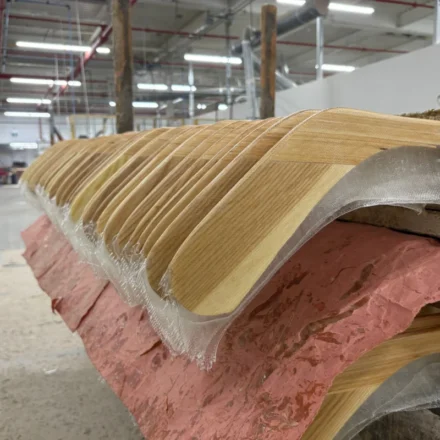
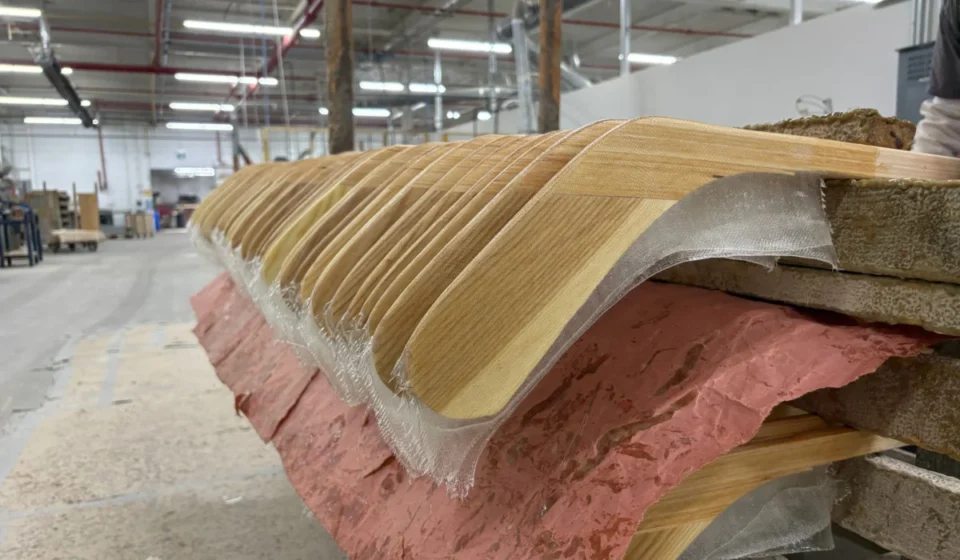
The response from Canadian manufacturing has been one of defiance coupled with economic reality. Roustan Hockey, which operates the last major hockey stick factory in Canada, has publicly affirmed its commitment to staying in the country. Founder W. Graeme Roustan recently hosted Canadian federal minister Evan Solomon to highlight the facility’s operations, stating, “We remain committed to our employees, our customers and our manufacturing operations here in Canada.”
Meanwhile, political leaders in Canada, such as Mark Carney, have signaled that the door for trade negotiations remains open if Washington demonstrates a willingness to engage in serious, good-faith dialogue. Whether such negotiations will arrive in time to stabilize the current hockey season remains an open question.
The Long-Term Implications for Youth Sports
The primary concern for organizations like the SFIA is that these tariffs will reverse the gains made in youth participation. Over the past three years, the U.S. has seen a 7% increase in hockey participation. Much of this growth is attributed to "learn-to-play" programs that provide free equipment and reduced-cost ice time to new skaters—programs that often rely on the affordability of bulk-purchased gear.
If the cost of that gear rises, the entire ecosystem of youth hockey faces a "stunting" effect. As Smith noted, "It couldn’t be a worse time for tariffs to hit in terms of really having the possibility to increase costs."
Economists suggest that the long-term price of goods will be dictated by how permanent these tariffs are perceived to be. If the market believes the tariffs are a temporary negotiating tactic, manufacturers may attempt to hold prices steady. If they are viewed as a long-term shift, the price increases will be immediate and significant.
“If there’s an expectation that tariffs are going to be permanent or at least in place for the long term, then I think prices rise pretty instantaneously,” Douglas noted. “Because the cost of production has risen and that gets passed on to consumers via a higher price.”
For now, families like the Rands are left to navigate a market defined by uncertainty. They are choosing between the sport they love and the reality of an increasingly expensive hobby. As the hockey season progresses, the true cost of these trade policies will be measured not just in dollars, but in the number of empty seats on the bench and the number of young players who simply decide that the price of the game is no longer worth the cost of admission.