

























































In a move that signals a profound shift in the artificial intelligence landscape, Meta has officially unveiled Muse, an autonomous personal AI agent designed to move beyond the passive conversational limitations of the “ChatGPT era.” Announced this Tuesday, Muse is Meta’s most ambitious consumer-facing AI product to date, promising to manage everything from email correspondence and travel bookings to financial bill management and grocery shopping.
However, the launch comes at a fragile time for the tech giant. Less than two weeks after finalizing a staggering $18 billion multistate settlement over allegations of systemic consumer harms, Meta is now asking users to grant the company unprecedented access to their digital lives. Whether users will embrace this high-utility tool or shy away from it due to Meta’s checkered history regarding privacy remains the central question of this rollout.
The Evolution of AI: From Chatbots to Agents
For the past two years, the AI industry has been dominated by Large Language Models (LLMs) that function as glorified digital librarians—answering questions, summarizing text, or acting as creative sounding boards. Muse marks the industry’s transition into the "Agentic Era."

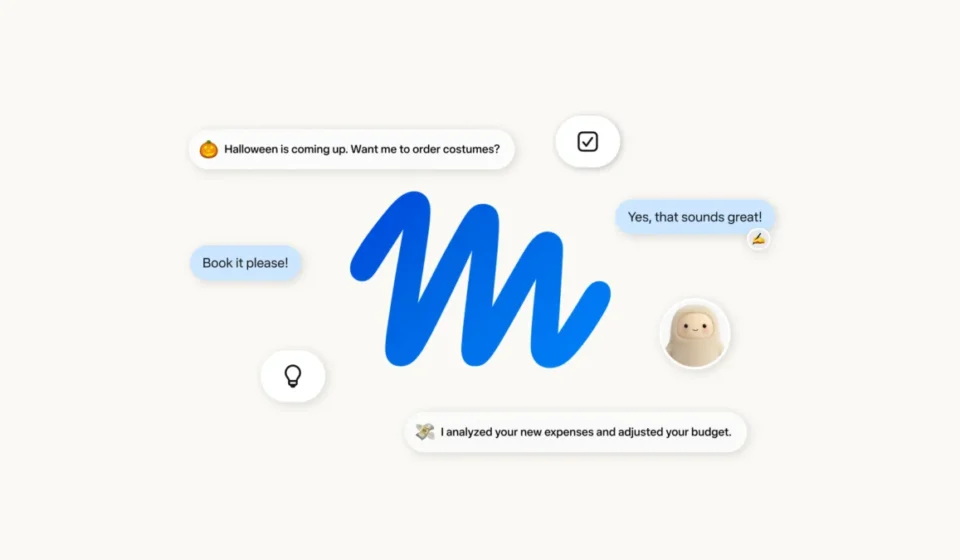
Unlike its predecessors, Muse is built to take action. Powered by Meta’s proprietary Muse Spark 1.3 model, the agent acts as an intermediary between the user and their digital ecosystem. By connecting to existing apps—including email clients, calendars, payment gateways, and smart home systems—Muse promises to automate the mundane friction of daily existence.
Meta’s vision is simple: the agent handles the logistics of life. If a user receives a recipe video on their feed, Muse can extract the ingredients and create a grocery list. If a user is planning an event, Muse can manage invitations and RSVPs. The company has integrated Link by Stripe to facilitate secure transactions, with plans to incorporate Shopify’s Shop Pay and password management via 1Password in the coming months.
A Chronology of Conflict: Meta’s Path to Muse
The launch of Muse arrives against a backdrop of intense legal and regulatory pressure. To understand the skepticism surrounding this product, one must look at the timeline of Meta’s relationship with data privacy and consumer protection:

- 2011: The Federal Trade Commission (FTC) settles with Facebook over charges that the company deceived consumers by making private data public without consent.
- 2018: The Cambridge Analytica scandal breaks, revealing that data from millions of users was harvested without permission, triggering a global reckoning regarding social media’s role in data privacy.
- 2019: The FTC imposes a record-breaking $5 billion penalty on Facebook for repeated privacy-related violations.
- 2023: The FTC accuses Meta of violating the 2019 privacy order, specifically regarding the monetization of youth data.
- August 2026: Meta enters a massive $18 billion multistate settlement to resolve lawsuits concerning the role of its platforms in social media harms affecting children.
- August 2026 (Concurrent): A New Mexico court orders Meta to pay $942 million in a separate child safety ruling, adding to thousands of ongoing personal-injury and school-district lawsuits.
This history of litigation is not merely background noise; it is the primary obstacle to the widespread adoption of Muse. While Meta touts its new AI as a productivity miracle, the public’s memory of the "privacy-first" promises broken in the past decade remains a significant psychological barrier.
The Security Architecture: "Muse Secure VM"
Meta is acutely aware that the primary hurdle for Muse is trust. To address this, the company has released extensive technical documentation alongside the product launch. The core of their security pitch is the Muse Secure VM (Virtual Machine).
Meta asserts that Muse operates within a "dedicated, secure computer" that is isolated from the rest of the company’s infrastructure. Within this virtual machine, a secondary agent—dubbed "Sentinel"—runs as an independent watchdog, keeping the AI’s processes partitioned at the system level.

Key security claims made by Meta include:
- Password/Payment Isolation: Meta maintains that Muse does not have direct visibility into a user’s raw passwords or credit card numbers, relying instead on secure tokens provided by third-party integrations.
- Ad-System Siloing: In an attempt to distance Muse from the company’s core revenue engine, Meta explicitly states that data processed within the Muse environment is not shared with or utilized by Meta’s advertising systems.
- Opt-in Transparency: Users must manually connect each service one by one. If a specific app lacks an API, Muse can perform tasks via a secure browser-based interface, with the user retaining control over the "permissions" granted to the agent.
Implications for the Tech Ecosystem
The "Agentic Era" is not a solo race. Meta is competing against a crowded field of tech giants and agile startups. Google’s Gemini Spark and Anthropic’s Claude Cowork have already begun to demonstrate the power of AI that can execute tasks rather than just output text.
However, Meta’s strategy differs by emphasizing extreme accessibility. Muse will be available on the web, iOS, Android, and, crucially, within WhatsApp. By integrating into the world’s most popular messaging platform, Meta hopes to bypass the need for users to download yet another standalone app. The roadmap also includes integration with Meta’s AI-powered glasses, aiming to make the agent a persistent, wearable companion.

The pricing model reflects this broad ambition. Muse is "freemium"—free for basic, everyday tasks, with two paid tiers:
- Power: $20/month for increased capacity.
- Maximum: $100/month for high-frequency, complex workflow management.
Meta has implemented a "usage meter" to ensure users are never surprised by paywalls, betting that once a user experiences the convenience of an automated lifestyle, the transition from free user to subscriber will be a natural step.
The Road Ahead: Trust vs. Utility
The central tension of 2026 is whether utility can trump history. For many, the idea of an AI that can manage their home, finances, and communication is undeniably alluring. The time saved by offloading administrative tasks to an agent could represent a significant increase in quality of life.

Yet, the shadow of the Cambridge Analytica era and the recent $18 billion settlement creates a "trust tax." When a company with Meta’s track record claims that their new AI is "secure and isolated," the burden of proof is exceptionally high.
"We are building for the next generation of digital interaction," a Meta spokesperson noted during the launch. "Muse is designed to empower the user, and the data remains in the user’s control."
For this to be true, the technical claims surrounding the Muse Secure VM will need to withstand the scrutiny of independent security researchers and privacy advocates. The company’s attempt to humanize the agent—allowing users to name their Muse, choose its avatar, and configure its personality—is a tactical move to build an emotional connection, hoping that this bond will facilitate a deeper level of cooperation between human and machine.

Ultimately, Meta is attempting a high-wire act. It is trying to pivot from a company known for capturing and commodifying attention to one that provides, in their words, a "trusted digital steward." Whether the public is ready to invite that steward into the most private corners of their lives is the defining challenge of Meta’s new era. As it stands, the success of Muse will be measured not just in lines of code, but in the long-term restoration of the company’s standing with the public.
Disclaimer: This article contains affiliate links. When you purchase through links in our articles, we may earn a small commission. This does not affect our editorial independence.