

























































Minnesota’s Digital Divide: Courts Become Unlikely Battlegrounds in the Fight Against Hyperscale Data Centers

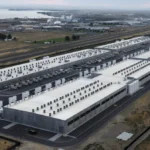
PINE ISLAND, MN – What was once slated to be a groundbreaking ceremony for Google’s next hyperscale data center in Pine Island, Minnesota, has instead become a symbol of a deepening statewide conflict. Local officials and developers had envisioned shovels breaking ground this July, transforming a vast farm field into a digital behemoth. Yet, as summer progresses, the ambitious project remains mired in legal limbo, a Goodhue County judge having issued a pivotal order halting construction to allow opponents to present their case.
This judicial intervention in Pine Island is not an isolated incident. Across Minnesota and indeed the nation, a powerful, grassroots movement has coalesced against the rapid proliferation of massive data centers. Fuelled by concerns over emerging AI technology, environmental impact, and perceived lack of transparency, these projects have become a potent "litmus test" for political candidates and a focal point of intense public debate. While much of the energy from opponents has been directed at swaying public opinion and pressuring elected officials, the developments in Pine Island and other Minnesota communities underscore a critical shift: actual courtroom rulings are increasingly dictating the trajectory of these high-stakes digital infrastructure projects.
The judiciary, historically a last resort for citizens feeling unheard, is emerging as a crucial arbiter in disputes that elected bodies and legislative processes have struggled to address. Sam Temple of Faribault, a candidate for Rice County Board this year, welcomed a recent ruling that similarly slowed down a data center development in his city. "People place hope in the judiciary when they lose it in elected officials," Temple observed. "(The court is) not the ideal tool, but it certainly is a tool, and it’s a tool that is a result of local organizing." His words resonate across a state grappling with the economic promises and environmental costs of hosting the digital backbone of the future.
The Pine Island Stalemate: A Timeline of Conflict
The Google data center, an immense undertaking known locally as "Project Skyway," was initially met with enthusiasm by Pine Island’s city leaders. They saw it as an economic boon for the southeastern Minnesota town of just under 4,000 residents, promising jobs and significant tax revenue. The proposed 482-acre facility was fast-tracked through local approvals, with city officials seemingly eager to accommodate the tech giant’s timeline. Construction was anticipated to commence in July 2026, transforming agricultural land into a sprawling industrial complex designed to house vast arrays of servers.

However, beneath the surface of official optimism, a vocal citizen group quickly mobilized. Concerned about the scale of the project, its potential environmental footprint, and what they perceived as a hurried and opaque approval process, these residents formed a formidable opposition. Despite their fervent protests at local meetings and public forums, their appeals to city leaders often fell on deaf ears. The city’s determination to push ahead, despite the clear and growing dissent, highlighted a common frustration experienced by communities grappling with large-scale industrial developments.
The turning point came not from city hall or the state capitol, but from the Goodhue County District Court. Following a lawsuit filed by the Minnesota Center for Environmental Advocacy (MCEA) on behalf of the citizen group, a judge issued an injunction, effectively pausing all construction activity. This ruling, while not a definitive termination of the project, represented a significant victory for opponents. It granted them precious time to meticulously build their legal case, challenging the very foundation of the city’s approval process. The injunction served as a stark reminder that while local governments might hold the initial power to greenlight such projects, the judicial system retains the authority to scrutinize and, if necessary, halt them when procedural or substantive legal flaws are identified.
A Statewide Battleground: The Rise of Anti-Data Center Activism
The struggle in Pine Island is emblematic of a broader, rapidly expanding movement across Minnesota and the United States. Data centers, once largely invisible infrastructure, have emerged from the shadows to become contentious public issues. This shift is driven by a confluence of factors, including escalating concerns about climate change, resource scarcity, and the accelerating demands of artificial intelligence.
The "full-blown movement," as described in the article, is characterized by several key grievances:

- Environmental Impact: Foremost among concerns is the staggering environmental footprint of hyperscale data centers. These facilities consume enormous quantities of electricity, often requiring the construction of new power plants or significant upgrades to existing grids, increasing reliance on fossil fuels. Equally alarming is their insatiable demand for water, used for cooling server racks. Critics point to regions experiencing drought or water stress, questioning the long-term sustainability of such operations.
- Land Use: The sheer scale of these projects often necessitates converting vast tracts of agricultural land or natural habitats into industrial zones, impacting local ecosystems and changing the character of rural communities.
- Transparency and Local Control: Many citizen groups allege a lack of transparency in the planning and approval processes. They report instances of non-disclosure agreements (NDAs) that shield developers and local officials from public scrutiny in the early stages, leaving residents feeling shut out until plans are well advanced. This perceived secrecy fuels distrust and ignites accusations of local governments prioritizing corporate interests over community well-being.
- AI and Energy Demand: The burgeoning field of artificial intelligence is projected to drastically increase the energy and cooling demands of data centers, exacerbating existing concerns. As companies like Google, Meta, and Microsoft race to become "the next AI overlords," the physical infrastructure required to support this ambition is coming under intense scrutiny.
These concerns have transformed data centers into a potent political issue. Local and state elections are now seeing candidates positioned on either side of the debate, reflecting the growing awareness and passionate engagement of the electorate. Citizens are not only challenging specific projects but also demanding broader regulatory frameworks to govern these energy- and water-intensive facilities.
Legal Strategies and Allegations: Unmasking the Process
The lawsuits brought against data center projects across Minnesota share common frustrations, even if the specific legal arguments vary. Luke Norquist of the Minnesota Center for Environmental Advocacy (MCEA), a nonprofit at the forefront of many of these legal challenges, summarizes the core issue: "People are feeling like they don’t have information or a say in these massive projects that seem like they’re moving ahead at lightning speed."
The MCEA and various citizen groups have built their legal cases on several key allegations:
- Insufficient Environmental Reviews: A frequent claim is that cities have allowed "lax" or "illegal" environmental reviews. These reviews are critical for assessing the potential impact of large developments on air quality, water resources, noise levels, and local ecosystems. Opponents argue that initial assessments are often rushed, incomplete, or fail to adequately account for the cumulative effects of such projects.
- Withholding Public Information: Lawsuits often allege that information crucial to public understanding and participation has been withheld, or that public records requests have been stonewalled. Transparency in public documents is a cornerstone of democratic governance, and its alleged subversion is a significant point of contention.
- Violations of Open Meeting Laws: Another common accusation is that local leaders have discussed "secret plans" in defiance of open meeting laws. These laws are designed to ensure that public business is conducted in public, preventing backroom deals and fostering accountability. Paul Fish, a resident living near the proposed Hermantown data center site, recounts how he learned he was named in a lawsuit for questioning city leadership. He stated that the project had a significant "head start" due to non-disclosure agreements, which enabled plans to advance before residents could mobilize. "This was planned way before we knew anything about it," Fish lamented. "By the time the city of Hermantown stuff came forward that people knew about, we were already a year behind." This sentiment of being blindsided by pre-determined plans is a recurring theme in communities resisting data center developments.
The MCEA is actively involved in lawsuits challenging regulatory processes in several Minnesota cities, including Pine Island, Faribault, Hermantown, and Monticello. Citizen-led groups like "Stop the Hermantown Data Center" and the "Coalition for Responsible Data Center Development" in Farmington are also pursuing independent legal action, demonstrating the broad-based nature of this resistance. In North Mankato, a planned project never materialized, leading MCEA to drop its suit, but the city is now considering a moratorium, reflecting a growing caution among local authorities.

Case Studies of Judicial Intervention: Shifting the Momentum
The recent court rulings have provided crucial, albeit often temporary, victories for data center opponents, demonstrating the power of judicial oversight.
Pine Island’s Injunction:
In Pine Island, the Goodhue County judge’s decision to issue an injunction was a direct response to MCEA’s lawsuit, which argued that the city’s environmental review was "insufficient and illegal." The judge’s order stated that allowing the project to proceed without resolving the legal challenge would cause "irreparable harm." While a slowdown rather than an outright termination, the injunction was a monumental moment for local activists. Aubree Derksen, a key figure in the Pine Island opposition, expressed the profound relief and validation felt by the community. "Getting the injunction, finally, getting that victory, it’s like f— yeah," Derksen exclaimed, highlighting the David-and-Goliath nature of their fight. "We’re the smallest town in the state fighting this and it’s a small nonprofit that’s putting you in your place." City administrator Elizabeth Howard, in line with standard legal practice, declined to comment on pending litigation, underscoring the sensitivity of the ongoing judicial process.
Faribault’s Appellate Victory:
Another significant precedent was set in Faribault, where an MCEA lawsuit against the city and developer Archer Datacenters reached the Minnesota Court of Appeals. In a June 2026 opinion, the appellate judges sided with MCEA, ruling that the city needed to conduct a more rigorous environmental review. This decision effectively kicked the process back to the city, compelling local officials to re-evaluate their approach. In response, the Faribault City Council extended Archer’s deadline for submitting additional information until 2027. More importantly, the city announced plans to develop and consider "new data center standards" specifically addressing critical issues like water usage, electric consumption, and air emissions. This outcome signals a potential shift towards more proactive and comprehensive regulatory frameworks for data centers, directly influenced by judicial intervention.
Sam Temple views this outcome as a clear indictment of governmental passivity. He believes that cities and counties should have anticipated these challenges and developed robust standards long ago. "What the court ruling has shown, specifically at the city level, but I see it politically at the county level, as well, is not corruption, is not malicious intent, but it is simply passivity," Temple asserted. "And I think people want a more proactive local government." His perspective highlights a demand for elected officials to be more forward-thinking in regulating emerging industries that have significant local impacts.

Why Courts are an Imperfect Venue for Recourse
Despite the recent successes, courts were not the first choice for Minnesotans seeking to halt data center developments. Before turning to litigation, communities exhausted other avenues:
- City Hall: Residents initially appealed to their local elected officials, often finding them more amenable to developers than to citizen concerns. The promise of economic development, jobs, and tax revenue can be a powerful incentive for municipal leaders, sometimes overshadowing potential downsides or public opposition.
- State Capitol: Efforts to enact statewide regulations or moratoriums in the Minnesota Legislature also met with failure. Every bill introduced last session aimed at reining in data centers, whether through moratoriums or increased transparency, ultimately stalled. This legislative gridlock left communities feeling unsupported at the state level.
- Electoral Politics: While data centers are becoming an election issue, the impact of electoral shifts on policy takes time, often months or even years, to materialize.
Thus, lawsuits have become another, often last-resort, lever for communities. Cathy Johnson of the Coalition for Responsible Data Center Development articulated this sentiment: lawsuits are for when "our local officials aren’t listening to us and the state Legislature is too tied up in gridlock."
However, the judicial path is fraught with its own significant challenges, primarily financial and temporal. Data center opponents, typically grassroots citizen groups and smaller nonprofits, operate with limited resources compared to the vast coffers of multinational tech giants like Google, Meta, and Microsoft.
The financial toll was a central topic at a recent gathering of the Stop the Hermantown Data Center group. Speakers stressed the urgent need for donations to sustain their legal fight. Johnson echoed this, stating her Farmington-based group "desperately needs funding" to continue its lawsuit. Paul Fish, while hopeful for a favorable ruling in Hermantown, acknowledges the stark reality of legal battles against corporate behemoths. "It’s costly, that’s the thing," he said. "For a citizens group to have the resources to fight Google off? (Google) could walk away from this whole thing and write it off." The asymmetry of resources means that even with valid legal arguments, sustained litigation can be an overwhelming burden for communities, making the courts an "imperfect venue" despite their crucial role in providing recourse.

Looking Ahead: The Enduring Fight for Local Control
The ongoing legal battles over data centers in Minnesota represent a critical juncture in the balance between technological advancement, economic development, and local community interests. While court rulings have provided significant pauses and forced re-evaluations, they are not ultimate solutions. They highlight systemic issues in how large-scale industrial projects are introduced and approved, particularly the perceived lack of transparency and proactive governance.
The demand from citizens for more proactive local government, as articulated by Sam Temple, will likely continue to grow. This could manifest in greater scrutiny of NDAs, more robust environmental impact assessments, and the development of comprehensive municipal standards for resource usage before projects are even considered. The Faribault case, where the city is now developing new data center standards, could serve as a model for other communities.
Ultimately, the trajectory of data center development in Minnesota and beyond will depend on a combination of factors: the continued vigilance and organizing efforts of citizen groups, the willingness of courts to uphold procedural fairness and environmental protections, and the evolving responsiveness of elected officials at all levels of government. The digital revolution, with its promise of artificial intelligence and boundless connectivity, is undeniably reshaping landscapes, but the fight for local control and responsible development is proving to be just as powerful a force in shaping its future.