
























































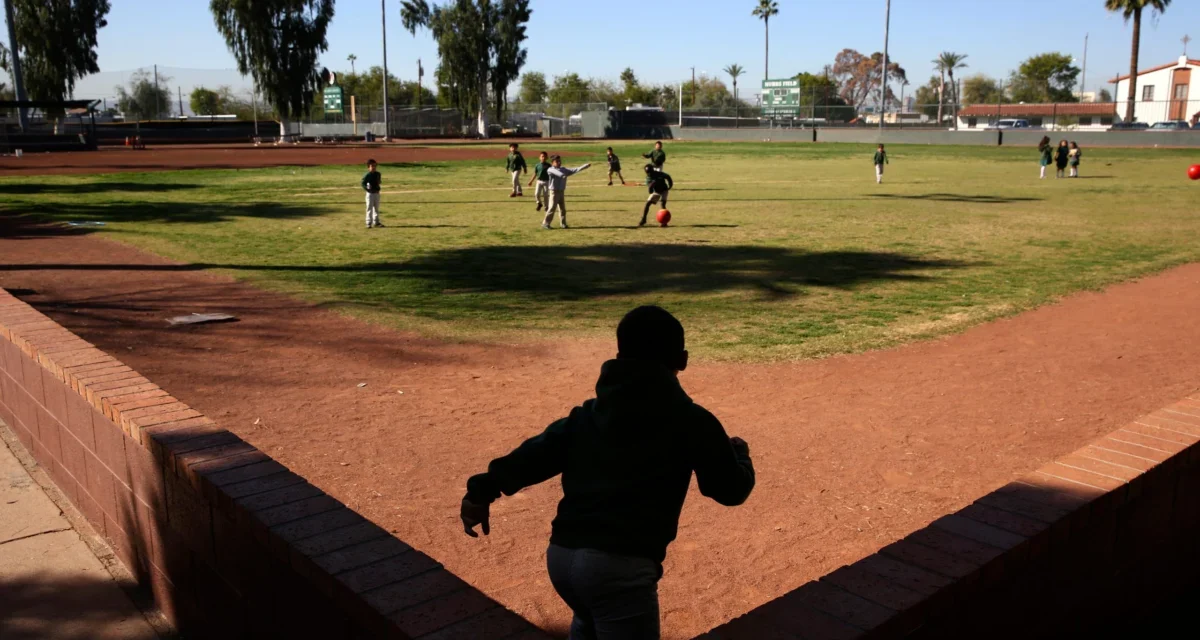



For decades, the American school day has been defined by an intensifying arms race for academic performance. In the quest for higher standardized test scores and a competitive edge in global rankings, schools have systematically pruned away the "non-essentials." Chief among the casualties has been recess—that unstructured, often chaotic, and noisy period of play that once served as a cornerstone of the American childhood experience.
However, a landmark policy statement released this week by the American Academy of Pediatrics (AAP) seeks to reverse this trend. Representing the first comprehensive update to their guidance on the subject in 13 years, the AAP is sounding the alarm: recess is not a luxury or a reward; it is a physiological and psychological necessity for students of all ages.
The Science of the Pause: Main Facts
The core argument presented by the AAP is that the human brain—particularly the developing brain of a child or adolescent—is not designed for constant, sedentary, and hyper-focused instruction. New neurological research cited in the report underscores the biological imperative of the "brain break."
When a student engages in deep, sustained cognitive work, the brain eventually hits a point of diminishing returns. The AAP argues that intentional pauses between bouts of instruction are vital for memory consolidation. During these breaks, the brain’s default mode network activates, allowing for the processing and storage of information gathered during lessons. Without these intervals, cognitive fatigue sets in, leading to decreased attention, lower retention rates, and increased behavioral friction in the classroom.
Beyond the academic scope, the AAP highlights the role of recess in fostering social-emotional learning. On the playground, there is no teacher-led curriculum; students must negotiate rules, manage conflict, build friendships, and develop the confidence that comes from independent navigation of social dynamics. These are the soft skills that translate into success in adulthood, yet they are being crowded out by an obsession with desk-based instruction.
A Chronology of Decline: From Playgrounds to Performance Metrics
To understand why this guidance is necessary, one must look at the trajectory of the American school day since the turn of the millennium.
- The Early 2000s: The implementation of the "No Child Left Behind" Act placed unprecedented pressure on schools to meet strict performance benchmarks. As reading and math scores became the primary metrics for success, schools began to view recess as "lost time."
- The Mid-2000s to 2015: A trend of "recess reduction" swept across the United States. Data from the CDC and the organization Springboard to Active Schools indicates that up to 40% of school districts significantly cut or eliminated recess during this period.
- The 2020 Pivot: The COVID-19 pandemic introduced a new, stark reality. With schools moving to remote learning and eventually returning to classrooms with strict distancing measures, the physical, social, and emotional isolation of students became a national health crisis.
- 2026 and Beyond: The current AAP update arrives at a tipping point. With childhood obesity rates now hovering at 20% and a documented decline in adolescent mental health, pediatricians are now framing the restoration of recess as a public health intervention rather than a pedagogical preference.
Supporting Data: The Cost of Sedentary Schools
The physical implications of reduced recess are perhaps the most quantifiable aspect of the current crisis. According to Dr. Robert Murray, a lead author of the AAP statement, the sedentary nature of the modern school day is a primary contributor to the rise in childhood obesity.
Current data paints a sobering picture:
- Obesity Rates: Approximately 1 in 5 American children and adolescents currently live with obesity.
- The Recess Deficit: Recess duration is currently inconsistent, ranging from less than 10 minutes to over an hour in different districts. Older students, particularly those in middle and high school, are increasingly sidelined, often receiving no structured break at all.
- Global Comparisons: The U.S. lags significantly behind nations like Japan, the United Kingdom, and Denmark, where students are granted mandatory breaks after every 45 to 50 minutes of instruction. These countries consistently rank higher in global academic assessments, suggesting that the "more time in seat equals better scores" hypothesis is fundamentally flawed.
Official Responses: The Debate Over Punishment and Policy
One of the most controversial findings in the report is the practice of withholding recess as a punitive measure. The AAP takes a firm, uncompromising stance: recess should never be used as a disciplinary tool or a penalty for poor academic performance.
"If a child is disruptive, rude, or disrespectful, recess is often the first thing taken away," Dr. Murray explained. "This is fundamentally counterproductive. The students who struggle the most with behavioral issues or academic performance are precisely the ones who need that release the most."
By removing the very outlet required to regulate their nervous systems, schools are inadvertently setting these students up for further failure. The AAP urges school administrators to adopt a "no-withholding" policy, arguing that if a student is struggling, the solution should be to provide more support, not to restrict their physical activity and social development.
Implications: A Call for Cultural Change
The implications of the new AAP guidance extend far beyond the elementary school playground. There is a growing consensus that the "recess deficit" is a developmental failure that affects teenagers just as much as younger children.
Dr. Lauren Fiechtner, a childhood obesity expert at Mass General Brigham for Children, emphasizes that the adolescent brain is arguably more in need of a reset than ever before, given the ubiquity of digital screens. "As kids get older, they are more tethered to their devices," Dr. Fiechtner notes. "Outdoor activity and the simple, face-to-face social interaction of recess are antidotes to the screen-time epidemic."
The Road Ahead
For the AAP’s recommendations to take hold, a systemic shift in school culture is required:
- Mandatory Minimums: Districts must move toward a standard of at least 20 minutes of daily, uninterrupted play, preferably broken into multiple sessions.
- Professional Development: Teachers must be supported in understanding that allowing a "brain break" is not an abdication of teaching responsibility, but an enhancement of it.
- Infrastructure: Schools must prioritize safe, inclusive, and engaging play spaces that cater to students of all physical abilities.
The message from the medical community is clear: a successful education is not built solely on the hours spent at a desk. It is built on the balance between rigorous inquiry and the necessary, restorative power of play. As Dr. Fiechtner summarized, "Recess is great. We all kind of need recess." In a world that is increasingly fast-paced and digitally saturated, the simple act of stepping outside to play may be the most important lesson a student learns all day.