

























































The Eight-Billion-Can Legacy: How Spam Transcended Its Tin to Become a Cultural Icon

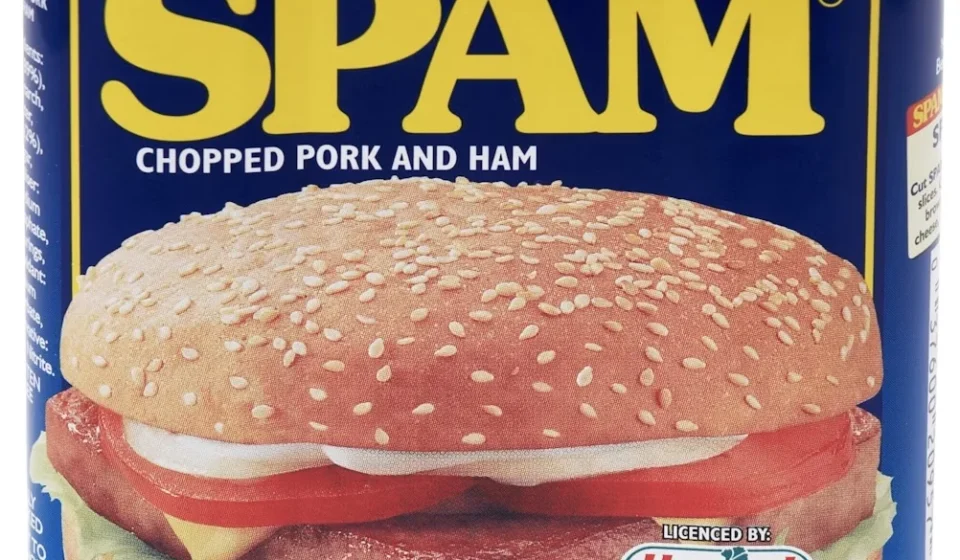
While many associate Spam with the utilitarian, no-frills aesthetic of a basic canned meat, it is, in reality, one of the most resilient and successful business ventures in the history of global commerce. Since the Hormel Foods Corporation first introduced the shelf-stable, spiced pork product in 1937, it has transcended its humble origins to become a permanent fixture in global pantries, with over eight billion cans sold across 44 countries. To categorize Spam merely as a food product is to ignore its status as a masterclass in branding, consumer psychology, and cultural adaptation.
The Foundations of an American Icon: Main Facts
Spam occupies a unique space in the American psyche, sitting comfortably alongside Coca-Cola, McDonald’s, and Pizza Hut as an immediately recognizable symbol of the United States. Its birthday, July 5th—fittingly occurring just one day after the nation’s independence—serves as a reminder of its deep roots in mid-century American culture.
The product’s success is rooted in two fundamental pillars: solving a genuine consumer need and cultivating an emotional resonance that taps into quintessential American ideals like ingenuity, resourcefulness, and rugged adaptability.
At its core, the original recipe was a triumph of engineering: a blend of chopped pork shoulder meat, ham, salt, water, sugar, and sodium nitrite. Before its introduction, the concept of a meat product that required no refrigeration was a logistical miracle for the average household. By solving the problem of protein preservation, Hormel secured a significant competitive advantage that kept the product relevant for decades.
A Chronology of the Tin: From Depression-Era Invention to Modern Luxury
The story of Spam is one of constant evolution. To understand its longevity, one must trace its journey through the pivotal moments of the 20th and 21st centuries.
- 1937: Hormel Foods launches Spam. The name, suggested by Kenneth Daigneau, the brother of a Hormel vice president, was chosen via a contest, marking the beginning of the brand’s penchant for clever, if occasionally eyebrow-raising, marketing.
- 1940: Hormel releases a 20-page recipe book, desperate to prove the versatility of the meat. This was an early attempt to move the product beyond "emergency ration" status.
- 1941–1945: World War II propels the brand into the stratosphere. Over 150 million pounds of Spam were shipped to the front lines. The military context transformed Spam from a convenience food into a symbol of wartime survival, with soldiers famously utilizing the product’s grease for everything from lubricating firearms to waterproofing boots.
- 1950s–1970s: The post-war era saw the rise of the "Hormel Girls," a musical troupe of female veterans who toured the country, cementing the brand’s patriotic and friendly image.
- 1990s–2000s: Hormel began a aggressive strategy of brand expansion, launching the Spam Museum, sponsoring NASCAR teams, and introducing a plethora of flavors, including Spam with Bacon, Teriyaki, and Jalapeño, to match changing global palates.
- 2010–Present: Spam completes its unlikely transformation into a gourmet ingredient, appearing in high-end culinary challenges and on the menus of prestigious, trend-setting restaurants.
Supporting Data: By the Numbers
The metrics of Spam’s success are staggering. With eight billion cans sold, the product is a fixture of international trade. In Hawaii, perhaps the most enthusiastic market in the world, consumption reaches seven million cans annually.
The shift in the product’s formula in 2009—the addition of potato starch—was a calculated move based on consumer feedback. By minimizing the gelatinous layer that formed during the heating process, Hormel proved that even a legacy brand must adapt to evolving sensory preferences.
Market research on "brand love," such as the model developed by scholars Rajeev Batra, Aaron Ahuvia, and Richard P. Bagozzi, helps explain this data. Their research suggests that for a product to achieve lasting success, consumers must interact with it in ways that transcend the point of sale. Hormel’s long history of festivals, museums, and Broadway musicals (the Tony Award-winning Spamalot) has ensured that the "brand experience" is constantly renewed, preventing the product from becoming a stale artifact of the past.
Official Responses and Strategic Branding
Hormel Foods has consistently approached the Spam brand with a blend of corporate seriousness and a willingness to embrace the product’s inherent "eccentricity." From the very beginning, the company understood that they were not just selling pork; they were selling a solution.
When asked about the brand’s longevity, marketing experts point to Hormel’s agility. They did not fight the irony associated with the product; they leaned into it. By promoting the "Spamburger" or highlighting the difference between a "spreader" and a "slicer," the company has allowed the brand to remain playful. This official strategy of "self-awareness"—acknowledging that Spam is not a filet mignon—has been the company’s greatest defense against ridicule. By owning the joke, Hormel has turned potential critics into long-term brand advocates.
Implications: The Global Culinary Metamorphosis
The most profound implication of Spam’s history is its ability to serve as a blank canvas for local culture. While it is an American export, it has been thoroughly "localized" in foreign markets.
In South Korea, Spam is highly prized, often packaged in elegant gift sets during holidays—a far cry from its reputation as a "cheap" meat in the United States. In the Philippines, the Spamsilog (a breakfast staple of Spam, fried rice, and eggs) demonstrates how the product can become a cornerstone of a national breakfast tradition. In the United Kingdom, the Spam fritter remains a nostalgic, working-class comfort food served in burger bars.
Perhaps the most fascinating shift is the recent trend of "culinary irony" in the United States. Today, at establishments like the Liholiho Yacht Club in San Francisco or Noreetuh in New York, chefs are elevating Spam to the status of a luxury ingredient. Pairing canned pork with truffles, foie gras, or uni is an act of culinary subversion that highlights just how far the product has traveled.
Conclusion: The Persistence of the Tin
The evolution of Spam from the trenches of World War II to the $40 entrees of modern urban restaurants represents a rare trajectory for any consumer product. It has survived economic shifts, changing dietary trends, and the inherent volatility of global branding.
As a case study in consumer behavior, Spam teaches us that success is rarely about the quality of the product alone. It is about the narrative built around that product. Hormel successfully convinced the world that Spam was not merely a survival ration, but a versatile, reliable, and eventually, even a "cool" ingredient.
Whether it is being fried on a beach in Hawaii, sliced into a breakfast dish in Manila, or incorporated into a fine-dining experience in Manhattan, Spam has achieved a level of ubiquity that most corporations spend billions trying to attain. It is an American icon that has, through a combination of necessity, marketing brilliance, and cultural adaptation, ensured its place in the global kitchen for generations to come. The inventors at Hormel in 1937 may have been looking for a way to sell pork, but they accidentally created a piece of global heritage that, much like the product itself, has proven to be shelf-stable in the most crowded of markets.