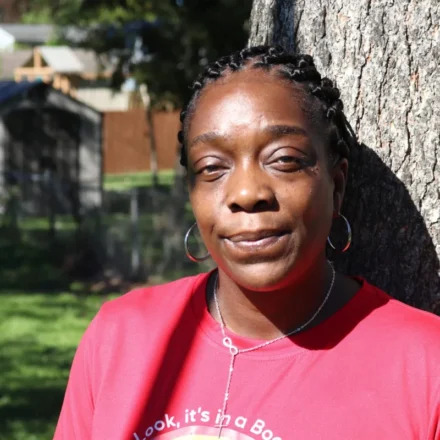















































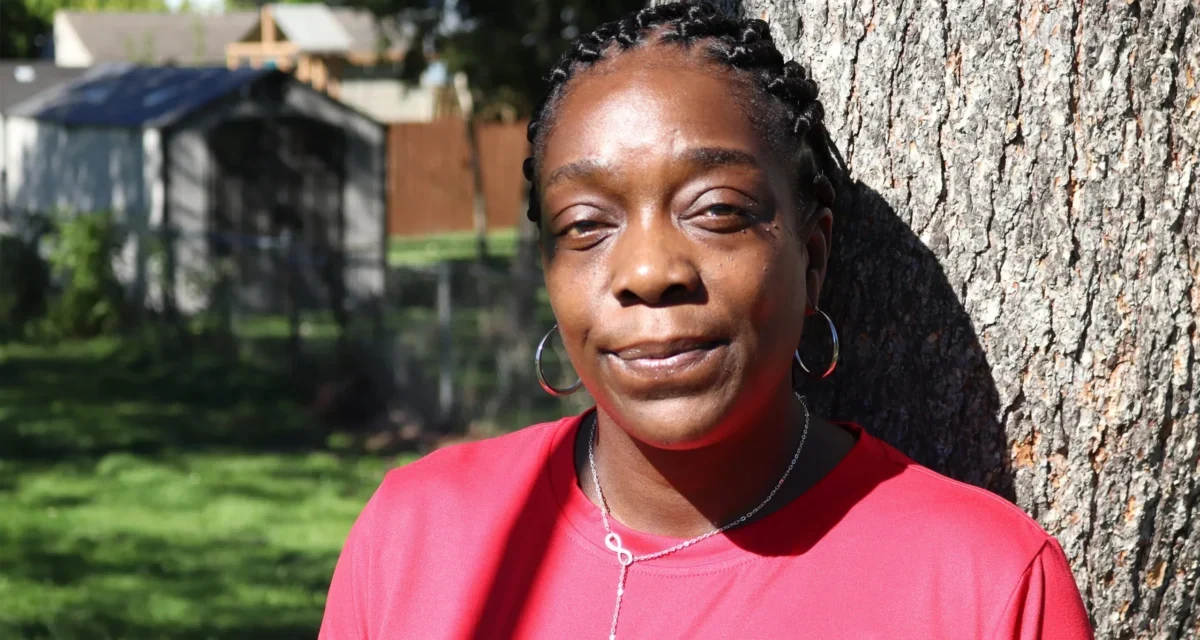






LANSING, Mich. — For Christina Starks-Clay, the math of modern American healthcare has become an exhausting, daily exercise in survival. Standing in line at a downtown Lansing town hall in September, the early childhood special education paraprofessional pulled out her smartphone to reveal a digital receipt: a $1,000 cashier’s check she had just withdrawn from her bank account.
The money wasn’t for a luxury or an investment; it was a partial payment toward her son’s mounting dental bills. Despite having what is considered "good" dental insurance, she was still staring down a remaining balance of $389. Weeks earlier, her own routine cleaning had set her back $600.
“I told myself, ‘Tina, you were in a position for this moment to do this,’” she recalled, her voice steady but weary. “A lot of people couldn’t do what I had to do today. I couldn’t do it. But I did it. So I need to hear: How are you going to make this better for everyone?”
Starks-Clay was one of hundreds gathered to hear U.S. Senate candidate Abdul El-Sayed. As the heat of the afternoon sun beat down on the crowd, the stories shared in line mirrored her own—a tapestry of financial fragility, medical debt, and the harrowing choice between bodily health and fiscal ruin.
The Pulse of a National Movement: Main Facts
The scene in Lansing serves as a microcosm for a broader, national shift in political sentiment. Support for "Medicare for All"—a proposed single-payer system that would essentially replace the current fragmented, employer-based private insurance model with a federally run program—has reached its highest point in at least a decade.
According to a recent KFF health tracking poll, two-thirds of Americans now favor expanding the government’s role in healthcare. This support is fueled by a stark reality: fewer than half of all Americans report that they can comfortably afford their current healthcare costs. As the cost of premiums, deductibles, and out-of-pocket expenses continues to outpace wage growth, Medicare for All has evolved from a fringe policy concept into a shorthand for systemic, radical change.
At its core, the policy aims to eliminate the administrative bloat and profit-seeking motives of private insurance, theoretically ensuring that medical necessity, not the size of one’s bank account, dictates the quality of care received.
A Chronology of Discontent
The rise of the Medicare for All movement is not a sudden phenomenon; it is the culmination of decades of incremental policy shifts and the subsequent reactions to them.
2010: The ACA Era
The passage of the Affordable Care Act (ACA) was a landmark moment that cut the national uninsured rate nearly in half. It introduced vital protections, such as the prohibition of denying coverage based on pre-existing conditions. For a decade, the focus was on expanding the existing framework.
2016–2020: The Progressive Catalyst
During the 2016 and 2020 presidential primaries, Senator Bernie Sanders thrust Medicare for All into the national spotlight, successfully pushing the concept from the political periphery into the mainstream Democratic platform.
2024–Present: The "Great Reversal"
In the last two years, however, the landscape has darkened. The repeal of tax subsidies, coupled with the "One Big Beautiful Bill Act" (OBBBA)—the signature healthcare legislation of the Trump administration—has led to significant turbulence. Experts estimate that up to 355,000 Michiganders could lose their Medicaid coverage by 2028 due to these changes. Insurance companies in the state have responded by hiking individual marketplace premiums by an average of 20%, creating a sense of urgency that has reinvigorated the call for a total system overhaul.
Supporting Data: The Economic Reality
The healthcare industry in Michigan is currently experiencing a "perfect storm" of rising costs and diminished access.
- Marketplace Volatility: Following the expiration of federal tax credits, enrollment in ACA plans has seen a sharp decline as monthly premiums became untenable for middle-class families.
- The Debt Burden: A recent Yale study provided a complex look at the economic feasibility of a single-payer system. While researchers estimated the implementation cost at roughly $4.2 trillion annually, they projected that the structural efficiency would ultimately save the U.S. healthcare system $1 trillion per year in administrative overhead and redundant services.
- Public Sentiment: KFF data suggests that while "Medicare for All" is popular in the abstract, its approval fluctuates based on how the policy is framed. When presented with concerns about taxes and the loss of private insurance, support wanes. When presented as a solution to high drug costs and medical bankruptcy, support surges.
The Human Cost: Voices from the Field
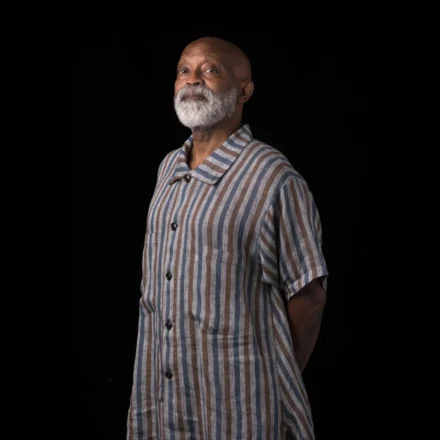
For those working within the healthcare system, the statistics are not just numbers—they are faces. Darleana Ash, who works at a medical diagnostics lab, notes that patients are increasingly skipping critical tests because their insurance deductibles are too high.
"If you have someone who is 75 or 80 years old, guess what? They’re going to go without the medication, because they have to eat," Ash said.
This sentiment was echoed by Cindy Lou Coolich, a retiree whose life was upended by a bout of sepsis. After losing her horse farm and her financial independence, she found herself reliant on a meager Social Security check. Her path to stability only came after the death of her ex-husband, which allowed her to claim his benefits.
"It hardly seems like the mark of a functioning healthcare system that someone had to die for things to get better," she remarked.
Official Responses and Political Strategy
The political divide over healthcare has become the central fault line in the Michigan Senate race.
The Progressive Approach
Abdul El-Sayed, a physician and former public health official, has staked his political identity on the promise of universal coverage. His campaign argues that the current system is not broken but is working exactly as designed—to prioritize profits over patients. For voters like Starks-Clay, El-Sayed’s consistency is his greatest asset. He provides a clear, uncompromising vision that cuts through the noise of moderate, incremental proposals.
The Conservative Counter
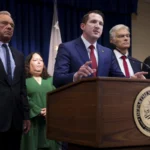
Republican opponent Mike Rogers has taken a sharp, tactical approach in opposing the plan. At a recent press conference, Rogers characterized Medicare for All as a "government takeover" that would destroy private insurance options for millions.
"If the government is going to give you something, they have to take it away from someone else," Rogers said, highlighting the $4 trillion price tag and the inevitable tax implications. His platform focuses on market-based solutions, though he has faced criticism for failing to provide a detailed roadmap for how those solutions would lower costs for the average family.
Implications: The Long Road Ahead
Despite the fervor of the campaign trail, political analysts warn that the path to a single-payer system is fraught with structural obstacles.
Jonathan Oberlander, a professor at the University of North Carolina-Chapel Hill, notes that Medicare for All remains a powerful symbol of discontent, but implementing it is a different matter. "In an electorate that wants change, that is disenchanted with the status quo, Medicare for All is an important symbol," he said. However, he cautioned that even a victory for its proponents would face stiff headwinds from lobbying groups, the insurance industry, and moderate members of Congress.
For voters like Thomas "Jermaine" Carey, the cynicism is palpable. A self-described activist, Carey views the political rhetoric with a jaundiced eye. "Do I believe it?" he asked, shrugging toward the stage at a recent town hall. "It’s still America. You still have super PACs, the lobbyists that control everything."
The debate in Michigan illustrates a broader American tension: the clash between a desire for a compassionate, universal safety net and the deep-seated fear of government overreach and economic disruption. Whether or not Medicare for All becomes the law of the land, the urgency of the conversation makes one thing clear: the status quo is no longer a viable option for a population that is increasingly choosing between their health and their livelihood.
As the midterms approach, the "money in your pocket" rallying cry will continue to resonate—not because voters have mastered the complexities of federal health policy, but because they are currently paying for the system with their savings, their property, and their peace of mind.