





















































As the Minnesota Timberwolves navigate a pivotal offseason, head coach Chris Finch is firmly focused on the integration of new talent and the refinement of a roster designed for deep postseason success. In the third installment of an extensive, 80-minute sit-down interview with MinnPost, Finch pulled back the curtain on his tactical philosophy, addressing the high-stakes addition of forward Jonathan Kuminga and the evolution of the team’s supporting cast.
With the team looking to move past the frustrations of an injury-plagued previous campaign, the message from the top is clear: the path to the championship is paved with defensive versatility, collective rebounding, and the precise calibration of lineup chemistry.
The Kuminga Mandate: A "Prove It" Opportunity
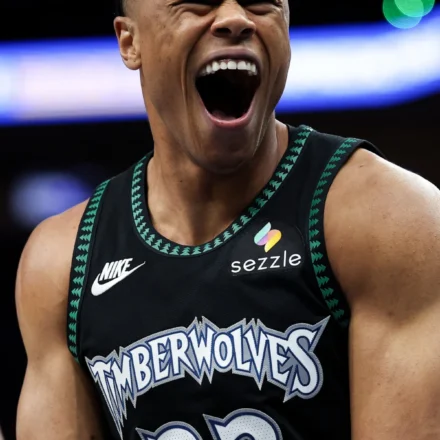
The most significant move of the Timberwolves’ summer was the acquisition of Jonathan Kuminga, a player who arrives in Minnesota with both immense potential and a need for a defined role. When asked about the team’s depth chart—which notably lacked a primary power forward—Finch was candid about his expectations.
"It is his job to lose," Finch stated regarding Kuminga’s path to the starting lineup.

The coach’s vision for Kuminga is specific. Rather than asking the explosive forward to shoulder a massive scoring burden, Finch is prioritizing Kuminga’s impact on the defensive end. "The way that he wins it most rapidly is by solidifying our defense into elite," Finch explained. "We feel he has the capability to do that."
However, the transition comes with challenges. Finch acknowledged that Kuminga shares a common struggle with much of the current Timberwolves roster: a tendency to commit unnecessary fouls. Furthermore, the coaching staff has emphasized rebounding as a non-negotiable requirement for Kuminga’s success in Minnesota.
"I was just talking to him today: ‘If you rebound at a high level for us, it is going to be such a shot in the arm,’" Finch noted. Offensively, the goal is to integrate Kuminga into the team’s transition game and leverage his prowess as an off-ball cutter. Finch envisions Kuminga as a barometer for the team’s offensive health—if he is getting consistent, quality touches within the flow of the offense, it suggests the system is functioning at an optimal level.
Navigating the "Glue" and the "Stoppers"
With the starters taking shape, the conversation turned to the bench—a unit that often dictates the ceiling of a playoff team. Finch spent considerable time discussing the development of Ayo Dosunmu and TJ Shannon, two players who will be asked to carry the load for the second unit.

Finch expressed a desire to see these two share the floor, believing their combined skill sets could provide the team with a much-needed injection of pace and intelligence. "TJ is an underrated passer," Finch said. "He needs to self-regulate, and when we put that ball in his hands, have the mindset of making the right play."
For Dosunmu, the coach’s assessment is one of quiet confidence. "He’s super-smart, his game is simple and repeatable," Finch remarked. "He is outstanding in transition, great finisher, his three-point shot has become real."
Defensively, the challenge for Shannon is a matter of anticipation. Finch believes that while Shannon has the physical tools to be a premier defender, he often reacts a split-second too late. In the modern NBA, where elite athletes are the norm, that delay can be the difference between a stop and a highlight-reel bucket for the opponent.
Youth, Experience, and the Bench Rotation
The interview also touched upon players fighting for consistent minutes, specifically Bones Hyland and Jaylen Clark. For Hyland, the directive is a return to aggression. Finch noted that the guard has occasionally "turned down" shots, likely out of a desire to be a facilitator, but that the team needs him to maintain a "let-it-fly" mentality to maximize his offensive utility.

Jaylen Clark, a fan favorite of the coaching staff, presents a unique case. Finch praised Clark’s defensive instincts, particularly his ability to make "momentum plays" in the gray area between possessions. However, the coach emphasized that to move into a larger role, Clark must learn the nuance of guarding elite, number-one options.
"You can’t guard them all the same," Finch said, referencing the wisdom of starter Jaden McDaniels. "Jaylen has tried to guard everybody the same. Number two options and on down, you can probably get away with that. Number one options, not so much."
Tactical Implications: The Departure of Naz Reid
The signing of Kuminga and the shifting roles of the bench have naturally raised questions about veteran Trey Lyles. While his minutes may be squeezed by the new additions, Finch still sees value in Lyles as a "skilled big" who can space the floor and attack close-outs.
"I don’t see a 22-minute-a-night role," Finch admitted. "But one thing I do like about Trey is that he is in the skilled big category… He’s a little faster than he looks, and a little bigger than he looks."

Official Response: A Culture of Winning
Finch’s perspective on Kuminga’s arrival reveals much about the current Timberwolves culture. He acknowledged that Kuminga’s decision to sign a "prove-it" contract with Minnesota was a calculated risk that the organization respects.
"The fact that he chose to come here, we don’t take that decision lightly," Finch said. "We understood what he was giving up to come here. We understood that he was betting on us: our culture, our environment, our superstars who have embraced him and recruited him hard."
This "winning-DNA" approach is what the front office hopes will define the upcoming season. By fostering an environment where individual growth is tied directly to team success, Finch is attempting to replicate the stability that allowed teams like the Warriors to thrive—albeit with a distinctly Minnesota flavor.
Looking Ahead
As the Timberwolves prepare for the upcoming preseason, the blueprint is becoming clear. The team is not looking for a single savior; they are looking for a cohesive unit capable of executing high-level defensive schemes and efficient, ball-moving offense.

The Kuminga experiment is the centerpiece of this effort. By betting on his ability to transition from a high-potential talent to a reliable, defensive-minded starter, the Timberwolves are gambling that their coaching staff can unlock the version of Kuminga that thrives in high-stakes environments.
For fans and analysts alike, the next few months will be a masterclass in roster management. Will Kuminga’s defensive impact justify his minutes? Can the bench unit find the playmaking rhythm Finch is demanding? And most importantly, can the team avoid the "drift" that derailed their championship aspirations last spring?
As the team gathers for training camp, the answers to these questions will begin to materialize. For now, the sentiment within the organization is one of measured optimism—a belief that the pieces, when properly assembled, are more than capable of taking the franchise to the next level.
The fourth and final part of this interview series will be released later this week, covering the team’s long-term tactical outlook and final preparations for the season opener.