














































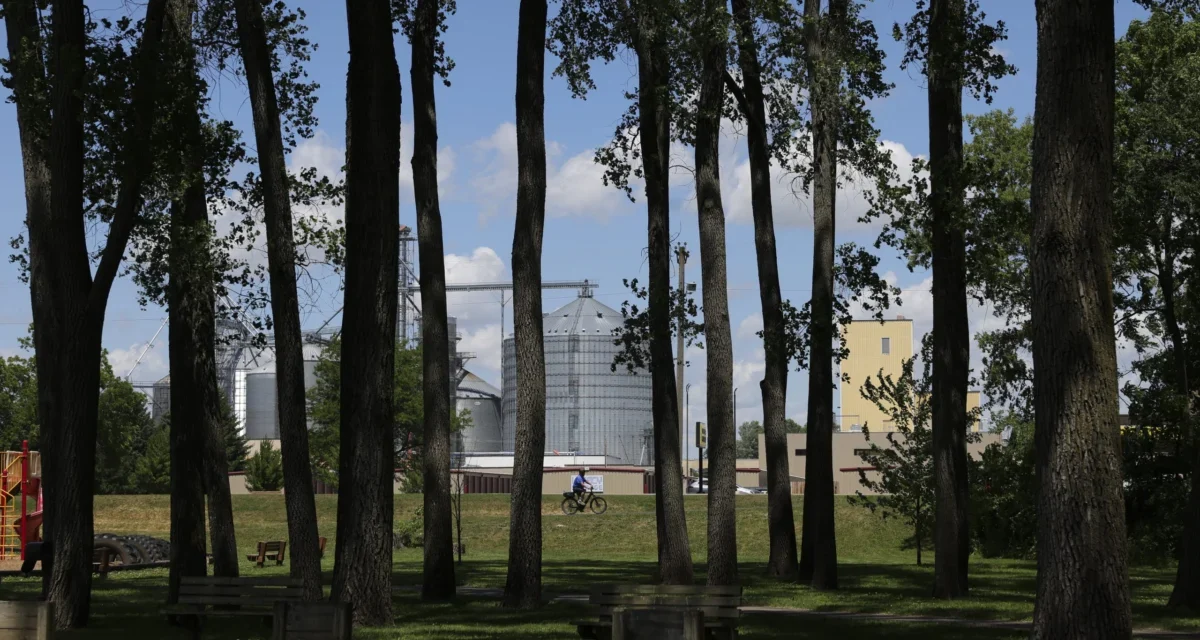

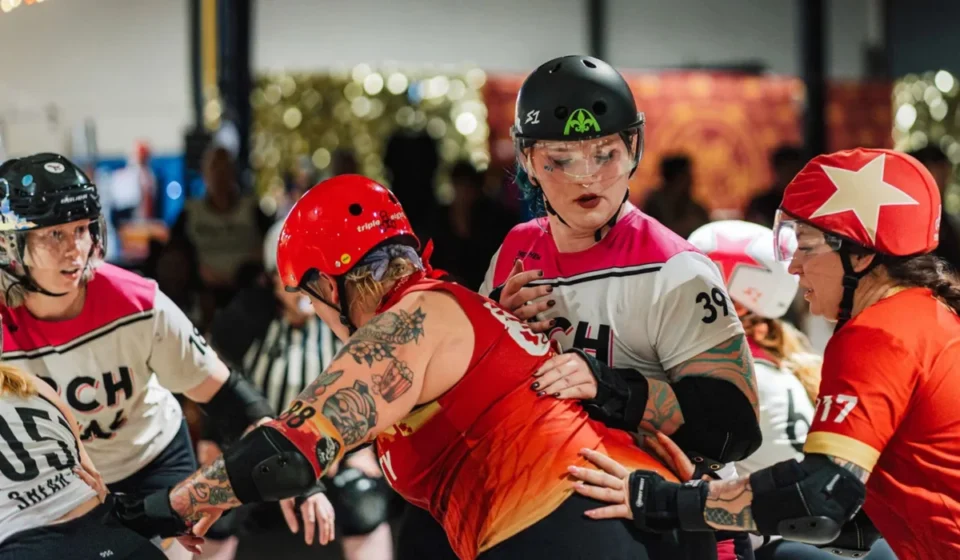

For Juniper Simonis, the memory of a summer evening in 2012 remains as vivid as a favorite film. The air in Ithaca, New York, was thick with the scent of pine and asphalt as she sped through the city on her bicycle, the wind whipping past her helmet. Through her headphones, the ethereal folk melodies of Mariee Siou provided the soundtrack to a life-altering moment: an email had just pinged on her phone, confirming that the Ithaca League of Women Rollers had officially voted to welcome her to the team.
"As somebody who played sports and was queer—but those were two very separate parts of my life—the promise and the opportunity to integrate those was profoundly hopeful," Simonis recalls.
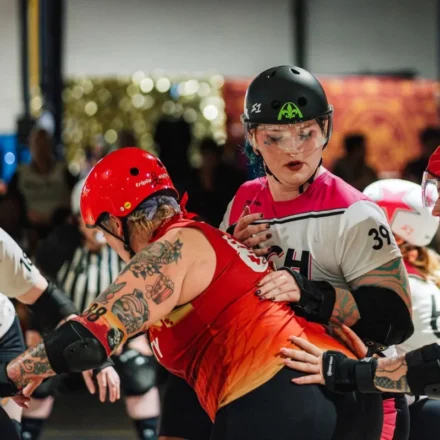
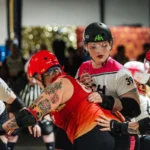
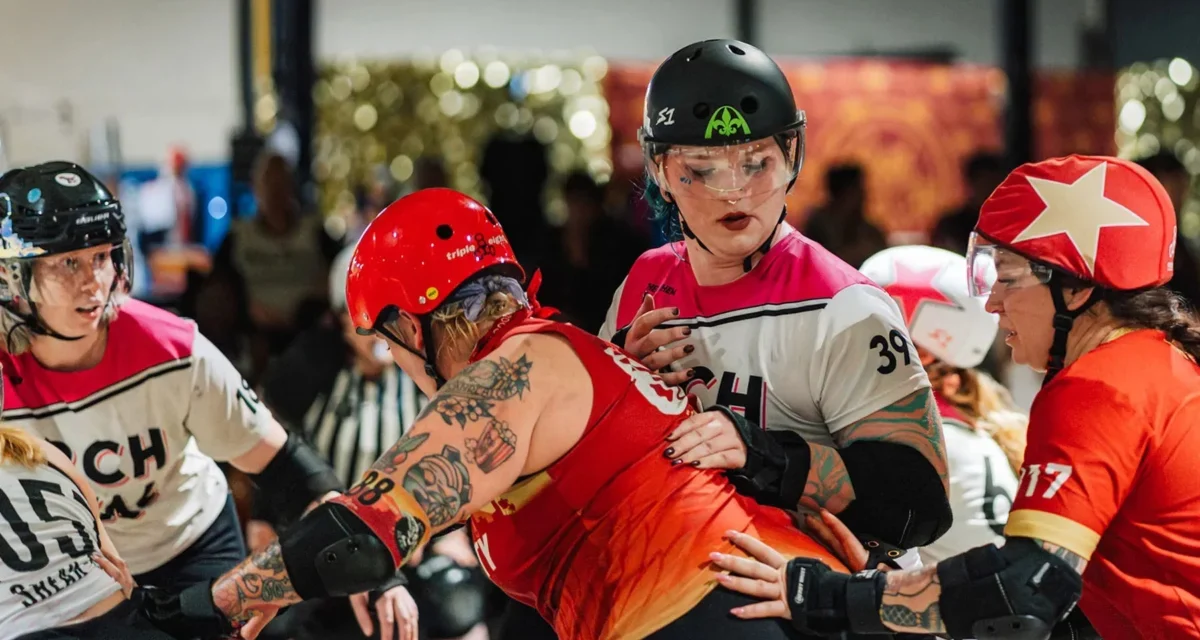
At the time, the transgender rights movement had not yet become the flashpoint of national legislative debates that it is today. Yet, in the gritty, high-contact world of roller derby—a sport defined by punk-rock aesthetics and aggressive, bone-rattling hits—a quiet revolution regarding gender inclusion was already underway. While the sport has faced its own internal struggles with discrimination and systemic bias, roller derby has consistently chosen a path of radical inclusion, offering a blueprint for how sports can prioritize community and humanity over rigid, exclusionary dogmas.
The Evolution of a Counter-Culture Sport
To understand the current landscape of roller derby, one must look back to its origins. Tracing its lineage to the 1930s, the sport began as a marathon endurance race promoted by Leo Seltzer. According to historical records from the Smithsonian, even in its earliest iteration, roller derby was a co-ed pursuit, though it was plagued by the same pay disparities that haunted the rest of the professional sporting world.
As the decades passed, the endurance race morphed into the strategic, five-player contact sport recognized today. By the early 2000s, a grassroots movement in Austin, Texas, breathed new life into the discipline. This era birthed the "punk rock" ethos that defines modern derby: a reclamation of athleticism by women, for women, and eventually, for all marginalized genders.
"There was something really cool about a tough, punk-rock chick of that era," says Rachel "Rotten" Johnston, a veteran skater and Director of the Angel City League. "Roller derby was as much about the bar fights and the black eyes as it was about the skating. It was a direct, visceral rebuttal to the mainstream pop culture of the time."
While mainstream sports often focused on traditional, often restrictive, versions of femininity, roller derby became a sanctuary for the "freaky" and the marginalized. It was a sport where "Beyonslay" and "Iron Maven" were more than just player names—they were declarations of identity.
Chronology of Inclusion: From Gatekeeping to Open Doors
The path to the current inclusive standards was not linear. In the early 2000s, as the Women’s Flat Track Derby Association (WFTDA) began to organize the sport globally, there was a palpable tension regarding membership.
The Early Years: Vague Policies
In the early aughts, the primary goal for many leagues was establishing a "safe space" away from the dominance of men in sports. Consequently, policies were often reactionary and lacked nuance. For years, the WFTDA modeled its gender policies after Olympic standards, which typically required transgender women to have undergone hormone replacement therapy (HRT) for at least two years.
"The gender policy we were working from was well-intentioned, but certainly not iron-clad," Johnston admits. In practice, the enforcement was uneven. Some leagues operated on a "case-by-case" basis, while others relied on antiquated documentation, such as the gender marker on a driver’s license.
The Turning Point: 2015
The shifting tide reached a climax in 2015 when the WFTDA formally updated its policy to welcome all people of marginalized genders. This move moved the focus away from medical gatekeeping and toward a community-based approach. The policy shift was a watershed moment, creating space not only for trans women but also for nonbinary and gender-diverse athletes who had previously felt alienated by the binary structure of women’s sports.
Supporting Data and Personal Narratives
The impact of this policy shift is best illustrated through the lives of the athletes themselves. For Penelope Nederlander, known on the track as "Fifi Nomenon," the transition into the LA Derby Dolls in 2010 was a masterclass in community support.

"I remember sitting down with a mentor after my tryout and saying, ‘I know it’s pretty obvious, but you know I’m trans, right?’" Nederlander recalls. Her mentor simply asked if she identified as female. When Nederlander confirmed, that was the end of the discussion. For the first time in her life, she had a community that only knew her as "Penny."
However, this does not mean the sport is a utopia. The reality for trans athletes—particularly those of color—remains fraught with difficulty.
The Intersection of Race and Gender
Donita Green, known as "Blaxyl Rose," highlights that the sport is not immune to the broader societal issues of racism. "I’ve seen firsthand how much worse some of these microaggressions happen when you are a dark-skinned Black skater," Green notes. "When you add the layer of trans identity, the intensity of that exclusion or judgment often doubles."
Simonis, despite her love for the sport, echoes this, noting that she has been the target of physical assault by other players specifically because of her identity as a transgender woman. These incidents underscore the fact that policy changes at the institutional level do not immediately erase the biases held by individuals.
Official Stances and Institutional Philosophy
Unlike many national governing bodies that have opted to ban transgender athletes in the name of "protecting women’s sports," the roller derby community has largely rejected this framework.
Nicole Williams, often cited as the "LeBron James" of roller derby, has seen two decades of evolution in the sport. When asked about the common arguments regarding "protecting women’s spaces," Williams is blunt: "When I see ‘protect women’s spaces,’ that feels so repressive. I don’t want to discount that women’s spaces are important, but I don’t identify with that rhetoric in the way I used to."
The WFTDA’s refusal to align with exclusionary international sports policies was a conscious decision. For years, the sport was on the shortlist for Olympic consideration, but the organization eventually walked away from the process. They were unwilling to compromise their inclusive values to meet the rigid, often discriminatory, gender regulations mandated by the International Olympic Committee and various international governing bodies.
Implications for the Future of Athletics
The "derby experiment" proves that sports can be both highly competitive and deeply inclusive. Critics often cite "fairness" and "safety" as reasons to exclude trans women, but veterans of the sport argue that these concerns are often disingenuous.
"People who are concerned about safety are missing the fact that we’re playing a full-contact sport," says Johnston. "You’re going to get hurt no matter what. Life isn’t fair, and sports most certainly are not."
The implications of the roller derby model are significant. By prioritizing the human experience of the athlete over the enforcement of rigid biological categories, derby has created a sustainable community that has thrived in the face of external pressure.
Nederlander suggests that the path forward for all sports involves honesty rather than exclusion. "I want to arrive at the same conclusion, but with honesty about it," she says. "In roller derby, there doesn’t seem to be an important difference [in physical advantage]. We don’t have complaints about trans skaters. That’s a more honest, accepting way to handle it."
As the rest of the athletic world continues to struggle with the integration of trans athletes, roller derby stands as a resilient, albeit imperfect, model. It is a reminder that sports were created for human connection, movement, and community—elements that flourish best when the doors are left open, rather than bolted shut.