



















































Minnesota’s Digital Crossroads: Local Courts Become Battlegrounds in the Fight Against Hyperscale Data Centers

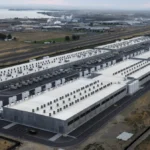
PINE ISLAND, MN – What was once slated to be the bustling construction site of Google’s next hyperscale data center in Pine Island, Minnesota, now lies in a state of suspended animation. Developers and city leaders had envisioned shovels breaking ground this July, transforming a sprawling agricultural field into a digital behemoth. However, those plans have been abruptly halted by a Goodhue County judge, granting a reprieve to fervent local opposition and signaling a growing trend: the judiciary is emerging as a critical arbiter in the contentious national debate over data center expansion.
Across Minnesota and indeed the wider United States, concern over the proliferation of these energy and water-intensive facilities has escalated into a full-blown grassroots movement. Fueling public alarm are the burgeoning demands of artificial intelligence (AI) technology, which require immense computational power housed within these centers. The issue has become a litmus test for political candidates, forcing a reckoning with the environmental, economic, and social impacts of rapid digital infrastructure growth. While much of the opposition’s energy has been directed at swaying public opinion and pressuring elected officials, the unfolding saga in Pine Island, and similar cases statewide, underscores the potent, often decisive, role that actual courtrooms can play in altering the trajectory of major development projects.
Sam Temple, a candidate for the Rice County Board from Faribault, echoes this sentiment, noting that courts have historically served as crucial arbiters for significant public issues. Welcoming a recent ruling that slowed a data center development in his city, Temple observed, "People place hope in the judiciary when they lose it in elected officials. (The court is) not the ideal tool, but it certainly is a tool, and it’s a tool that is a result of local organizing.” His words encapsulate the frustration and newfound empowerment felt by communities grappling with projects often perceived as being fast-tracked without adequate public discourse or regulatory scrutiny.
The Unfolding Chronology of Resistance
The battle against data centers in Minnesota is not a singular event but a series of interconnected skirmishes, each with its own local flavor, yet united by common grievances. The legal landscape has proven dynamic, with several communities experiencing significant shifts in their development trajectories.

Pine Island: A Google Project Halted (July 2026)
The planned Google hyperscale data center, internally dubbed "Project Skyway," was initially on a fast track. City leaders and the developer were prepared to begin construction in July 2026, despite vocal opposition from a citizen group. However, a lawsuit filed by the Minnesota Center for Environmental Advocacy (MCEA) alleged that the city’s environmental review was "insufficient and illegal." In a pivotal moment, a Goodhue County judge issued an injunction, pausing construction indefinitely. The judge’s order cited "irreparable harm" if the project were allowed to proceed without resolving the legal challenges. This ruling offered a crucial victory to activists like Aubree Derksen, a local organizer against the project, who expressed a defiant sense of accomplishment, stating, “Getting the injunction, finally, getting that victory, it’s like f— yeah. We’re the smallest town in the state fighting this and it’s a small nonprofit that’s putting you in your place.” The city of Pine Island, through Administrator Elizabeth Howard, has declined to comment on pending litigation.
Faribault: A Call for More Rigorous Review (June 2026)
Concurrently, another MCEA lawsuit targeting a data center project in Faribault, developed by Archer Datacenters, made its way to the Minnesota Court of Appeals. In a significant June 2026 opinion, the appeals court sided with MCEA, ruling that the city had failed to conduct a sufficiently rigorous environmental review. This decision sent the project back to the drawing board. In response, the Faribault City Council extended Archer’s deadline to submit additional information for review until 2027, and critically, announced plans to develop and implement new, comprehensive data center standards. These forthcoming standards will address critical concerns such as water usage, electricity consumption, and air emissions, reflecting a more proactive approach to regulation prompted directly by judicial intervention.
Hermantown: Citizen-Led Opposition and NDAs
In Hermantown, local residents and groups like "Stop the Hermantown Data Center" are engaged in their own active legal battle. Paul Fish, a resident living near the proposed site, found himself named in a lawsuit after questioning city leadership about the development. His experience highlights a recurring theme: the feeling that plans are far advanced before the public is even aware. Fish noted that non-disclosure agreements (NDAs) signed by local officials enabled the project to progress in secrecy, leaving residents "a year behind" by the time information became public. A community gathering in Solway Township in July 2026, captured in news photos, showed residents actively discussing their opposition, emphasizing the grassroots nature of this movement.
Monticello and Farmington: Ongoing Legal Fights
The MCEA nonprofit is also actively involved in challenging regulatory processes in Monticello. Beyond MCEA’s efforts, other citizen groups have initiated their own legal actions. The "Coalition for Responsible Data Center Development" filed a lawsuit in Farmington, indicating a broader, decentralized resistance across the state. Cathy Johnson of this coalition articulated the despair that often leads to legal action: lawsuits become necessary "when our local officials aren’t listening to us and the state Legislature is too tied up in gridlock."

North Mankato: Moratorium on the Horizon?
North Mankato briefly featured on MCEA’s lawsuit list, but the organization dropped its case when no concrete project materialized. However, the community remains vigilant. The city is now poised to hold a public hearing to consider imposing a moratorium on data center developments, reflecting a growing desire among local governments to pause and reassess the implications of these projects before committing to them.
This chronological overview demonstrates a clear pattern: as local elected officials often appear unwilling or unable to adequately address community concerns, citizens and environmental advocates are increasingly turning to the courts, finding them a more responsive, albeit costly, avenue for recourse.
Deep Dive into Opposition: The Concerns at Stake
The legal arguments against data center projects vary in their specifics, ranging from allegations of lax environmental reviews and withheld public information to violations of open meeting laws. Yet, as Luke Norquist of the Minnesota Center for Environmental Advocacy points out, these cases are united by fundamental frustrations. “People are feeling like they don’t have information or a say in these massive projects that seem like they’re moving ahead at lightning speed,” Norquist stated. He directly links this local resistance to the global tech race, observing, “As Meta fights Google fights Microsoft to try and become the next AI overlords, that sort of local resistance is happening across the nation.”
The core concerns driving this opposition are multifaceted and deeply rooted in environmental, social, and democratic principles:

Environmental Impact: Water, Energy, and Emissions
At the forefront of environmental concerns is the immense resource footprint of hyperscale data centers. These facilities are ravenous consumers of electricity, often requiring dedicated power infrastructure and contributing significantly to the demand on the regional grid, frequently powered by fossil fuels. The energy demands are projected to surge further with the proliferation of AI, which requires exponentially more processing power. Equally pressing is the issue of water usage. Data centers rely heavily on water for cooling their vast arrays of servers, often drawing millions of gallons daily from local municipal supplies or natural sources. In regions already facing water scarcity or strained infrastructure, this demand can have profound ecological and community-level consequences. Furthermore, the massive power consumption often translates to increased air emissions from power plants, impacting air quality and contributing to climate change. Lawsuits frequently target the adequacy of environmental impact statements, arguing that cities have approved projects without a thorough and transparent assessment of these long-term consequences. The Faribault ruling, mandating a more rigorous environmental review and new standards for water and electric usage, directly addresses these critical environmental dimensions.
Transparency and Local Control: The Democratic Deficit
A pervasive complaint among residents is the lack of transparency and public engagement in the early stages of data center development. The use of non-disclosure agreements (NDAs) by developers and local officials is a particular point of contention. As Paul Fish in Hermantown articulated, these agreements allow plans to advance behind closed doors, leaving the public "a year behind" by the time official processes begin. This secrecy creates a perception that projects are a "done deal" before residents have any opportunity for meaningful input. Allegations of secret plans and defiance of open meeting laws further erode public trust, making communities feel disenfranchised from decisions that will profoundly impact their quality of life, local infrastructure, and natural resources. The fight, then, is not just against the data centers themselves, but for the fundamental right to local democratic control and informed consent.
Community Character and Quality of Life
While less explicitly detailed in the legal arguments, underlying community concerns often include the alteration of local landscapes and quality of life. The transformation of "sprawling farm fields" into industrial complexes, as described in Pine Island, speaks to a fundamental change in the rural or semi-rural character of these towns. Potential issues like noise pollution from cooling systems, increased traffic during construction and operation, and the sheer scale of these facilities can be deeply unsettling for residents. These intangible impacts, while harder to quantify legally, form the emotional bedrock of citizen opposition.
The Judicial Front: Rulings and Recourse
The recent court rulings in Pine Island and Faribault represent significant, albeit perhaps temporary, victories for data center opponents. They highlight the judiciary’s capacity to enforce existing environmental regulations and demand greater accountability from local governments.

In Pine Island, the judge’s order to pause construction was not a final judgment on the project’s legality but a critical injunction. It acknowledged the potential for "irreparable harm" if the project were allowed to proceed while the lawsuit, alleging an "insufficient and illegal" environmental review, was still unresolved. This provides the citizen group and MCEA the necessary time to fully plead their legal case, preventing developers from creating irreversible facts on the ground.
The Minnesota Court of Appeals ruling concerning Faribault was more definitive in its finding, explicitly stating that the city needed to conduct a "more rigorous environmental review." This wasn’t merely a delay; it was a mandate for a higher standard of due diligence. In response, the Faribault City Council’s commitment to developing new standards for water usage, electric usage, and air emissions is a direct consequence of this judicial intervention. It suggests a shift from passive approval to a more proactive, regulatory stance, demonstrating the court’s power to compel local governments to strengthen their oversight.
Sam Temple’s observation that the court rulings reveal "not corruption, is not malicious intent, but it is simply passivity" on the part of elected officials, resonates deeply. He argues that communities desire a "more proactive local government," implying that courts are stepping in where local councils have failed to adequately anticipate and regulate these massive industrial developments.
However, the judicial path is not one that communities choose lightly. Before seeking legal recourse, citizens often exhaust all other avenues. They turn to city hall, only to find elected officials more amenable to the developers’ plans. They lobby state legislators, as seen by the failure of "every bill to rein in data centers last session." They attempt to make data centers an election issue, but electoral shifts take time to translate into policy. For groups like the Coalition for Responsible Data Center Development, lawsuits become a last resort, a "lever to pull" when all other democratic processes seem gridlocked or unresponsive.

The Path Ahead: Challenges and Evolving Landscape
While court rulings offer a powerful mechanism for checks and balances, they are far from a perfect solution for citizen groups. The most formidable barrier is undoubtedly financial. Lawsuits are expensive, requiring substantial resources for legal fees, expert testimonies, and administrative costs. This financial burden is starkly asymmetrical when citizen groups are pitted against multinational tech giants like Google, Microsoft, or Meta, which possess virtually limitless legal budgets.
At a recent gathering of the Stop the Hermantown Data Center group, the pressing need for donations was a recurring theme. Cathy Johnson of the Coalition for Responsible Data Center Development openly stated that her group in Farmington "desperately needs funding" to continue its legal battle. Paul Fish, reflecting on the David-and-Goliath nature of these contests, expressed his hope for a favorable ruling in Hermantown but remained pragmatic about the realities of litigation. He noted that court cases rarely resemble the dramatic resolutions seen on "Court TV," often dragging on for extended periods without immediate, decisive outcomes. "And it’s costly, that’s the thing," Fish emphasized. "For a citizens group to have the resources to fight Google off? (Google) could walk away from this whole thing and write it off.” This stark reality highlights the vulnerability of local activists against well-resourced corporate adversaries.
Despite these significant challenges, the collective action by citizens and environmental advocacy groups, coupled with favorable court decisions, is undeniably reshaping the conversation around data center development in Minnesota and beyond. The growing awareness of their environmental impact, particularly concerning water and energy consumption, is forcing a reevaluation of siting and regulatory processes. The issue’s emergence as a "litmus test for political candidates" signals that the public is demanding accountability and a more balanced approach to technological growth.
The judicial interventions in Pine Island and Faribault have not only provided temporary relief but have also set important precedents, demonstrating that local governments cannot rubber-stamp major industrial projects without rigorous environmental review and adherence to transparency principles. These rulings send a clear message: while the march of AI and digital infrastructure may seem inexorable, local communities, armed with legal tools and unwavering determination, possess the power to pause, question, and ultimately shape the future of their landscapes in the face of hyperscale ambition. The battle is far from over, but the courts have emerged as an indispensable arena in this evolving struggle for local control and environmental stewardship.