

























































Rivian CFO Claire McDonough Departs Amidst Strategic Pivot: A Look at Her Legacy and the Road Ahead

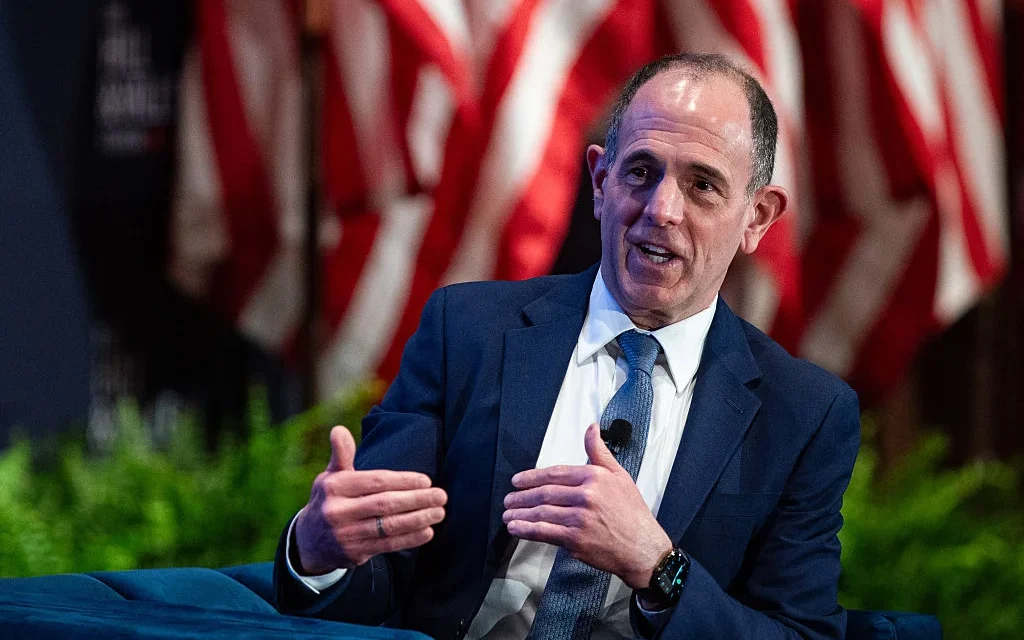
In a significant leadership shakeup for the electric vehicle (EV) sector, Rivian Automotive announced on Thursday that Chief Financial Officer Claire McDonough will step down from her position at the end of October. The departure marks the end of a pivotal four-year tenure during which McDonough navigated the company through the treacherous transition from a private, pre-revenue startup to a publicly traded manufacturer grappling with the realities of global automotive scale.
According to a regulatory filing submitted by the company, McDonough is leaving to "pursue a new opportunity and relocate to the East Coast to be closer to her family." Shortly after the announcement, it was confirmed that she will be transitioning to the role of CFO at GE Vernova, the Massachusetts-based energy equipment giant.
Rivian, in an attempt to project stability, stated that the resignation is "not the result of any disagreement" regarding the company’s operations, policies, or financial practices. As the search for a permanent successor commences, Derek Mulvey, the company’s current Vice President of Finance, has been tapped to serve as interim CFO.
The Chronology of a High-Stakes Tenure
Claire McDonough joined Rivian in January 2021, stepping into the CFO seat at a time when the company was under immense pressure to prove its viability. Replacing her predecessor, Ryan Green, McDonough arrived at a crossroads; the company was burning through billions in venture capital to fund the R1T truck, R1S SUV, and commercial delivery vans.
2021: The IPO and Operational Hurdles
McDonough’s first year was defined by the intensity of the capital markets. She served as a primary architect of Rivian’s 2021 Initial Public Offering, which raised $12 billion—one of the largest and most anticipated IPOs of the year. While the stock debuted at $78, the subsequent years proved difficult, with the share price reflecting the broader volatility of the EV market and the immense difficulty of scaling automotive production.
2022–2023: The Struggle for Profitability
The intervening years saw McDonough tasked with a brutal balancing act: scaling production while managing crippling supply chain constraints. Unlike many automotive CFOs who came up through traditional OEMs like Ford or GM, McDonough brought a background from JPMorgan and Fairway Market. This unconventional profile allowed her to approach the company’s balance sheet with a focus on operational efficiency that transcended legacy industry norms. She became a fixture in product meetings, working alongside CEO RJ Scaringe to ensure that as Rivian grew, it did not fall into the trap of losing money on every unit sold—a struggle that has plagued many of its competitors.
2024: The Volkswagen Partnership
Perhaps the crowning achievement of McDonough’s tenure was the negotiation of the landmark technology joint venture with the Volkswagen Group. Finalized in November 2024, the deal saw Volkswagen commit to investing up to $5.8 billion into Rivian by 2027. In return, VW gained access to Rivian’s proprietary electrical architecture and software, a validation of the technical foundation McDonough helped fund and foster.
Supporting Data: Financial Realities and Market Performance
The landscape in which McDonough leaves Rivian is vastly different from the one she entered. While the company has successfully transitioned to a mass-production entity, the financial metrics illustrate the ongoing uphill battle.
- Stock Performance: From its peak, the company’s valuation has faced significant headwinds. As of the close of markets on the day of the announcement, Rivian’s stock was trading at approximately $16.80, a stark contrast to its $78 opening price.
- Production Scaling: The company is currently in the midst of its most aggressive project to date: the launch and scaling of the R2 SUV. The R2 is designed to be a volume-driver, intended to bring the brand to a wider consumer base.
- Operational Scope: Beyond vehicle manufacturing, McDonough’s oversight was broad. She managed corporate and business development, facilities, vehicle repair operations, and the infrastructure of the Rivian Adventure Network (the company’s proprietary charging grid).
Official Responses and Internal Sentiment
The departure was handled with the typical corporate formality, but the tone of the communication underscored a level of mutual respect. In a poignant LinkedIn post, McDonough reflected on the evolution of the brand:
"Together, we launched the R1T, R1S, and our commercial van, drove technology innovation and partnerships, built our go-to-market operations, and positioned the company for global scale and profitability with the launch of R2," McDonough wrote. "Being part of taking Rivian from an ambitious vision to a category-defining enterprise has been the highlight of my career."
Industry observers and insiders have noted that McDonough’s influence was felt far beyond the balance sheet. By acting as a bridge between the engineering department and the investor community, she helped maintain a cohesive vision for the company during periods where cash flow concerns threatened to derail long-term projects. Her ability to secure the VW deal is widely seen as a "bridge to the future," providing the liquidity required to survive the current capital-intensive phase of the R2 rollout.
Implications: What Comes Next for Rivian?
The timing of this exit is critical. Rivian is currently navigating a "make-or-break" phase. While the R2 is seen as the company’s best hope for reaching profitability, the automotive industry is currently experiencing a cooling of consumer demand for EVs, accompanied by intense price competition from Tesla and Chinese manufacturers.
The Interim Transition
The appointment of Derek Mulvey as interim CFO suggests a desire for continuity. Mulvey, as a long-time member of the finance team, is intimately familiar with the internal structures McDonough helped build. However, the search for a permanent successor will be closely watched by Wall Street. Investors will be looking for a candidate who can not only manage the complex cost-accounting of an automotive startup but also one who can maintain the strategic partnerships that McDonough cultivated.
The Strategic Outlook
Rivian now faces a period of transition in the C-suite that coincides with a transition in its product lineup. The company must prove that its R2 platform can be manufactured at a margin that justifies the massive investment. Furthermore, the integration of the VW software partnership remains a significant technical and cultural challenge.
McDonough leaves behind a company that has moved from "surviving" to "executing." Whether the path she paved will lead to the profitability she envisioned depends heavily on the company’s ability to maintain discipline in the face of shifting market dynamics. As she moves to GE Vernova, she leaves a void in the leadership team of one of America’s most ambitious automotive endeavors—a void that the incoming leadership will need to fill with both financial acumen and the same strategic foresight that defined her tenure at Rivian.
For the automotive sector, this departure is a reminder of the high turnover and intense pressure inherent in the EV startup ecosystem. The coming months will be a test of whether the systems and culture installed by McDonough can sustain the company as it moves toward the next chapter of its development.