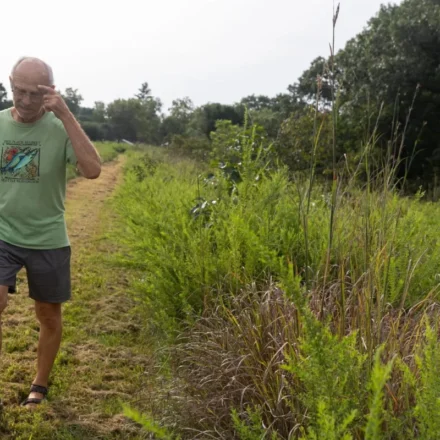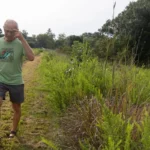


































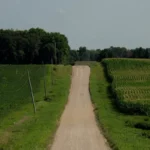








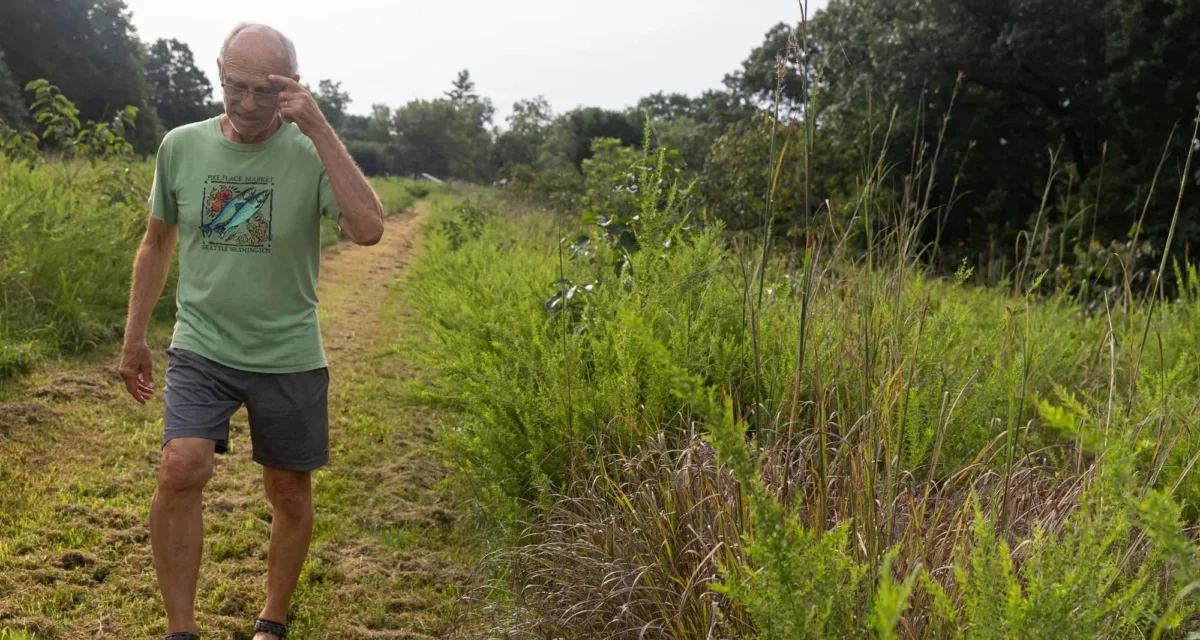





ASHLAND, Mo. — On a humid August morning, Dan Kuebler walks the perimeter of the 30-acre property he once called his own. For 33 years, these fields were the engine of his life, producing a bounty of fruits, vegetables, and artisanal fermented goods that became staples at the Columbia Farmers Market. But as he surveys the soil, his perspective is no longer that of a producer, but of a steward.
Kuebler is part of a growing movement of landowners grappling with a painful paradox: the land they have spent decades cultivating is now more valuable as a subdivision than as a farm. With urban sprawl encroaching on rural Boone County, the pressure to sell to developers is immense. For many, this represents a final, difficult decision—a choice between maximizing retirement savings or ensuring that the land remains productive for generations to come.
The Shrinking Heartland: A Crisis of Development
The numbers paint a sobering picture of American agriculture. According to data from the American Farmland Trust (AFT), the United States loses or compromises approximately 2,000 acres of farmland every single day to development. By 2040, the organization projects that an additional 18.4 million acres—a landmass roughly the size of South Carolina—will be lost to urban sprawl and "low-density residential" development.
This phenomenon is particularly acute in the Midwest and the South. While high-density urban expansion is often blamed, the proliferation of rural housing—large, multi-acre plots carved out of former working farms—accounted for the loss of nearly 7 million acres of agricultural land between 2001 and 2016.
For farmers like Kuebler, the sight of a quiet, two-mile dead-end road being chopped into five-acre residential parcels is more than just a change in scenery; he describes it as "sacrilege." Having moved to Ashland in 1977 when it was a "little, bitty, sleepy town," he watched as the geography shifted to accommodate commuters from Columbia and Jefferson City. As he neared retirement, the looming question was how to ensure his legacy didn’t end in a cul-de-sac.
Chronology of a Stewardship
Kuebler’s journey into the soil began relatively late in life. He started farming at 40, balancing the labor-intensive reality of agriculture with his professional career as an in-home physical therapist. Over three decades, he built a reputation for high-quality produce and was a vocal advocate for the Columbia Farmers Market, even helping push for the permanent shelter that currently houses the venue.
However, as the encroaching development tightened its grip on southern Boone County, Kuebler faced the realization that he couldn’t control the future of his land indefinitely without legal intervention. His solution was a conservation easement—a legal agreement that permanently restricts development on a property.
Working with the Greenbelt Land Trust of Mid-Missouri, Kuebler attached an easement to his deed that effectively strips the land of its "development rights." Regardless of who purchases the property in the future, it must remain farmland. "You cannot subdivide it, you cannot sell it off for residential or commercial development," says Nick Shapiro, executive director of the Greenbelt Land Trust. "That is the guiding principle."
For Kuebler, the process was not without cost. He estimates he spent roughly $20,000 on appraisals and surveys. Furthermore, by opting out of residential development, he surrendered an estimated $90,000 in potential market value. Despite this, he sold the land last year to a young, local farmer with the explicit requirement that the land be managed using sustainable and regenerative methods. In a final, personal touch, the easement allows Kuebler to retain access to a small cabin on the property for the remainder of his life.
The Economic Barrier: Why Easements Remain Rare
While conservation easements offer a moral victory for land preservation, they present a daunting financial hurdle. Josh Wright, a representative for the American Farmland Trust, notes that placing such restrictions on a property can reduce its appraised value by up to 65%.
"Whenever you go to sell your property, it’s going to be appraised, and that’s going to be judged at the ‘best and highest use’ in the industry," Wright explains. In the current real estate market, that "best use" is almost never agriculture. For a farmer relying on the sale of their land to fund their retirement, the financial sacrifice required for an easement can be prohibitive.
Rick Mareske, a farmer on the north side of Kansas City, Kansas, represents the other side of this dilemma. For 20 years, he and his wife have operated a 40-acre farm focused on berries and forest farming. Like Kuebler, they are approaching retirement and have explored the possibility of an easement.
"The cons are, it’s expensive," Mareske says. "It’s like $20,000 to $25,000 just to do it, and then you lose money." Because the land serves as their primary retirement asset, the potential loss of equity is a risk they are struggling to justify. They currently hope to find a buyer who values the farm’s existing mission, but they lack the financial buffer to enforce that legacy through a formal easement.
Official Responses and Federal Support
Recognizing the rapid decline of American farmland, the federal government has attempted to step in. The Agricultural Conservation Easement Program (ACEP-ALE) was designed to help close the gap between the agricultural value of land and its development value. Congress has steadily increased funding for this program, which currently stands at $650 million annually.
These funds are distributed through land trusts, state agencies, and tribal governments to effectively "buy" the development rights from the owner, providing a financial cushion that makes the conservation choice more viable. Since 2014, over 1 million acres have been preserved under this federal umbrella.
Yet, the distribution of these protected lands is highly uneven. More than half of the acreage currently under federal easements is concentrated in just three states: Montana, Wyoming, and Colorado. In Missouri, the program has yet to see a single acre of farmland enrolled.
Eric Gramlich of the Ozark Land Trust attributes this to a lack of awareness and a scarcity of local land trust organizations equipped to handle the complex, multi-year application process. "I’d like to think that we’ll be gaining more efficiencies in the program now that it’s been established," Gramlich notes, "but it is generally a multiyear process to get the application in, the contracting paperwork, and then to actually do the boots-on-the-ground work."
The Natural Resources Conservation Service (NRCS) has attempted to "streamline" the process by simplifying appraisals and surveys, but for many farmers, the gap between government compensation and the lucrative offers from commercial developers remains too wide to bridge.
Implications for the Future of Agriculture
The loss of farmland is not merely an issue of real estate; it is a fundamental threat to regional food security and cultural heritage. As Nick Shapiro of the Greenbelt Land Trust emphasizes, the economy, culture, and history of mid-Missouri are inextricably linked to the land.
The "graying" of America’s farmers—a generation currently holding millions of acres that will change hands by the end of the decade—creates an urgent window of opportunity. If this land is allowed to transition into residential use, it is lost forever. If it is transitioned to a new generation of farmers, it can continue to provide for the community.
For Dan Kuebler, the transition has been bittersweet but ultimately fulfilling. Though he no longer sells at the farmers market, he remains a regular attendee, catching up with the customers he served for over 30 years. "I see them and we talk," he says, "and it’s like I really didn’t lose my community."
As the pressure from urban sprawl continues to mount, the stories of Kuebler and Mareske serve as a microcosm of a larger national struggle. The future of the American landscape depends on whether society can place a higher value on food production than on pavement. Until the financial incentives align with the environmental and social need for preservation, the fate of the family farm will remain in the hands of individuals willing to prioritize a legacy over a profit margin.