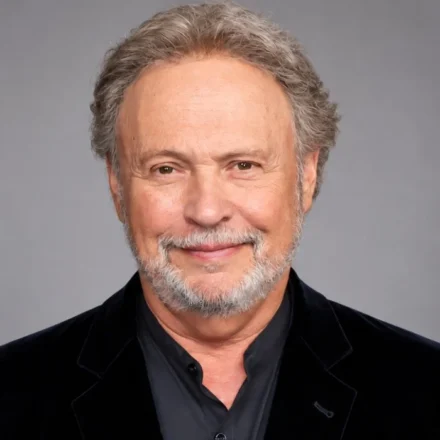








































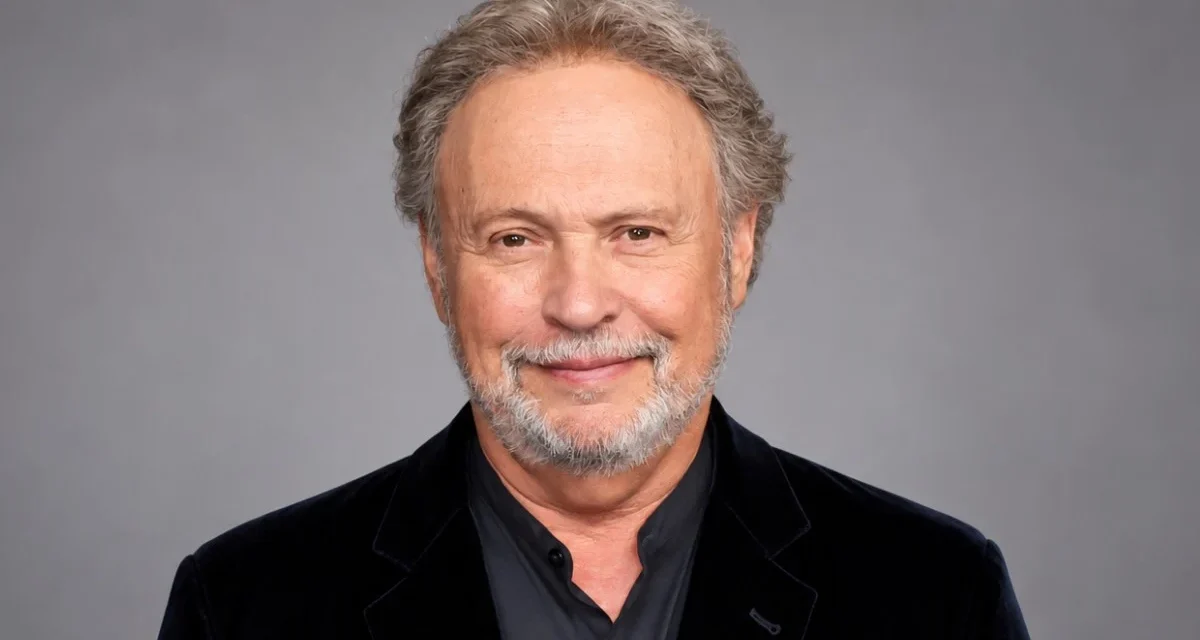






For over five decades, Billy Crystal has stood as one of American entertainment’s most iconic comic voices. Through celebrated roles in film classics such as When Harry Met Sally…, City Slickers, and Analyze This, as well as hosting the Academy Awards nine times, Crystal established a career built on warmth, sharp observational wit, and relatable humanity. However, at age 78, the legendary performer finds himself navigating an unprecedented period of personal grief—one so profound that it has fundamentally altered his inner spiritual life.
Over the course of a single year, Crystal suffered two catastrophic losses: the complete destruction of his long-time family home in the Los Angeles wildfires, followed months later by the brutal murder of his closest friend, director Rob Reiner, and Reiner’s wife, Michele. The compounding weight of these events led Crystal to a surprisingly stark admission during a national television interview: he has stopped talking to God, severing a spiritual dialogue that had once been a cornerstone of his creative and personal identity.
To process his grief, Crystal has returned to the venue where he previously converted personal pain into artistic achievement—the Broadway stage. His new one-man show, 860, serves as both a public memorial to what was lost and a testament to the role of comedy as a survival mechanism in the face of tragedy.
Main Facts: A Comedy Icon Facing Unimaginable Tragedy
The structural foundation of Crystal’s recent ordeal rests on two distinct, highly traumatic events that occurred in close succession, fundamentally upending his life and sense of security.
First, in January 2025, a disastrous wildfire consumed the Pacific Palisades neighborhood in Los Angeles, reducing the house Crystal shared with his wife, Janice, for nearly 50 years to ash. Beyond the immense financial value of the real estate, the residence held half a century of family history, childhood memories for their daughters, and decades of creative work.
Second, in December 2025, tragedy struck his immediate social circle in a violent and unimaginable manner. Filmmaker Rob Reiner—who directed Crystal in When Harry Met Sally… and remained one of his dearest confidants—was found dead alongside his wife, Michele, in their Los Angeles home. Their son, Nick Reiner, was subsequently arrested and charged with their murders. Crystal had spent the evening prior with the couple at a holiday gathering, making the sudden violence almost impossible to comprehend.
The emotional fallout from these paired disasters led Crystal to reconsider his spiritual beliefs. In an interview broadcast on CBS Sunday Morning on October 11, 2026, correspondent Tracy Smith asked Crystal if he still engaged in the conversational prayers with God that he famously featured in his Tony Award-winning Broadway show, 700 Sundays.
"No, ’cause I don’t trust Him," Crystal replied bluntly. He explained that the sheer volume of tragedy he had witnessed made the world feel inherently unpredictable and unsafe, prompting him to step away from his former faith.
Chronology of Crisis: From Pacific Palisades to Broadway
Understanding the impact of these events requires examining the timeline of loss that reshaped Crystal’s life over a 22-month period.
+-----------------------------------------------------------------------+
|                         TIMELINE OF EVENTS                            |
+-----------------------------------------------------------------------+
| JAN 2025 : Palisades Fire destroys Crystal's home of nearly 50 years. |
| DEC 2025 : Rob and Michele Reiner murdered; Nick Reiner charged.      |
| OCT 2026 : CBS interview airs; preview performances of '860' begin.   |
| OCT 2026 : Official Broadway opening of '860' at Imperial Theatre.    |
| JAN 2027 : Scheduled conclusion of initial limited Broadway run.      |
+-----------------------------------------------------------------------+
January 2025: The Devastating Palisades Fire
In early January 2025, the Palisades Fire raged through Pacific Palisades, an affluent coastal neighborhood of Los Angeles. As flames rapidly approached, sirens and low-flying emergency helicopters awakened Crystal and his wife. Forced to evacuate on short notice, the couple faced frantic moments of decision-making.
Crystal later recalled the surreal juxtaposition of panic and mundane human thought during the evacuation: while Janice focused on gathering essential prescriptions, Crystal found himself strangely preoccupied with a leftover sandwich in the refrigerator. Within hours, the house, its contents, and the surrounding property—including a backyard basketball court where Crystal frequently hosted friends and interviewers—were entirely destroyed.
December 2025: The Loss of Rob and Michele Reiner
Elevating the year’s tragedy from material loss to personal horror, director Rob Reiner and his wife, Michele, were killed inside their Los Angeles residence in December 2025. Hours before the crime, Crystal had attended an intimate holiday gathering with the couple. They exchanged routine, warm goodbyes late into the evening, with no indication of the catastrophe that would unfold the following day.
The subsequent arrest of the Reiners’ son, Nick Reiner, sent shockwaves through the entertainment industry and left Crystal struggling to process the sudden disappearance of his closest artistic collaborator and friend.
October 2026: The Public Reckoning and ‘860’ Launch
On October 1, 2026, Crystal began preview performances for his new one-man theatrical show, 860, at the Imperial Theatre in New York City. On October 11, the CBS Sunday Morning segment aired, offering the public its first deep look into Crystal’s emotional state, his spiritual detachment, and his determination to use humor as a therapeutic tool. The production officially opens on October 21, 2026, with a limited Broadway run scheduled through January 3, 2027.
Theological and Psychological Toll: The Fracturing of Spiritual Trust
Crystal’s public departure from faith represents a notable evolution in his public persona. Throughout his career, his comedic framing of life often leaned on a warm, culturally Jewish perspective that viewed God as an approachable, if slightly perplexing, figurehead.
Conversations with God: A Dramatic Shift
In 700 Sundays, his acclaimed 2004 autobiographical show, Crystal frequently staged hypothetical dialogues with God, using them to interrogate the loss of his father, Jack Crystal, who died of a heart attack when Billy was just 15 years old. In that work, God was treated as a harsh yet ultimately acceptable authority figure with whom one could negotiate or express grief.
The events of 2025, however, stripped away that theological tolerance. The transition from grieving a father who died young to losing half a century of home life alongside the violent murder of a peer proved to be a breaking point. Crystal’s declaration—"I don’t trust Him"—signals a psychological shift from searching for meaning within a divine framework to viewing events as inherently chaotic and untrustworthy.
The Dual Burden of Material and Personal Bereavement
Psychological research into disaster recovery indicates that losing a home late in life carries specific, acute stress factors. For seniors, a home is not merely shelter; it is an physical repository of memory and identity. While Crystal acknowledged his financial privilege and access to immediate resources after the fire, he noted that wealth does not insulate an individual from the emotional vacuum created when decades of physical history disappear overnight.
When compounded by violent crime within his immediate personal network, the psychological toll deepened. Traumatic bereavement—grieving a friend lost to homicide—often creates severe cognitive dissonance, particularly when the victim was seen mere hours before the crime.
Creative Catharsis: The Genesis and Staging of ‘860’
To navigate this landscape of grief, Crystal turned to creative work. His new theatrical production, 860, takes its name directly from the street address of the Pacific Palisades house he lost in the fire.
+-----------------------------------------------------------------------+
|                    PRODUCTION PROFILE: '860'                          |
+-----------------------------------------------------------------------+
| Venue            : Imperial Theatre, New York City                    |
| Director         : Scott Ellis                                        |
| Music Composer   : Marc Shaiman                                       |
| Key Set Feature  : Detailed recreation of destroyed home office       |
| Run Dates        : Previews Oct 1, 2026 | Opens Oct 21 | Closes Jan 3, 2027 |
+-----------------------------------------------------------------------+
Rob Reiner’s Final Creative Nudge
The title of the show carries a poignant connection to Rob Reiner. As reported by Entertainment Weekly, Crystal had been wrestling with several potential titles for a project addressing the loss of his home. Shortly before Reiner’s death, Crystal pitched the idea of simply naming the show 860. Reiner immediately endorsed the concept, urging him to keep it simple and direct. Consequently, the title stands as Reiner’s final creative contribution to his friend’s body of work.
Reconstructing the Lost Physical Space
A central feature of 860 is its stage design. Rather than relying entirely on digital projections or abstract staging, Crystal worked with set designers to build a precise physical recreation of his destroyed home office. Every detail—from the arrangement of furniture to the placement of memorabilia—was modeled on the room that burned in the Palisades Fire.
For audiences, the set provides a vivid back-drop for Crystal’s stories about family, marriage, Hollywood, and friendship. For Crystal himself, walking onto the stage each night offers a temporary, controlled return to a space that no longer exists in the physical world.
Insights from Collaborators
The production brings together long-time creative partners, including director Scott Ellis and Tony-winning composer Marc Shaiman. Speaking during the CBS Sunday Morning coverage, both collaborators emphasized that humor was not being used to mask pain, but rather to organize it.
"The humor is the way through," Ellis noted, highlighting how Crystal’s writing balances lighthearted memories of life in Pacific Palisades with the stark reality of its destruction. Shaiman’s musical score similarly weaves nostalgic melodies with somber tones to reflect the show’s emotional landscape.
Cultural and Human Implications: Grieving in the Public Eye
Crystal’s experience underscores several broader cultural themes regarding trauma, aging, artistic resilience, and the public processing of grief.
The Healing Power of Tragedy-Driven Comedy
Using comedy to confront dark subject matter has a long tradition in theatrical arts, one Crystal previously explored after his father’s early death. In 860, Crystal demonstrates that finding humor within a terrible situation does not negate grief; rather, it provides the psychological relief necessary to endure it. Performing the show, Crystal stated, served as a primary driver of his personal healing long before the formal Broadway opening.
   [ Traumatic Loss ]
           │
           ▼
  [ Artistic Expression ]  ──►  Reconstructing Memory (Set Design)
           │
           ▼
  [ Shared Experience ]   ──►  Audience Engagement & Catharsis
           │
           ▼
 [ Healing & Survival ]   ──►  Reclaiming Agency over Tragedy
Wildfire Disasters and Generational Displacement
The loss of Crystal’s home reflects a growing reality for residents in wildfire-prone regions of California. Beyond the immediate crisis of displacement, long-time homeowners face the loss of historical memory anchors. By placing his experience on a national stage, Crystal’s work resonates with broader populations affected by climate-driven property destruction and sudden displacement.
Future Plans: Returning to Los Angeles
Following its limited Broadway engagement through January 3, 2027, Crystal intends to bring 860 to Los Angeles. Performing the show in the city where both the Palisades Fire and the murder of Rob Reiner took place represents a deliberate effort to share this narrative with the community most directly impacted by the disaster.
At 78, Crystal remains resolute about continuing his work. While his trust in divine oversight may be severed, his commitment to human connection through storytelling remains intact—offering an example of how artistic discipline can sustain an individual through the darkest chapters of life.