





































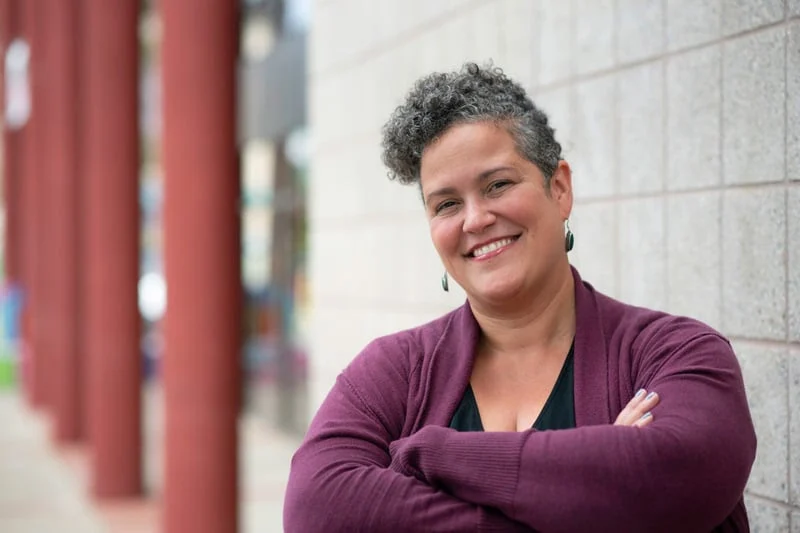
From the Stage to the Boardroom: How Signe Harriday is Redefining Nonprofit Leadership

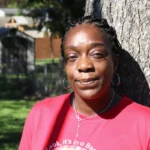
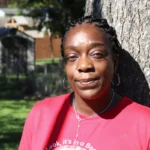
In an era where higher education institutions are systematically downsizing their theater programs—often absorbing them into other departments or eliminating them entirely—the perceived utility of an advanced degree in the performing arts is frequently under fire. Critics often argue that a life spent in the wings of a theater provides little preparation for the rigorous demands of executive management. However, the recent appointment of Signe Harriday as the president and CEO of Pillsbury United Communities (PUC), one of the Twin Cities’ oldest and most influential nonprofit organizations, serves as a powerful counter-narrative to that skepticism.
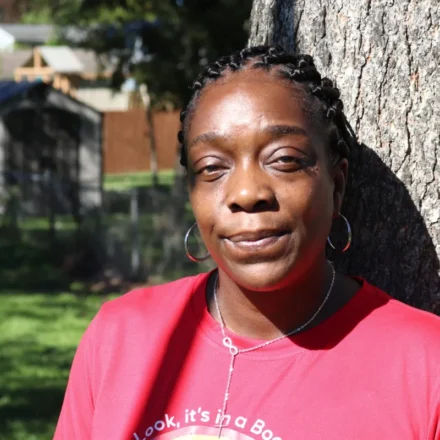
Harriday, a multidisciplinary artist whose career has spanned two and a half decades of community-rooted performance, is proving that the skill set required to mount a successful production is remarkably synonymous with the skills needed to steer a multi-faceted social services giant.
The Evolution of a Leader: A Chronology of Impact
Signe Harriday’s trajectory is not one of a traditional corporate climber, but rather one of deep, iterative community engagement. Her career with Pillsbury United Communities has been defined by a rare longevity that allowed her to understand the organization from the inside out.
- Early Foundations: After graduating from St. Olaf College, Harriday pursued an MFA in Acting from the A.R.T. Institute for Advanced Theater Training—a prestigious, albeit currently paused, collaborative program between the American Repertory Theater, the Moscow Art Theatre, and Harvard University. Following her training, she cut her teeth in audience development and public relations at the renowned Mixed Blood Theatre, while simultaneously performing on stage.
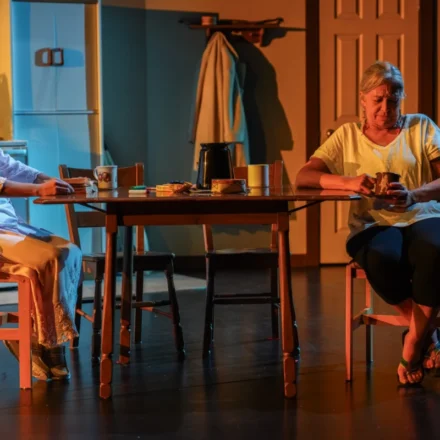
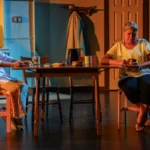
- Deep Roots (2000s–2021): Over the past 25 years, Harriday has been a fixture within the PUC ecosystem. Her work wasn’t limited to the stage; she acted, directed, and taught within the Pillsbury House + Theatre, eventually rising to become its artistic producing director in 2021.
- Dual Leadership (2023–2024): In the year leading up to her appointment as CEO, Harriday operated in a high-pressure dual capacity. She maintained her artistic leadership at the theater while simultaneously overseeing the organization’s complex social enterprise portfolio, which includes KRSM Radio, the Full Cycle Bike Shop, and the community-focused news outlet, North News.
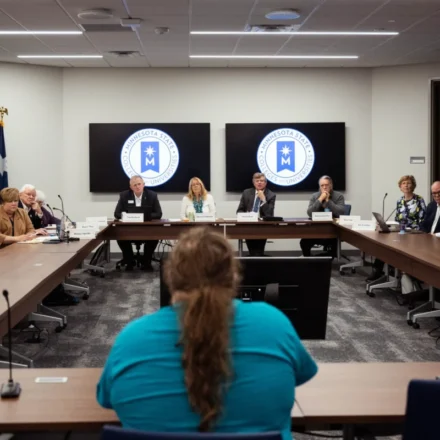
- The CEO Appointment (June 2026): On June 23, 2026, the Board of Directors officially announced Harriday as the new President and CEO, signaling a shift toward a leadership model that prioritizes creative strategy, agility, and deep local connectivity.
The "Director" Mindset in Executive Management
For Harriday, the transition from artistic director to chief executive is not a departure from her core competencies; it is an expansion of them. She posits that the fundamental role of a theater director—to curate a vision and empower others to realize it—is the ultimate management tool.
"As a director and a producer, it is actually not my job to build the set, to design the set, to build the costumes, to even perform the show," Harriday explains. "It’s actually my job to inspire the greatest performance or the best idea in the room, and then help the team find a way to make that real."
This perspective shifts the focus of the nonprofit sector from bureaucratic oversight to collective innovation. By viewing her staff not as subordinates, but as an ensemble, Harriday aims to foster a culture of creative problem-solving. This approach has already borne fruit; her tenure as artistic producing director saw the expansion of the Pillsbury House + Theatre campus, culminating in the $5.7 million Pillsbury Creative Commons—a physical manifestation of her ability to bridge the gap between creative vision and infrastructure development.
Supporting Data: Infrastructure and Innovation
The success of Harriday’s leadership style is reflected in the tangible growth of the organization. The Pillsbury Creative Commons is more than a building; it is a hub for community advancement, housing KRSM Radio and technical workforce development programs designed to provide residents with high-demand skills.
Furthermore, Harriday’s influence has been pivotal in navigating the organization through economic instability. As many arts organizations face existential threats due to shifting donor priorities and inflationary pressures, the structure of Pillsbury House + Theatre—embedded within a larger, diversified nonprofit—has provided a vital buffer.
"Our ability to radically pivot when we’ve needed to, both during COVID and during the global uprising, and Operation Metro Surge, and even during this moment of leadership transitions, that kind of longevity has allowed us to have nimbleness and agility," Harriday notes.
This nimbleness is essential. While the organization continues to navigate complex projects like the paused North Market community grocery store in North Minneapolis, Harriday’s board, represented by chair Kaori Yamada, remains confident in her ability to handle the volatility. "I think she will continue to bring this organization into what it always has done, which is to innovate and be creative and listen to the needs of the moment," Yamada said.
A Broader Commitment to Equity
Harriday’s leadership is deeply informed by her work outside the nonprofit sector, which has always centered on marginalized voices and radical inclusivity. She is a co-founder of the Subversive Sirens, a Minnesota-based synchronized swimming collective that challenges traditional notions of body image and athletic identity while centering Black liberation and queer visibility.
Additionally, her role as a founding member of Rootsprings—a creative sanctuary for BIPOC artists and activists—demonstrates her commitment to creating sustainable environments for those who are often excluded from mainstream professional spaces. These experiences are not mere hobbies; they are the bedrock of her professional philosophy. They represent a life-long refusal to be defined by the limitations others place upon her—a trait she jokingly attributes to her childhood ambition of being a fire truck.
"Don’t tell me what I can do," she says. "I’m going to show you what we can do."
Implications for the Future of the Arts and Nonprofits
Harriday’s rise to the helm of a major organization is a signal to the broader nonprofit and arts sectors. It advocates for a model of leadership that is not strictly financial or administrative, but deeply human-centric.
The "Artist as Leader" Paradigm
Harriday views her new role as a victory for the artistic community at large. "We’ve been saying for so long: We need artists as leaders in the right places, and we need people who are connected to the work to lead the work," she asserts. This suggests a future where the traditional "siloing" of artistic talent and organizational management is dismantled.
Preparing for a Transformed Landscape
However, Harriday is not under the illusion that the nonprofit sector will return to "business as usual." She recognizes that the confluence of economic pressures, shifting social needs, and the loss of traditional arts funding models requires a fundamental reimagining of what an organization can be.
"I think that the arts ecosystem and the nonprofit sector will look different, and so will Pillsbury in the future," she admits. "I couldn’t predict exactly what that will be, but I think it would be naive to think that with all the pressures and all the things that make this moment hard and challenging and difficult, that we will somehow be the same on the other side."
Closing the Gap
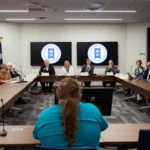
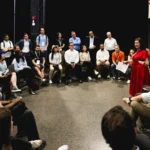
As local arts groups grapple with the loss of venues and the tightening of philanthropic purse strings, the roundtable discussion hosted by Mixed Blood Theatre on July 8—which will feature participation from Pillsbury House + Theatre—highlights the urgency of the moment. Events like these, modeled on the "Frankly Speaking" series, underscore that the solution to these systemic problems will not come from distant policy-makers, but from the very artists and community leaders who are living through the crisis.
In appointing Signe Harriday, Pillsbury United Communities has made a bold choice: they have opted for a leader who treats an organization like a living, breathing performance—one that requires constant collaboration, an unwavering commitment to the truth of the narrative, and the courage to change the script when the audience demands a new direction. In doing so, they have not only secured a new CEO but have set a standard for what leadership in the 21st century can look like when it is rooted in art, activism, and community.